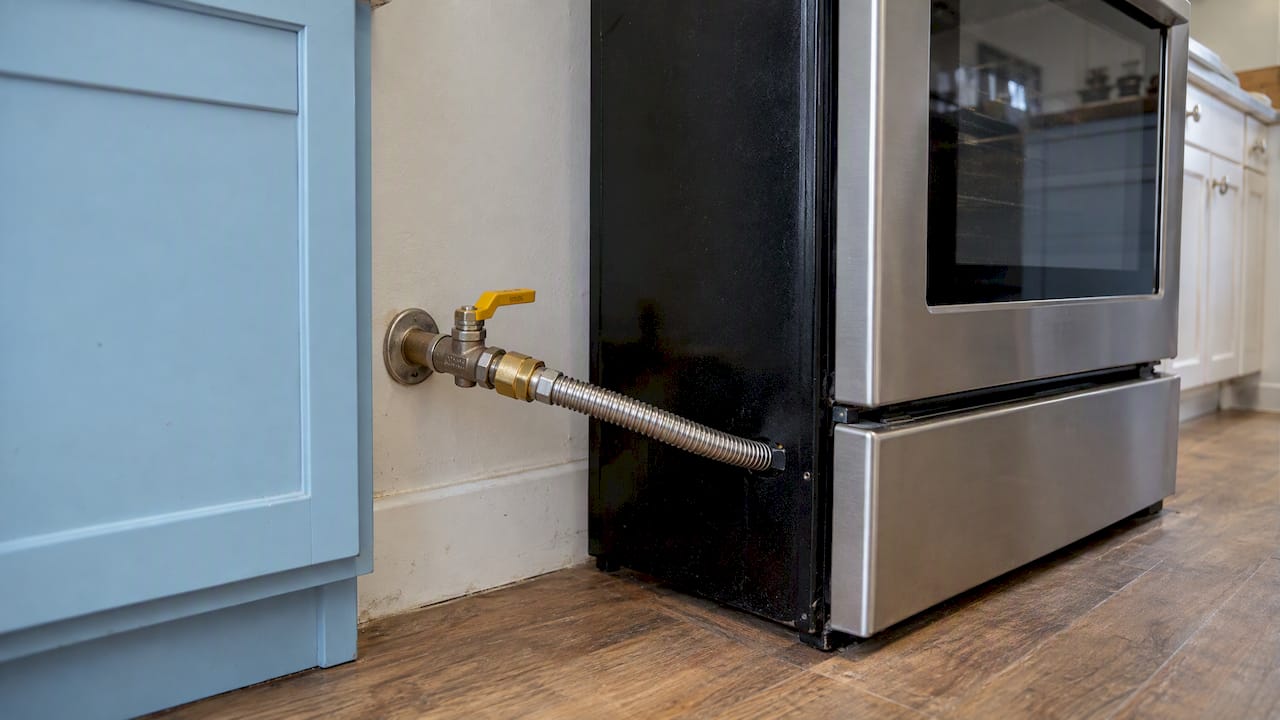
Every gas appliance in a building needs its own accessible, approved manual shutoff valve, and the model code says it must sit within 6 feet of the appliance and ahead of any flexible connector. Beyond that, requirements depend on where you live: some cities also require a seismic or excess flow valve on the whole building, and gas utilities follow federal rules for the service line. This guide walks through each layer so you know what applies to your home or property, and when to bring in a licensed plumber.
TL;DR
- Each appliance connected to gas piping needs an accessible, approved manual shutoff valve, or a listed gas convenience outlet.
- Under the model fuel gas code, that valve goes within 6 feet of the appliance and upstream of any flexible connector.
- Seismic or excess flow valves on the whole building are a local requirement. Los Angeles, for example, ties them to sales, meter replacements and larger alterations.
- Utilities, not homeowners, carry the federal service line valve rules, but you still need to know where your meter valve is.
- Gas work requires a licensed professional and often a permit. Confirm the local code before you buy or install anything.
Table of Contents
- Three different valves, three different rules
- The appliance shutoff valve: what the code says
- Main shutoff valves at the building
- Seismic gas shutoff and excess flow valves
- Utility and federal rules: the service line valve
- What this means for commercial properties
- Where is your gas shutoff valve?
- A practical compliance checklist
- Our perspective
- Need a valve installed or checked?
- FAQ
- Sources
Three different valves, three different rules
People searching for gas shut off valve requirements are often mixing up three separate things. Sorting them first saves a lot of confusion.
| Valve | Where it sits | Who it protects | Who sets the rule |
|---|---|---|---|
| Appliance shutoff valve | At each appliance (stove, water heater, furnace, dryer, fireplace) | Lets you isolate one appliance for service or a leak | Model fuel gas and plumbing codes, adopted by your state or city |
| Main or building shutoff | At the meter or where the line enters the building | Stops gas to the whole property | Local code and your gas utility |
| Seismic or excess flow valve | Downstream of the gas meter, on each fuel gas line | Closes automatically after strong shaking or a major leak | Local ordinance (for example Los Angeles) and state standards |
The first is nearly universal. The second varies by jurisdiction. The third is a local layer, and it is the one most likely to surprise you during a sale or a remodel.
The appliance shutoff valve: what the code says
The language most U.S. jurisdictions start from comes from NFPA 54, the National Fuel Gas Code, and from the plumbing and mechanical codes that reproduce it. According to the appliance shutoff valve provision published by UpCodes, each appliance connected to a piping system must have an accessible, approved manual shutoff valve with a nondisplaceable valve member, or a listed gas convenience outlet.
Break that sentence down:
- Accessible. You must be able to reach the valve without moving heavy equipment or opening a wall. A valve buried behind a range or inside a sealed cabinet is a common inspection failure.
- Approved. The valve must be rated and listed for fuel gas. A hardware-store water valve does not qualify.
- Manual. The code calls for a valve you operate by hand, not one that depends on power or a control signal.
- Nondisplaceable valve member. The internal part that stops the flow cannot come loose during normal operation. NFPA’s technical interim amendment to NFPA 54 is one of the documents that shows how this wording is maintained and revised between code editions.
The 6-foot rule and the connector
The same provision requires the valve to be within 6 feet (1829 mm) of the appliance it serves. If a flexible connector is used, the valve must be installed upstream of it, meaning on the supply side. A union or flanged connection should be provided downstream so the appliance can be disconnected for repair or replacement.
The reason is practical. With the valve upstream of the connector, a technician can close one appliance, disconnect it and service it while the rest of the building keeps its gas. Without that valve, the only way to work safely is to shut the whole building down.
In our experience, the written rule is the minimum. A valve that technically sits within 6 feet but requires you to reach behind a heavy range or under a large water heater is a poor installation. Put it where you can turn it quickly with both hands, in a hurry, without moving anything.
Does a gas stove need its own shutoff valve?
Yes. A range, cooktop, dryer, furnace, boiler, water heater, fireplace or outdoor fire feature is an appliance connected to a gas piping system, so each one needs a valve under the same rule. A valve at the meter does not replace it. Plumbers have long made the same point in trade forums: a valve at the meter does not substitute for an accessible valve at each appliance.
Gas fireplaces and fire features are easy to overlook, especially when they are added during a remodel. If you are planning one, the permit and valve questions are worth settling early, and this walkthrough of outdoor fireplace permit mistakes covers the planning side from a homeowner’s point of view.
Main shutoff valves at the building
A shutoff on the main supply line is a separate requirement, and it is more local. Some plumbing codes require a valve on the main supply line inside the building unless specific exceptions apply, and some jurisdictions add a requirement for an emergency valve outside rooms containing certain higher-pressure appliances. Because these provisions differ from one adopted code edition to the next, check which edition your city or state uses before you plan work.
States also adopt their own versions. For example, New York’s 2025 Fuel Gas Code of New York State defines coverage from the point of delivery to the outlet of the appliance shutoff valves, which shows how the appliance valve marks the end of the piping system the code governs.
What every homeowner should do, whatever the local code says, is know where the gas meter is and how its valve operates. Our guide on what to do if you smell gas at home explains why the first move is to leave the building and call from outside, not to hunt for a valve inside a gas-filled house.
Seismic gas shutoff and excess flow valves
This is the layer that catches property owners off guard. A seismic gas shutoff valve closes automatically when it senses strong ground motion. An excess flow valve closes when it detects a sudden surge, such as a broken pipe. Both exist to prevent the fires that can follow a major earthquake or a ruptured line.

There is no single national mandate for them in homes. They are required by local ordinance, and Los Angeles is the best-documented example.
What Los Angeles requires
Under Section 94.1216.0 of the Los Angeles Municipal Code, added by ordinance effective December 31, 2025, an approved seismic gas shutoff valve or excess flow shutoff valve must be installed downstream of the gas utility meter on each fuel gas line serving the covered buildings. The triggers include:
- Alterations or additions valued above a set threshold (over $10,000 in the provisions we reviewed)
- Replacement of the gas meter
- The sale of a building, including an individual condominium unit
The code also sets installation conditions. The valve must be installed by a contractor licensed in the appropriate classification by the State of California, with limited exceptions for people the department has qualified as installers. The valve must meet California Referenced Standard 12-16-1 and carry a warranty that it will operate properly for 30 years from installation. Valves installed before September 1, 1995 are exempt if they stay in place and are maintained.
The earlier sale-related rule is also on the public record: a 2002 Los Angeles ordinance required a valve before a sale agreement or close of escrow. If you are selling in Los Angeles, ask your escrow officer and agent early whether the valve is on the checklist. A missing valve can slow a closing.
The model code version
The same idea appears in model code form. Section 1217 of the plumbing code as published on UpCodes says an approved seismic gas shutoff valve or excess flow shutoff valve shall be installed downstream of the gas utility meter on each fuel gas line serving specified buildings. Whether it applies to you depends entirely on whether your jurisdiction adopted that chapter.
Is a voluntary valve worth it?
If you live in an earthquake-prone region and your property has no valve, installing one is a reasonable safety upgrade even when no ordinance forces it. The purpose is the same one the Los Angeles code serves: reducing the chance of fire after a major quake. Water heaters are the other earthquake-related gas risk in the home, so pair the valve decision with a look at the two-strap water heater requirement.
A seismic valve is not a leak detector, and it does not replace maintenance. It only acts when its trigger conditions are met, so a slow leak at a fitting can still go unnoticed. That is what inspections are for.
Utility and federal rules: the service line valve
Homeowners rarely deal with this layer, but it explains why a valve often exists at the street or meter. Under 49 CFR 192.385, gas operators must install a manual service line shut-off valve (or an excess flow valve where applicable) on a new or replaced service line with a meter capacity above 1,000 standard cubic feet per hour. The regulation defines a manual service line shut-off valve as a curb valve or other manually operated valve near the service line that is safely accessible. It also requires installation so it can be reached in an emergency, and maintenance according to the manufacturer’s specifications.
That obligation sits with the operator. It mostly affects larger commercial or multifamily meters, not a typical house. Still, if you manage a building, find out who owns the valve at the meter, and never operate a utility valve yourself except in an emergency your utility has told you how to handle.
What this means for commercial properties
Property managers and commercial owners face more moving parts. Commercial kitchens, boilers, rooftop units and process equipment each have their own appliance valves, and larger gas systems can trigger formal plan review.
In Los Angeles County, the plumbing and mechanical plan check requirements checklist lists any new gas service or new gas branch of 2 inches in diameter or larger, or a medium or high pressure system, among the work requiring a complete plumbing code plan check. Similar thresholds exist elsewhere under different numbers. The lesson is to ask the building department before you design, not after the pipe is cut. Plans prepared in advance by a licensed professional keep a project from stalling in review.
For kitchens in particular, see our commercial kitchen plumbing specs and checklist.
Where is your gas shutoff valve?
Before you need it, find these three points and show everyone in the household:
- The appliance valve. Look on the gas line behind or beside each appliance. The handle is parallel to the pipe when open and crosses it (a quarter turn) when closed.
- The meter valve. It sits at the meter, usually outside. Your utility can tell you how it works and whether a special wrench is expected.
- Any seismic or excess flow valve. If your property has one, it is downstream of the meter on the gas line. Note its location and the installation date, since the Los Angeles rules call for a 30-year warranty period.
If you smell gas, do not search for the valve. Leave, then call your gas utility or 911 from outside. Our guide on why gas leaks are dangerous explains the risks, and our page on natural gas leak repair covers what happens after the line is made safe.
The water side is a different valve with a different job. If you are also looking for your water shutoff, we have a separate guide to finding your main water shut-off valve.
A practical compliance checklist
Use this list when you buy, remodel, sell or add an appliance.
- Adding or replacing an appliance. Confirm the new unit has its own accessible valve within 6 feet, upstream of the connector, with a union downstream.
- Buying a home. Ask whether each gas appliance has a working valve and whether the property has a seismic or excess flow valve if your city expects one.
- Selling a home. Check local sale-triggered rules early, because Los Angeles-style requirements can apply at escrow.
- Remodeling. Check whether your project value or scope triggers a valve requirement, and get the permit if the work requires one.
- Replacing the meter. In Los Angeles, a meter replacement is itself a trigger.
- Commercial work. Ask about plan check thresholds before design.
A gas line inspection is the cleanest way to find missing or inaccessible valves before an inspector or buyer does. We explain what it covers in our article on gas line inspection safety and compliance.
Our perspective
The most common problem we see is not a missing code section. It is a valve that exists on paper and cannot be used in practice: painted shut, hidden behind a cabinet, or placed where you have to reach around hot equipment. Code sets the floor. Safe work asks a second question: could a person who is stressed and in a hurry turn this off in two seconds?

We also encourage owners not to treat gas as a DIY project. A valve is a small part, but a threaded joint that is slightly wrong can leak for years. Installing a valve means cutting into a live piping system, testing the connection for leaks, and often pulling a permit. That is licensed work, and we do it as a licensed and insured Burbank plumbing company, with transparent pricing and free quotes so you know the scope before we start.
If you are unsure what your property has, start with a look rather than a purchase. An inspection tells you what exists, what is accessible and what the local code expects, and it keeps you from paying for a valve you already have.
— Serghei
Need a valve installed or checked?
If your appliance valves are missing, hard to reach or in doubt, we can inspect your gas lines and tell you what needs to change. For homes with gas water heaters, our water heater services include installation and maintenance, and commercial clients can start with our commercial plumbing team. To request a free quote, contact us through our site.
For background on what gas piping work involves and what it can cost, read our gas line plumbing guide and our overview of residential gas line installation types.
FAQ
Do I need a shutoff valve for a gas stove?
Yes. Under the model fuel gas code, each appliance connected to a gas piping system needs an accessible, approved manual shutoff valve, or a listed gas convenience outlet. It should be within 6 feet of the stove and upstream of any flexible connector. A valve elsewhere in the house does not satisfy this.
Can a gas shutoff valve go bad?
Yes. Manual valves can stick, corrode or leak at the stem, and seismic valves are built with finite service lives. The Los Angeles code, for example, requires a 30-year warranty for the valves it covers. If a valve is hard to turn or you smell gas near it, have a licensed plumber inspect it rather than forcing it.
Is a seismic gas shutoff valve required everywhere?
No. There is no national requirement for homes. These valves are required by local ordinance, such as the Los Angeles Municipal Code, which ties them to sales, meter replacements and alterations above a set value. Ask your local building department what applies to your address.
Can I install a gas shutoff valve myself?
We advise against it. Gas piping work normally calls for a licensed contractor and often a permit, and the Los Angeles code requires seismic valves to be installed by a contractor licensed by the State of California, with limited exceptions. A wrong joint can leak long after the work looks finished.
Where is the main gas shutoff valve?
It is usually at the gas meter outside the building, where the line from the utility enters. Individual appliance valves sit on the pipe near each appliance. If you smell gas, leave first and call your utility or 911 from outside.
Sources
- Appliance Shutoff Valves and Connections, UpCodes
- NFPA 54 technical interim amendment, August 25, 2023
- 2025 Fuel Gas Code of New York State, Notice of Adoption
- Los Angeles Municipal Code, Sec. 94.1216.0 Seismic Gas Shutoff Valves
- City of Los Angeles Ordinance 174478 (2002)
- 49 CFR 192.385, eCFR
- County of Los Angeles Plumbing and Mechanical Plan Check Requirements Checklist
Leave a Reply