TL;DR:
- Water quality testing identifies harmful contaminants to ensure safe drinking and household water use. Testing methods vary from DIY kits to certified lab analysis, each suited for different needs and accuracy levels. Regular testing, especially after plumbing work or environmental events, helps protect health and prevent property damage.
Water quality testing is the scientific examination of water samples to identify harmful contaminants and confirm that water is safe for drinking, cooking, and everyday home use. The EPA and CDC both recommend regular testing, particularly for the roughly 23 million US households that rely on private wells. Those wells receive no government monitoring, which means contamination from bacteria, nitrates, lead, PFAS, or arsenic can go undetected for years. Understanding what water quality testing involves, and acting on the results, is the most direct way to protect your family’s health and your property.
What is water quality testing and why does it matter?
Water quality testing, known in the industry as potable water analysis, is the process of measuring physical, chemical, and microbiological properties of a water sample against established safety standards. The EPA sets Maximum Contaminant Levels (MCLs) for dozens of substances, and these benchmarks define what “safe” means in a regulatory sense. Testing tells you whether your water meets those benchmarks or falls short.

The health stakes are real. Lead exposure causes neurological damage in children. Nitrate contamination above 10 mg/L is dangerous for infants. PFAS compounds are linked to cancer and immune system disruption. None of these contaminants have a taste, color, or odor, so you cannot detect them without a test. The importance of water testing goes beyond health: contaminated water corrodes pipes, damages appliances, and creates liability for property managers.
Municipal water customers receive some protection through utility monitoring, but that monitoring stops at the water main. Your home’s internal plumbing, especially older pipes containing lead solder, can introduce contaminants after the water leaves the treatment plant. Private well owners have no safety net at all.
What are the main water quality testing methods available?
Water quality testing methods fall into three categories: DIY test kits, certified laboratory analysis, and smart water sensors. Each serves a different purpose and carries different accuracy limits.

DIY test kits
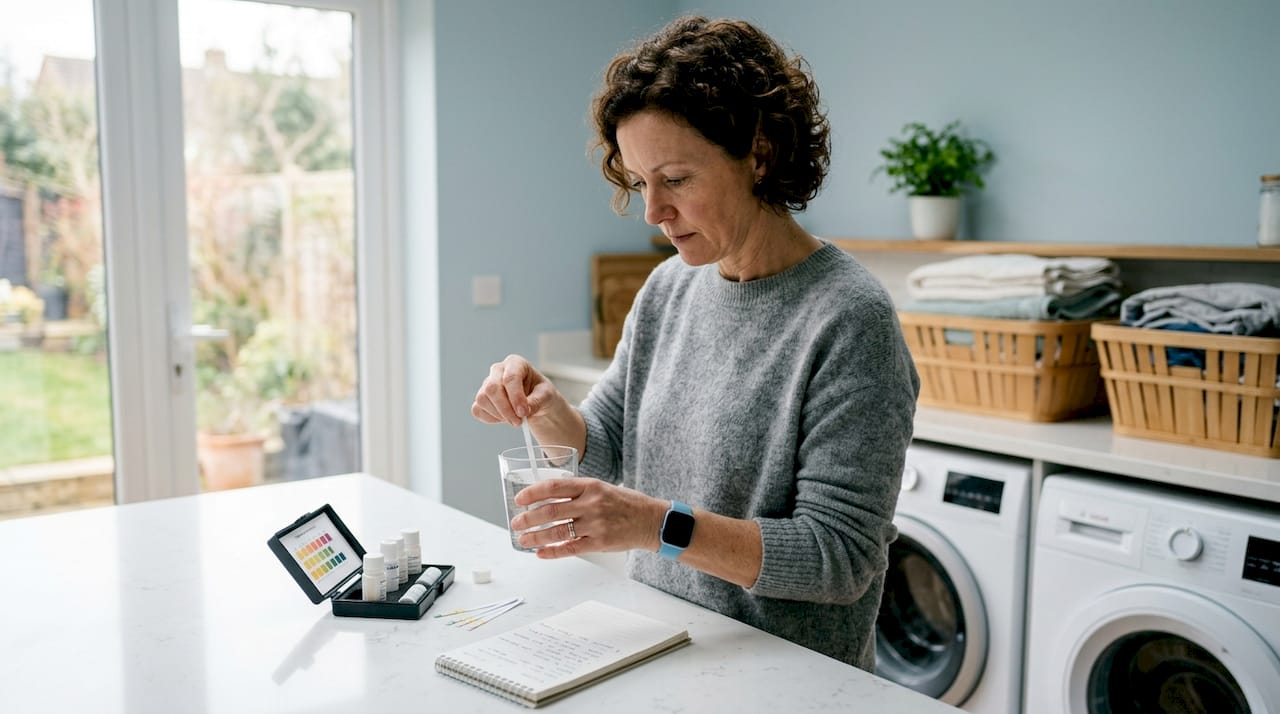
DIY kits cost $10–$50 and deliver results in minutes. They screen for basic parameters like pH, chlorine, hardness, and nitrates using color-change strips or reagent drops. The tradeoff is accuracy. Test strips cannot reliably detect low concentrations of lead, arsenic, or PFAS because the lead action level sits at 15 ppb, which falls below most strips’ detection thresholds. DIY kits work well as a first screening step, not as a final answer.
Certified laboratory testing
Certified labs use EPA-approved protocols including mass spectrometry and ion chromatography for chemical contaminants, and culture-based methods for bacteria. Lab tests cost $50–$300+ and return results in 3–10 days. That turnaround is worth it for health-critical decisions. Bacterial samples are time-sensitive, so labs often require expedited shipping or in-person drop-off to preserve accuracy.
Smart water sensors
Smart sensors mount directly to your plumbing and continuously monitor parameters like pH, turbidity, and temperature. They flag sudden changes in real time, which is useful for detecting a contamination event quickly. They do not replace lab testing for chemical or microbial analysis, but they add a layer of ongoing awareness between scheduled tests.
Pro Tip: Use a layered strategy. Run a DIY kit first to screen for obvious issues, then send a sample to a certified lab for confirmation. No single test detects all contaminants, so combining screening and lab testing gives you the most complete picture.
| Method | Cost | Turnaround | Best for |
|---|---|---|---|
| DIY test kit | $10–$50 | Minutes | Initial screening, pH, chlorine |
| Certified lab | $50–$300+ | 3–10 days | Lead, arsenic, PFAS, bacteria |
| Smart sensor | Varies | Continuous | Ongoing monitoring, trend detection |
Which contaminants should homeowners test for?
Water testing parameters fall into three groups: physical, chemical, and microbiological. Knowing which group applies to your situation helps you choose the right test panel.
Microbiological contaminants are the highest priority for any household using a private well:
- Total coliform bacteria: the standard indicator of fecal contamination
- E. coli: confirms fecal contamination and signals immediate health risk
Chemical contaminants vary by location and plumbing age:
- Lead: enters water through older pipes and solder; no safe level exists for children
- Nitrates: common near agricultural land; dangerous for infants under six months
- Arsenic: naturally occurring in some aquifers, especially in the western US
- PFAS: industrial compounds linked to cancer; found near military bases and manufacturing sites
- Metals: iron, manganese, and copper affect taste and can damage appliances
Physical parameters affect water usability and can signal deeper problems:
- pH: affects corrosivity of water and pipe integrity
- Total dissolved solids (TDS): indicates overall mineral load
- Turbidity: cloudiness that may signal sediment or microbial contamination
Local geology and land use shape your risk profile. A home near farmland faces higher nitrate risk. A house built before 1986 likely has lead solder in its plumbing. Understanding your specific risk factors helps you build a targeted test panel rather than paying for a broad panel that misses what actually matters in your area.
When and how often should you test your home’s water?
Annual testing is the baseline recommendation from both the CDC and EPA for private well owners. The annual testing schedule covers bacteria, nitrates, and pH at minimum. Beyond that annual check, certain events should trigger immediate testing:
- After flooding. Floodwater carries bacteria and agricultural runoff directly into wells and plumbing systems.
- After plumbing repairs. Disturbing pipes can dislodge sediment, introduce contaminants, or expose lead solder. A post-repair inspection should include a water test.
- After taste, odor, or color changes. These are the most common early warning signs homeowners notice.
- After nearby construction or agricultural activity. Ground disturbance and chemical application can shift contamination patterns.
- Every 3–5 years. Run a comprehensive lab panel to screen for contaminants not covered in the annual basic test.
Households with infants, pregnant individuals, or immunocompromised members should test more frequently and use a broader panel. Municipal water customers should read their utility’s Consumer Confidence Report each year before deciding whether additional home testing is needed. The CCR is free and lists every contaminant the utility monitors.
Pro Tip: Plan your testing schedule before choosing any filtration or treatment system. Test results should drive your treatment choices, not the other way around.
How should you interpret test results and respond?
A test result above an EPA Maximum Contaminant Level requires action, but a result below the MCL does not always mean the water is completely risk-free. MCLs represent the legal limit for public water systems, not a zero-risk threshold. For lead specifically, the EPA’s action level is 15 ppb, but health authorities state no level of lead exposure is safe for children.
When results come back elevated, the right response depends on the contaminant:
- Lead: Replace lead service lines or install a certified NSF/ANSI 53 filter rated for lead reduction.
- Bacteria: Shock chlorinate the well, identify the contamination source, and retest before resuming use.
- Nitrates: Use a reverse osmosis system certified for nitrate removal; boiling does not remove nitrates.
- PFAS: Activated carbon or reverse osmosis filters reduce PFAS; verify the filter’s NSF certification covers PFAS compounds.
Test results should guide your filter selection, not the reverse. Buying a filter before testing risks spending money on a system that does not address your actual problem. After installing any treatment system, retest within 30 days to confirm the system is working. If results remain elevated, contact your local health department or a licensed plumber to assess the source.
Avoid relying on a single DIY kit as your only data point for health decisions. Use lab-confirmed results for anything involving lead, bacteria, or PFAS.
Key Takeaways
Water quality testing is the most reliable way to confirm your home’s water is safe, and no single test method covers every contaminant.
| Point | Details |
|---|---|
| Annual testing for well owners | CDC and EPA recommend yearly testing for bacteria, nitrates, and pH at minimum. |
| Layer your testing methods | Combine DIY screening with certified lab analysis for complete contaminant coverage. |
| Test results drive treatment | Choose filtration systems based on confirmed test results, not assumptions. |
| Event-driven testing matters | Test after flooding, plumbing repairs, or any change in taste, odor, or color. |
| Retest after treatment | Verify your filter or treatment system works by retesting within 30 days of installation. |
What I’ve learned from years of watching homeowners skip this step
Most homeowners I talk to assume their water is fine because it looks clear and tastes normal. That assumption is the most common and most costly mistake I see. Lead, PFAS, and arsenic are all invisible and tasteless. By the time a problem shows up in a glass of water, it has usually been present for months or years.
The second misconception is that municipal water is always safe at the tap. The utility treats the water before it reaches your street. But your home’s internal pipes, especially in houses built before 1986, can leach lead between the meter and your faucet. That contamination never shows up in the utility’s Consumer Confidence Report.
My honest advice: treat water testing the same way you treat a smoke detector. You do not wait for a fire to install one. You install it, test it regularly, and replace it when it stops working. Integrating water testing into your annual home maintenance routine is the single most underused tool homeowners have for protecting their family’s health. Local health departments and state labs often offer free or subsidized testing for well owners, so cost is rarely the real barrier. The barrier is awareness. Now you have it.
— Serghei
How Psvplumbinginc helps you protect your home’s water system
Water quality problems often trace back to aging or damaged pipes. Corroded lines, failing joints, and outdated materials all introduce contaminants into water that tested clean at the source.

Psvplumbinginc provides licensed pipe repair, system inspections, and plumbing upgrades for homeowners and property managers who want reliable, safe water throughout their property. Whether you need a pipe repair assessment after a contamination finding or a full system review as part of your annual maintenance plan, our team delivers clear recommendations and quality work. We also cover water heater maintenance to keep your entire water system running safely. Contact Psvplumbinginc for a free quote and take the guesswork out of your home’s plumbing health.
FAQ
What does water quality testing check for?
Water quality testing checks for physical parameters like pH and turbidity, chemical contaminants like lead, nitrates, arsenic, and PFAS, and microbiological threats like coliform bacteria and E. coli. The specific panel depends on your water source and local risk factors.
How often should a homeowner test well water?
The CDC and EPA recommend annual testing of private well water for bacteria, nitrates, and pH, plus a comprehensive lab panel every 3–5 years and additional tests after flooding or plumbing repairs.
Can a DIY test kit replace a lab test?
No. DIY kits screen for basic parameters but cannot reliably detect lead below 15 ppb, arsenic, or PFAS. Certified laboratory testing is required for health-critical contaminant decisions.
Do municipal water customers need to test their own water?
Municipal customers should review their utility’s Consumer Confidence Report annually. Additional home testing is advisable for homes with older plumbing, since lead can enter water from internal pipes after it leaves the treatment plant.
What should I do if my water test shows a contaminant?
Match your treatment to the specific contaminant found: NSF/ANSI 53 certified filters for lead, reverse osmosis for nitrates and PFAS, and shock chlorination for bacteria. Retest within 30 days to confirm the treatment is effective.
Leave a Reply