TL;DR:
- Understanding plumbing terminology enables homeowners to communicate effectively and avoid costly misdiagnoses. Knowing key components like fixtures, pipe materials, DWV systems, and permits helps ensure proper maintenance and compliance. Well-informed homeowners can advocate for their home’s plumbing system and work confidently with licensed professionals.
You call a plumber, they mention a “P-trap siphoning through an undersized vent stack,” and suddenly you’re nodding along while understanding nothing. Plumbing terminology explained clearly can be the difference between a $200 fix and a $2,000 misdiagnosis. Most homeowners lose money not because they can’t maintain their homes, but because they can’t decode what a plumber is actually telling them. This guide covers the plumbing terms glossary every homeowner needs, from basic fixture vocabulary to how to read a quote without getting blindsided.
Table of Contents
- Key Takeaways
- Basic plumbing components every homeowner should know
- Pipes, pipe types, and piping terminology
- DWV system terminology and keeping your home sanitary
- Reading plumbing quotes and service terminology
- Work with licensed experts who speak your language
- FAQ
Key Takeaways
| Point | Details |
|---|---|
| Fixtures have specific names | Knowing terms like shut-off valve, flapper, and float valve helps you describe problems accurately to professionals. |
| Pipe material affects durability | Copper, PEX, and CPVC each serve different purposes; recognizing them helps you ask the right maintenance questions. |
| DWV systems need vent pipes | Venting prevents trap siphoning and sewer gas entry, and misunderstanding this leads to expensive misdiagnoses. |
| Quotes bundle multiple costs | A clear plumbing quote should break out labor, materials, permits, and diagnostics as separate line items. |
| Permits protect you legally | DWV work requires permits in all 50 states; a missing permit line in a quote is a serious warning sign. |
Basic plumbing components every homeowner should know
Understanding plumbing jargon starts at home, literally. The fixtures you interact with every day have specific names, and those names matter the moment something breaks.
A fixture is any device that connects to your plumbing system to supply or drain water. Toilets, sinks, bathtubs, and showers all qualify. The faucet is the valve assembly controlling water flow at a fixture. Inside your toilet tank, two components do most of the work: the flapper, a rubber seal that controls water release from the tank into the bowl, and the float valve, which shuts off the water supply once the tank refills to the correct level. When your toilet runs constantly, one of these two parts is almost always the culprit.

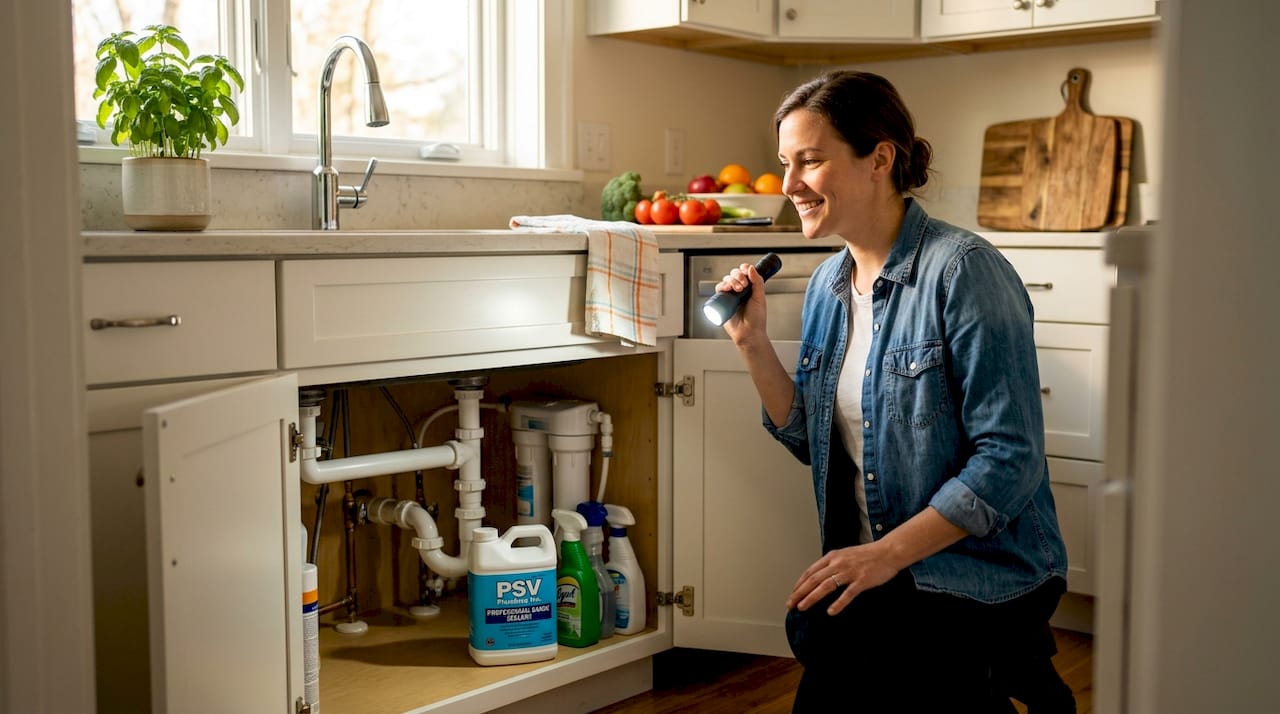
The shut-off valve is one of the most practical terms in the basic plumbing vocabulary. Shut-off valves stop water flow and are found next to toilets and under sinks. Knowing where yours are before a pipe bursts saves you from flooding a room while you search. Every adult in your household should know where the main shut-off valve is located, usually near the water meter or where the main line enters the house.
A few more terms worth knowing:
- Drain: The opening through which wastewater exits a fixture
- Aerator: A small screen at the tip of a faucet that mixes air into the water stream, reducing splashing and flow rate
- Garbage disposal: The motorized unit under a kitchen sink that grinds food waste before it enters the drain line
- Supply line: The small flexible hose connecting the shut-off valve to a fixture like a toilet or faucet
Pro Tip: If a plumber says your supply line is “braided stainless,” that’s a good thing. Braided stainless steel supply lines resist bursting far better than the older plastic or rubber versions, and they’re worth the upgrade if you’re replacing one.
Homeowners who understand basic plumbing terminology report smoother communication and fewer unexpected costs during repairs. Starting with fixtures gives you the foundation to build from.
Pipes, pipe types, and piping terminology
Once you move past the fixtures, you enter pipe territory. This is where plumbing jargon gets more technical, but the core concepts are straightforward once you see them laid out.
Here is a quick reference for the most common residential pipe materials:
| Pipe Type | Material | Common Use | Lifespan |
|---|---|---|---|
| Copper | Metal | Supply lines, hot and cold water | 50 to 70 years |
| CPVC | Rigid plastic | Hot and cold water supply | 50 to 75 years |
| PEX | Flexible plastic | Supply lines, retrofit installs | 40 to 50 years |
| Galvanized Steel | Metal | Older homes, now largely replaced | 20 to 50 years |
| ABS/PVC | Rigid plastic | Drain, waste, and vent lines | 25 to 40 years |
Pipe thread refers to the spiral ridges on pipe ends that allow them to screw into fittings. When a plumber mentions NPT (National Pipe Thread), they’re referencing the American standard for pipe thread sizing. A coupling joins two pipes of the same diameter; an elbow changes direction; a tee creates a branch. These fittings form the skeleton of every system in your home.

Pipe sizing is where it gets interesting. Residential supply pipes are usually 1/2 inch or 3/4 inch in diameter. Drain pipes are larger, typically 1.5 to 4 inches, because gravity-fed waste needs room to flow. Plumbers size pipes using fixture unit values based on cumulative demand: a lavatory counts as 1 drain fixture unit (DFU), while a toilet counts as 4 DFU. The sum of all fixture units on a branch line determines the minimum pipe diameter.
Water pressure ties directly into pipe performance. Residential water pressure typically ranges from 40 to 80 psi, and anything above 80 psi requires a pressure reducing valve (PRV) to protect fixtures and connections. You can check yours with an inexpensive gauge that screws onto an outdoor hose bib.
Flow rate is the other half of the pressure equation. Federally regulated flow rates cap showerheads at 2.5 GPM (gallons per minute) and faucets at 2.2 GPM. Knowing these numbers helps you recognize when a fixture is underperforming versus simply code-compliant.
Pro Tip: If a plumber recommends replacing galvanized steel pipes in an older home, take it seriously. Galvanized steel corrodes from the inside out, gradually restricting flow until water pressure at your faucets drops noticeably. By then, the pipe interior looks like a clogged artery.
For a deeper look at residential pipe systems, the PSV Plumbing homeowner’s guide covers installation and material selection in practical detail.
DWV system terminology and keeping your home sanitary
The drain, waste, and vent (DWV) system is the part of your plumbing that carries used water away from your home. Most homeowners understand drains in a basic sense, but the vent side of the equation is where misunderstandings get expensive.
Here is a breakdown of core DWV components:
| Term | Definition | Purpose |
|---|---|---|
| Drain | Horizontal or sloped pipe carrying wastewater | Moves waste away from fixtures |
| Waste pipe | Pipe carrying liquid waste without solids | Connects sinks and tubs to the main drain |
| Soil pipe | Pipe carrying solid waste | Connects toilets to the main drain |
| Vent pipe | Vertical pipe rising through the roof | Allows air in to prevent siphoning |
| Stack | Main vertical drain collecting all waste | Backbone of the DWV system |
| Clean-out | Capped access point in drain pipes | Allows plumbers to clear blockages |
The P-trap is one of the most important terms in the DWV glossary. P-traps retain a column of water to block sewer gases from entering living spaces, with a trap seal depth between 2 and 4 inches. You see the curved section of pipe under every sink. Without that water seal, your bathroom would smell like the city sewer.
There is an important distinction between P-traps and S-traps. P-traps maintain trap seals through horizontal drainage, while S-traps are prone to siphoning and are banned under modern plumbing codes. If your home is older and was never replumbed, you may still have S-traps under sinks. A plumber will flag this as a code violation.
A persistent misconception worth addressing: gurgling drains do not always signal blockages. Often, the noise comes from a venting problem where air is being pulled through the trap seal. When a vent pipe is blocked or improperly sized, negative pressure in the drain line can siphon water out of the trap. That exposes your living space to sewer gas, which is both unpleasant and potentially dangerous.
Key facts about DWV compliance:
- DWV work in new construction requires permits in all 50 US states
- Permits trigger inspections that validate code compliance and installation quality
- Unpermitted DWV work can void homeowner’s insurance claims after a sewer backup
- Most remodels involving drain relocation also require a permit, even minor bathroom updates
Understanding how your DWV system works makes you a far better advocate for your own home when a plumber gives you a diagnosis.
Reading plumbing quotes and service terminology
This is the section that can save you hundreds of dollars. Understanding plumbing jargon in a written quote is just as important as understanding it in a conversation.
Plumbing quotes often bundle labor, parts, diagnostics, and risk buffers into complex line items that aren’t always transparent. Here is what each component should mean when you see it on paper:
- Labor: The hourly or flat-rate charge for the plumber’s time. Ask whether travel time is included.
- Materials: The cost of pipes, fittings, fixtures, or parts being installed. Should be listed individually, not as a single lump sum.
- Permit fee: The cost to pull a building permit with your local authority. Permit and inspection line items signal a plumber’s code compliance; a missing permit line is a warning that work may be unlicensed.
- Diagnostic fee: The charge for identifying the problem, often applied toward the repair cost if you proceed.
- Camera inspection: A video scope inserted into drain lines to visually identify blockages, root intrusion, or pipe damage. This is a common diagnostic tool for plumbing diagnostics before major repairs.
- Pressure testing: A method of checking for leaks by pressurizing a section of pipe and monitoring for pressure loss over time.
- Scope of work: The written description of exactly what the plumber will and will not do. Never let this be vague.
Clear, itemized quotes reduce scope creep and make comparing bids accurate. When two quotes look very different in price, check whether one includes permits and the other doesn’t. That gap often explains itself.
Pro Tip: Ask every plumber this question before signing: “Does this quote include the permit, and who pulls it?” If the answer is vague or dismissive, that’s useful information about how they operate.
Using clear plumbing vocabulary empowers homeowners to make informed decisions about maintenance, avoiding both overpayment and underprotection. A residential plumbing checklist can help you track permit status and inspection records for any work done on your home.
Work with licensed experts who speak your language

FAQ
What is plumbing terminology?
Plumbing terminology is the specific vocabulary used to describe pipes, fixtures, components, and procedures within a water supply or drainage system. Understanding these terms helps homeowners communicate accurately with plumbers and make informed repair decisions.
What is a P-trap and why does it matter?
A P-trap is the curved pipe section under sinks and other fixtures that holds a water seal to block sewer gases from entering your home. The trap seal depth is typically between 2 and 4 inches, and a dry or siphoned trap is a common cause of drain odors.
What does DWV stand for in plumbing?
DWV stands for drain, waste, and vent. It describes the system of pipes that removes wastewater and solid waste from fixtures while using vent pipes to regulate air pressure and prevent siphoning.
Why are permits listed in plumbing quotes?
Permit fees in a plumbing quote indicate that the plumber intends to pull a building permit and have the work inspected. DWV work requires permits in all 50 states, and a missing permit line can signal unlicensed or non-compliant work.
What is the difference between a shut-off valve and a main valve?
A shut-off valve isolates water supply to a single fixture like a toilet or sink, while the main valve shuts off water to the entire home. Knowing the location of both is critical for managing emergencies and routine repairs.
Leave a Reply