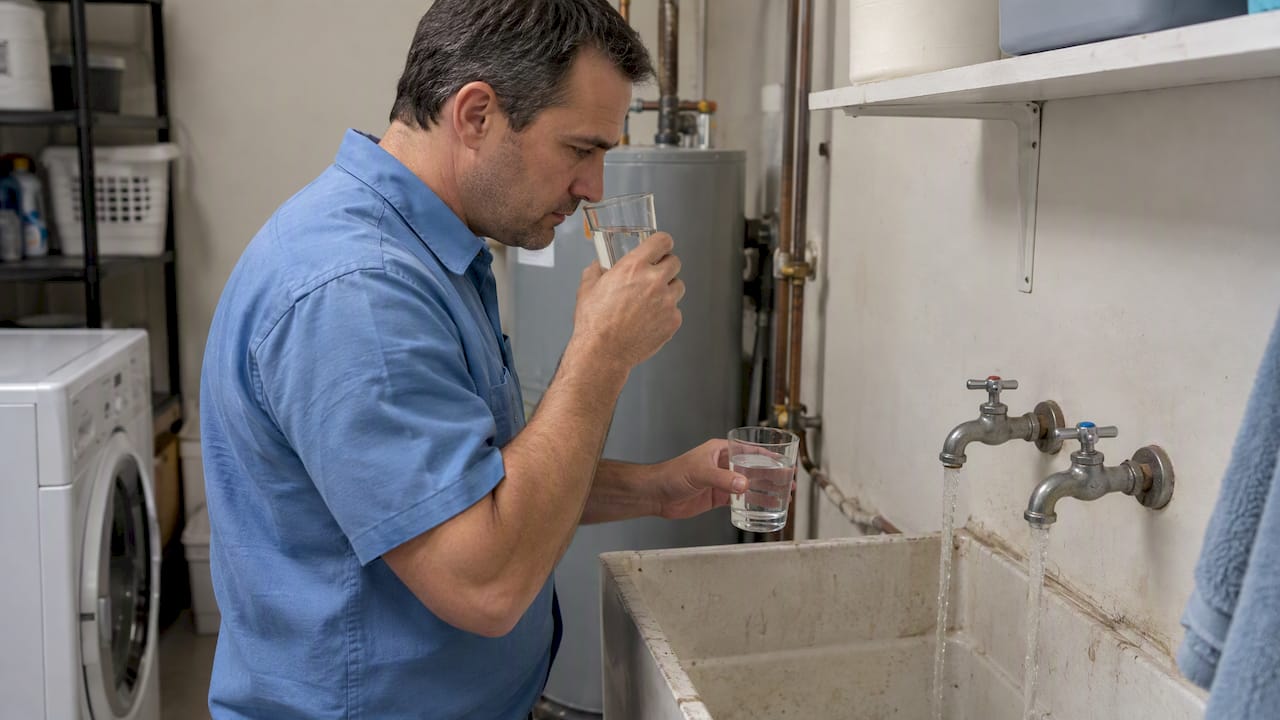
If your tap smells like rotten eggs, the usual culprit is hydrogen sulfide, and your first move is to compare hot and cold water. When only the hot side smells, start with the water heater. When every faucet smells, suspect your supply. The odor is usually a nuisance, but hydrogen sulfide is flammable at higher concentrations, so take a strong gas-like smell seriously.
TL;DR:
- Compare hot and cold water, swirl a filled glass away from the sink, and test other fixtures; one affected tap suggests a local source.
- For persistent whole house odors, collect an unfiltered cold water sample and use a state certified laboratory, following its instructions for flushing, containers, and timing.
- Well treatment depends on concentration: shock chlorination controls bacteria, activated carbon suits low levels, and oxidation with filtration addresses higher levels.
- If only hot water smells, have a plumber inspect the heater; replacing its magnesium anode rod with aluminum or zinc may affect the warranty.
- Stop using water that is cloudy, colored, or linked to illness, and contact your health department; take an intense gas odor seriously.
Table of Contents
- How can you tell where the rotten egg smell comes from?
- What causes water to smell like rotten eggs?
- How do you test the water safely?
- Which fix matches your cause?
- When should you call a plumber or health authority?
- Why test before you treat?
- How can we help with rotten egg smell in your water?
- FAQ
- Sources
How can you tell where the rotten egg smell comes from?
A few minutes at home can help you narrow down the source. Work through these steps in order.
- Smell the hot and cold water at the same faucet. If only hot water smells, the water heater is the likely source.
- Fill a glass, step away from the sink, and swirl it. If the glass smells clean, the odor is probably coming from the drain.
- Test other faucets: kitchen, bathroom, and outdoor. One smelly fixture points to a local problem. Every fixture points to the whole system.
- Run the faucet, then smell again. A smell that survives flushing points to the heater or the supply.
While you test, write down what you notice:
- Which fixtures smell, and which do not
- Whether the smell is constant or comes and goes
- Whether it shows up at certain times, such as the first use of the day
These notes make any later phone call, to us or to a utility, much faster.
What causes water to smell like rotten eggs?
Four sources account for most cases, and your checklist results usually point to one of them.
- Drain bacteria. Organic buildup in a sink drain or garbage disposal breeds odor-producing bacteria. This typically shows up at a single sink and disappears when you swirl a glass away from it.
- The water heater. A magnesium anode rod can chemically produce hydrogen sulfide in a tank, which Penn State Extension notes is often fixed by swapping in an aluminum or zinc rod.
- Well or groundwater. Sulfur-reducing bacteria and decaying organic matter create hydrogen sulfide that affects every faucet, hot and cold.
- The municipal supply. Distribution problems can cause short-lived odors. If neighbors notice the same smell, call your water utility.
Look for stains or slimy deposits around fixtures too. Iron and sulfur bacteria often leave greasy or rust-colored residue alongside the smell, and hard water deposits can show up together with odor issues, as we cover in our hard water guide.
Your nose is more sensitive than most tests: people can detect hydrogen sulfide well below 0.5 mg/L, so the smell appears long before the water reaches harmful concentrations.
How do you test the water safely?
Start with the glass swirl and hot versus cold checks above, then confirm what you find.
- Collect a sample from a cold-water faucet with no filter or aerator attached.
- Run the water for the time your lab instructs before filling the bottle.
- Ask the laboratory for its sample containers and follow its preservation and holding-time rules, as EPA sampling guidance describes.
- Send the sample to a state-certified laboratory, which USGS names as the best way to identify what is in your water.
Match your result to the right contact:
| Your result | Who to call |
|---|---|
| Only hot water smells | A licensed plumber for water heater service |
| One drain smells | A plumber, or clean the drain yourself |
| All cold taps smell after flushing | Your water utility (city water) or a well contractor (private well) |
Our water quality testing guide walks through lab sampling in more detail.
Which fix matches your cause?
Match the treatment to the source. Guessing wastes money.
If the drain is the source, clean the trap, disinfect the drain and garbage disposal, and follow with a flush of hot water. An enzyme cleaner can help with stubborn buildup. For deeper buildup, our drain cleaning service and hydro-jetting clear the line itself.

If the water heater is the source, flush the tank and consider replacing the magnesium anode rod with aluminum or zinc. One caution: a different rod may void the manufacturer’s warranty, because the original rod is specified for corrosion protection. A plumber can also disinfect the tank.
If you have a private well, treatment depends on how much hydrogen sulfide is present:
- Shock chlorination is the usual first step for bacterial control.
- Activated carbon works for low concentrations.
- Oxidation followed by filtration, or continuous chlorination, handles higher concentrations.
- A whole-home point-of-entry system treats every tap when the problem is house-wide.
Plan for maintenance either way. Carbon media needs periodic replacement, and it pays to recheck the water after any shock chlorination.
Pro Tip: Change one thing at a time and retest after each step. If you replace the anode rod and flush the drains on the same day, you will not know which fix worked.
For more on keeping a tank healthy, see our water heater maintenance tips. If your smell seems to come from the air rather than the water, HVAC odors are worth ruling out.
When should you call a plumber or health authority?
Some situations call for a professional rather than another DIY attempt.
- The smell persists at every tap after flushing and the simple fixes above.
- The water is cloudy or colored, or anyone in the home is ill. Stop using it and contact your local health department.
- You notice gas-like intensity, plumbing corrosion, or staining that keeps returning.
- The fix means replacing water heater components or touching code-related equipment. A licensed plumber keeps the work safe and compliant.
For private wells, the CDC says owners are responsible for their own water safety, so regular testing matters. Its well treatment guidelines also advise contacting your health department or a well contractor when contamination is possible.
Why test before you treat?
Most advice on this smell jumps straight to a product: a filter, a chemical, a new heater. We think that gets the order backward. The cheapest, most useful tool you own is a glass and a few minutes of patience. People often replace a water heater to fix a smell that was living in a kitchen drain, or buy a whole-house system when a new anode rod would have done the job. Diagnose first, spend second, and bring your notes to whoever you hire. A clear description of where and when the smell appears shortens any service call and keeps the quote honest.
— Serghei
How can we help with rotten egg smell in your water?
When you would rather hand the problem to a licensed, insured team, we are ready to help. Have your checklist notes in hand when you request a free quote, and we can help narrow down the cause. We can help with:
- Water heater service, including anode rod inspection and replacement
- Drain cleaning and hydro-jetting for odors that start in the drain
- Diagnostic plumbing inspections to pinpoint the source

Request your free quote through our water heater services page and tell us which faucets smell and when.
FAQ
Can a bad water heater cause a foul smell?
Yes. If only the hot water smells, the heater is the first suspect, since a magnesium anode rod can chemically produce hydrogen sulfide. A plumber can inspect the tank and swap the rod or disinfect the system. Our water heater replacement guide covers when an older unit is past service.
Why does my house smell like sulfur?
The usual cause is hydrogen sulfide from organic decay or certain minerals, as USGS explains. It can also come from drain bacteria or your water heater. Sniff each faucet and run the glass swirl test to find out which.
How do you get rid of sulfur smell in well water?
Start with shock chlorination of the well, then choose ongoing treatment based on how much hydrogen sulfide is present. Activated carbon suits low levels, and oxidation with filtration suits higher ones. Penn State Extension outlines each option.
How long does it take to clear the smell?
It depends on the source and the treatment. A drain or heater issue may clear after cleaning or flushing, while well treatment takes longer because you should retest after chlorination before resuming normal use.
Sources
- Odors in Your Water | CAES Field Report
- Hydrogen Sulfide (Rotten Egg Odor) in Water Wells
- Water Q&As: Why does my water smell like rotten eggs? | U.S. Geological Survey
- Cdc
Leave a Reply