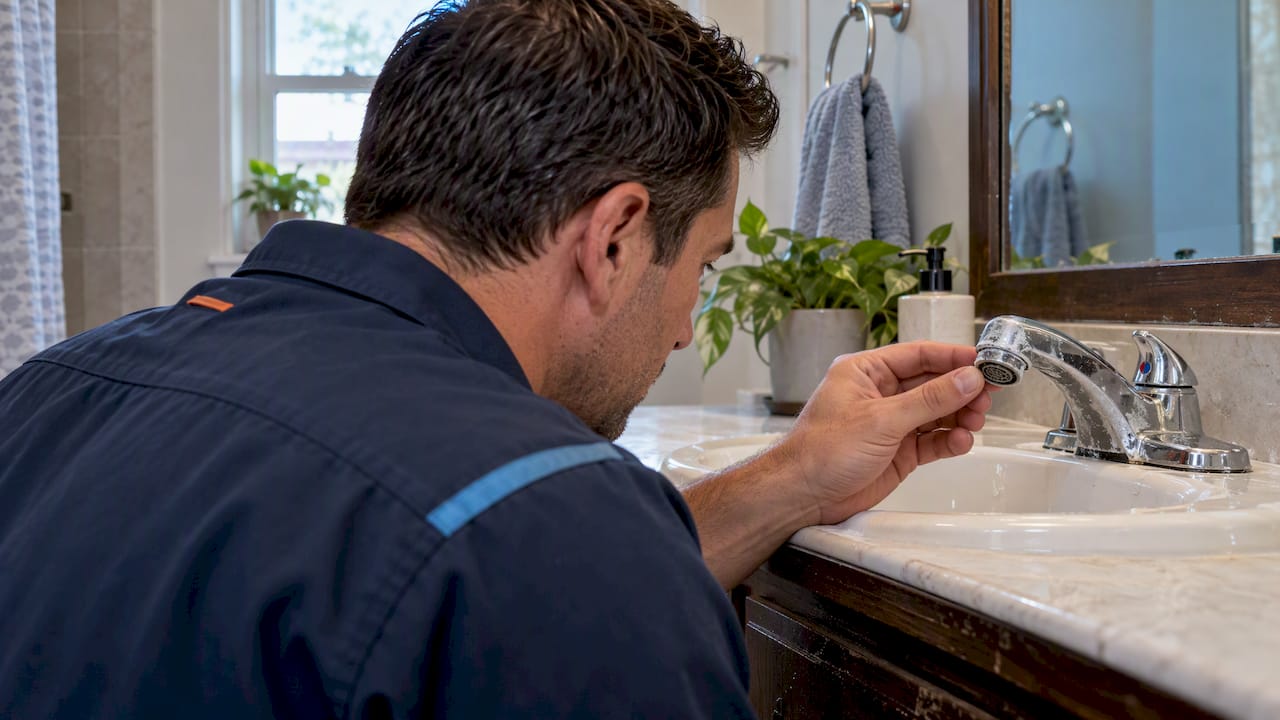
If your faucets wear a white crust, your glassware comes out spotted, and your water heater needs descaling more often than it should, hard water is almost certainly the cause. The quickest next step is a simple test strip or a look at your aerators and showerheads for mineral buildup. Treatment options exist, from whole-home softeners to targeted fixes, but each comes with trade-offs in cost, salt use, and maintenance.
TL;DR:
- Water hardness levels above 120 mg/L often justify treatment mainly to protect appliances rather than for health reasons, especially if levels are very high.
- Signs like mineral buildup on fixtures, cloudy glassware, and frequent appliance descaling indicate persistent hard water issues requiring diagnostic testing.
- Water heaters and pipes are most vulnerable to scale buildup, which can reduce efficiency and lifespan, and may necessitate professional descaling or pipe replacement.
- Testing water hardness with a simple test strip or lab analysis provides the necessary data to decide between targeted fixes and whole-home softening.
- Softening systems, particularly demand-initiated ion exchange units, are most cost-effective when used for very hard water or to prevent appliance damage, not necessarily for mild hardness or cosmetic concerns.
Table of Contents
- Common signs of hard water in the home
- What makes water “hard” and how hardness gets measured
- How hard water damages plumbing, fixtures, and appliances
- Does hard water affect your health, skin, or laundry?
- How to test your water for hardness
- Softeners, filters, and other ways to treat hard water
- What remediation costs and how long it takes to see results
- What a licensed plumber checks during a hard water diagnostic
- A plumber’s quick take on hard water myths
- Getting your hard water problem fixed: our services and process
- FAQ
- Sources
Common signs of hard water in the home
Hard water rarely announces itself with a single dramatic symptom. It shows up in small, repeated annoyances that add up over months.
The most visible clue is a white or chalky crust around faucet spouts, showerheads, and the rim of your kettle. That residue is mineral scale, left behind as calcium and magnesium in the water evaporate or react with soap. Glassware that comes out of the dishwasher with cloudy spots, even when it is clean, points to the same cause.
Tactile signs matter just as much. Soap and shampoo that refuse to lather well, skin that feels dry or tight after a shower, and laundry that comes out stiff or dingy are all common complaints in hard water households. Hair can feel coated or heavier than usual, especially for people who color or chemically treat it.
Appliances tend to tell the longer story. A water heater that needs descaling more frequently than the manufacturer recommends, a dishwasher or washing machine with a shortened lifespan, or heating elements that look discolored or crusted when serviced are all appliance-level signs worth tracking.
A few checks you can do yourself:
- Remove a faucet aerator and look for a gritty, white buildup inside the screen.
- Run a kettle test: boil water, let it cool, and check for a scaly film on the bottom.
- Inspect your shower glass or tile after a week without cleaning for a dull, spotted film.
- Compare your water heater’s maintenance history: more than one descaling per year is a flag.
None of these checks replace an actual hardness test, but they’re a fast way to decide whether that test is worth doing this weekend rather than next month.
What makes water “hard” and how hardness gets measured
Hard water is water carrying higher concentrations of dissolved calcium and magnesium, picked up as groundwater moves through limestone, chalk, or gypsum deposits. The more rock the water passes through, the more minerals it carries. Surface water from lakes and reservoirs tends to run softer, while well water in limestone regions often runs harder.
There are two practical categories. Temporary hardness comes from calcium bicarbonate and can be reduced by boiling, which is why kettles scale up so visibly. Permanent hardness comes from calcium and magnesium sulfates or chlorides and does not break down with heat, which is why pipes and water heaters accumulate scale over time regardless of temperature.
Hardness is measured in milligrams per liter of calcium carbonate equivalent, or in grains per gallon. The USGS Water Science School classifies water as soft at 0 to 60 mg/L, moderately hard at 61 to 120 mg/L, hard at 121 to 180 mg/L, and very hard above 180 mg/L. Softening is typically worth considering once levels reach the higher end of the hard water classification, with a stronger case for treatment at very hard water levels and above.

Knowing your number matters more than knowing the label. A reading of 125 mg/L and a reading of 300 mg/L both qualify as “hard,” but they call for different responses, from a single point-of-use filter to a full softening system.
How hard water damages plumbing, fixtures, and appliances
Scale forms wherever hard water sits, heats, or slows down, which makes pipes, water heaters, and aerators the three most predictable trouble spots in a house. As calcium and magnesium drop out of solution, they build a hard, chalky layer on the inside of pipe walls. Over years, that layer narrows the pipe’s effective diameter, which shows up as gradually reduced water flow at multiple fixtures rather than a single dramatic failure.
Water heaters take the worst of it because heat accelerates mineral deposition. Scale settles at the bottom of a tank and coats heating elements, forcing the unit to work harder to reach the same temperature. The USGS and EPA both note that this buildup reduces heat transfer efficiency and increases maintenance and replacement needs for water-using appliances. In practice, that means higher energy bills and a shorter working life for a heater that might otherwise run for over a decade.

Aerators and showerheads are the easiest place to see the problem because they’re small, low-flow passages where mineral particles concentrate fast, making expert fountain & aeration system installation a useful solution to manage buildup. A showerhead that sprays unevenly or a faucet aerator clogged within a few months of cleaning is a reliable early warning.
Some signs point past routine maintenance and toward a professional inspection. A house-wide pressure drop, rather than a single slow fixture, often means scale has narrowed supply lines broadly enough to need descaling or, in older galvanized systems, replacement. Repeated water heater failures within a short span, despite regular flushing, suggest the scale has outpaced maintenance and a tank replacement or whole-home treatment is the more cost-effective path. Our guide to water heater maintenance walks through the flushing schedule that keeps scale from reaching that point.
Does hard water affect your health, skin, or laundry?
For most people, hard water is a nuisance rather than a hazard. A peer-reviewed review summarized in PMC found no clear acute health risk from hard water for the general population. Some epidemiological associations, including possible links to cardiovascular outcomes, appear in the research, but the review describes these as mixed and not established as causal. In other words, hard water can add calcium and magnesium to your diet, but it isn’t something most households need to treat for medical reasons.
Skin and hair are a different story, cosmetically speaking. Mineral residue can interfere with soap’s ability to rinse clean, leaving a film that dries out skin and leaves hair feeling coated or dull. Laundry washed in hard water often comes out stiffer, grayer over time, and harder on fabric fibers because detergent can’t fully dissolve and rinse away.
Practical mitigation is straightforward: a vinegar rinse for hair, a double rinse cycle for laundry, or a shift to detergents formulated for hard water can all reduce the visible effects without any plumbing changes.
One caveat applies to households considering a salt-based softener. Softened water trades calcium and magnesium for sodium, and the EPA’s sodium advisory notes that sodium-sensitive individuals should talk to a doctor before relying on softened water as their main drinking source.
How to test your water for hardness
Testing is cheap, fast, and the only way to move from “probably hard” to an actual number you can act on. Three options cover nearly every situation:
- Use a test strip from a hardware store or plumbing supplier: dip it in a water sample, compare the color change to the chart, and read the result in grains per gallon or mg/L.
- Send a sample to a lab or your utility when you want precision or plan to invest in a softener. Labs typically use EPA Method 130.1, a documented laboratory procedure for measuring total hardness as calcium carbonate, which is more accurate than a color-change strip.
- Ask a plumber to run diagnostics when you also suspect flow or pressure issues, since a professional visit can combine a hardness reading with a check of pipe condition and water heater performance.
Test more than one tap if your home has a mix of old and new plumbing: a kitchen tap on newer copper can read differently than a bathroom tap on older galvanized line. Our guide to water quality testing walks through sample collection and how to read a lab report once results come back, and Penn State Extension’s guide is a solid independent resource for interpreting the full panel if your lab report includes more than hardness.
Softeners, filters, and other ways to treat hard water
Once you know your hardness number, the next decision is how to treat it, and the right answer depends on how hard your water is and what you’re trying to protect.
Ion-exchange softeners remain the most common whole-home fix. They swap calcium and magnesium ions for sodium or potassium ions as water passes through a resin bed, then flush the collected minerals out during a regeneration cycle. The EPA’s technical guidance on water softeners recommends demand-initiated regeneration systems, which regenerate only when the resin is actually depleted, over older timer-based units that regenerate on a fixed schedule regardless of use. That distinction shows up directly in your water and salt bills, since demand systems waste less of both. Systems rated under NSF/ANSI 44 are built to a recognized efficiency standard worth checking before you buy.
A few other paths are worth knowing:
- Potassium chloride can replace sodium chloride in a softener for households managing sodium intake, though it costs more per bag.
- Point-of-use reverse osmosis treats only your drinking water tap, leaving the rest of the house untreated and avoiding a whole-home sodium increase.
- Salt-free conditioners alter mineral structure to reduce scale buildup without removing hardness, a reasonable middle ground for moderately hard water.
- Partial-home softening, treating only the water heater line, protects your most scale-vulnerable appliance while cutting salt discharge compared with treating every tap in the house.
Softening isn’t automatically necessary. Water testing at or below the moderately hard range often doesn’t justify the cost and maintenance of a full system, especially if your main complaint is cosmetic rather than appliance damage. Environmental considerations matter too: softener brine discharge adds sodium to wastewater, which is part of why the EPA’s guidance leans toward right-sizing systems rather than over-softening.
Pro Tip: If your main concern is protecting the water heater rather than every faucet in the house, ask about softening just the hot water line before committing to a whole-home system.
What remediation costs and how long it takes to see results
Costs vary with hardness level, house size, and system type, and our breakdown of water softener installation costs covers the line items that typically drive the final price, from unit size to plumbing modifications.
Maintenance is ongoing rather than one-time. Salt-based softeners need regular salt refills, usually monthly, and periodic resin bed checks. Water heaters benefit from an annual flush regardless of whether you’ve installed a softener, since some scale accumulates even with treated water.
Most households notice a difference in soap lather and spotting within days of a softener coming online, since that reflects the current water rather than years of accumulated scale. Appliance-level improvement takes longer: a water heater with years of built-up scale may need a professional descaling or flush before efficiency recovers, and in advanced cases the scale has already shortened the unit’s remaining service life enough that replacement, not repair, is the more practical fix. Severely scaled galvanized pipe sometimes reaches a similar point, where repiping makes more sense than continuing to chase narrowing flow.
What a licensed plumber checks during a hard water diagnostic
A thorough diagnostic goes beyond a single test strip. When we’re called out for suspected hard water problems, the visit typically includes:
- A hardness test alongside a visual inspection of aerators, showerheads, and visible fixtures for scale buildup.
- A water heater inspection checking tank sediment, element condition, and flush history.
- Flow testing at multiple fixtures to rule out a house-wide pressure issue versus a single clogged point.
- Targeted descaling or hydro-jetting for lines where scale has measurably reduced flow.
Any softener installation also needs to meet local plumbing code, including proper drain line connection for the brine discharge and backflow prevention where required. We handle that permitting and code compliance as part of the installation, and we offer a free quote for homeowners who want a clear diagnostic before deciding on a fix.
A plumber’s quick take on hard water myths
Homeowners often assume a softener will fix everything from low pressure to a noisy water heater. It won’t. Softeners address mineral content, not unrelated pipe damage, worn valves, or aging fixtures. Do the simple checks yourself first. Consider partial softening if someone in your home watches sodium intake. When symptoms don’t match a simple hardness explanation, a licensed diagnostic saves more money than guessing.
— Serghei
Getting your hard water problem fixed: our services and process
We address hard water problems starting with a diagnostic rather than a sales pitch. If your water heater is showing scale damage, our water heater services cover flushing, descaling, and repair before a full replacement becomes necessary. When scale has narrowed pipes enough to cause clogs or slow drains, our drain cleaning and hydro-jetting services clear the line without guesswork about what’s actually causing the blockage.

For households considering a softener or partial-home treatment, we walk through the trade-offs in plain terms before any work starts, and installations meet plumbing code requirements and include necessary permits and compliance. The company is locally based and offers free quotes for homeowners seeking clarity before committing to repairs or installations. If you’ve spotted scale, a struggling water heater, or a pressure drop, request a free quote and we’ll tell you exactly what we find.
FAQ
Is hard water bad for your health?
For most people, no. A peer-reviewed review in PMC found no clear acute health risk from hard water, though some epidemiological associations appear in the research without being proven causal. People on sodium-restricted diets should check with a doctor before relying on softened water as a primary drinking source, since softening adds sodium.
What level of water hardness requires a softener?
The USGS classification labels water hard at 121 to 180 mg/L and very hard above 180 mg/L, with softening typically worth considering around 120 mg/L, or about 7 grains per gallon. Below that range, many households manage with targeted fixes rather than a full system.
Can hard water actually damage pipes and water heaters?
Yes. Mineral scale builds up inside pipes and water heater tanks, narrowing flow and reducing heating efficiency over time, which both the USGS and EPA note increases maintenance and shortens appliance life. Left untreated, advanced scale can lead to repeated water heater failures or a house-wide pressure drop.
How do I test my water for hardness?
A test strip gives a fast, approximate reading in grains per gallon or mg/L, while a lab test using EPA Method 130.1 gives a more precise result. Testing more than one tap in your home helps catch differences caused by pipe age or material.
Is a water softener worth the cost?
It depends on your hardness level and what’s at risk: protecting a water heater from scale damage often justifies the cost, while mild hardness with only cosmetic effects may not. Partial-home softening, treating just the hot water line, is a middle option that cuts salt use while still protecting your most vulnerable appliance.
Sources
- Hardness of water — USGS Water Science School
- Potential health impacts of hard water — PMC review article
- Drinking water advisory — sodium (EPA)
Leave a Reply