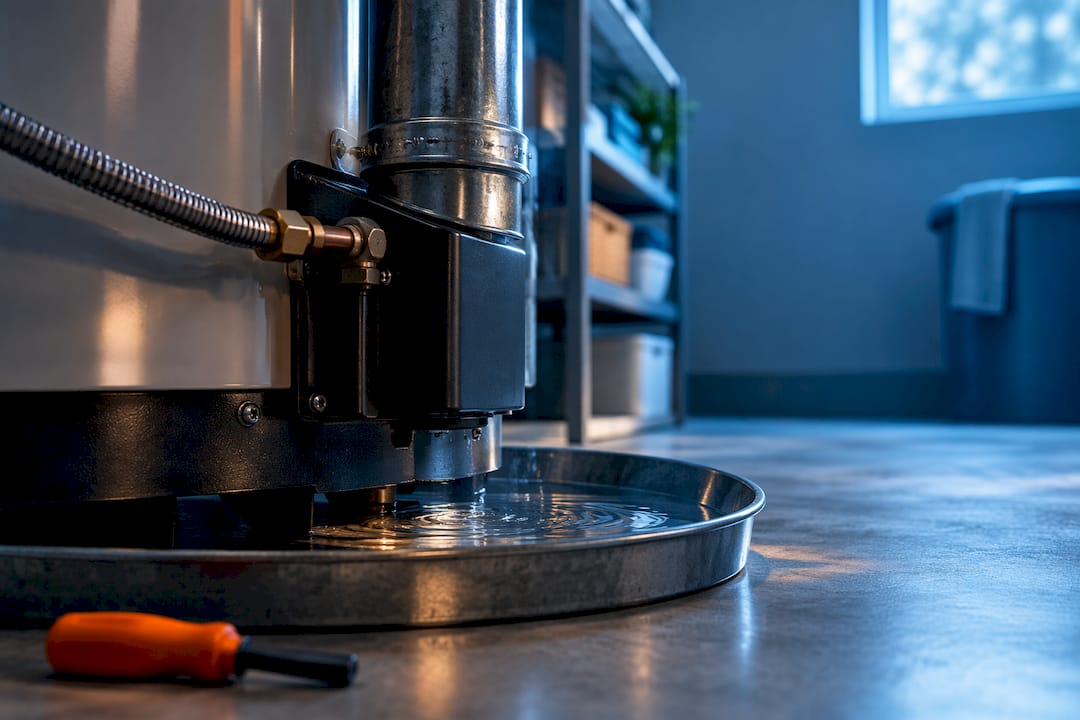
A quiet hum or an occasional click during heating is normal operation. Persistent hissing, screeching, or loud rumbling is not, and it can signal a pressure problem, a failing valve, or heavy sediment buildup. If you hear hissing, sizzling, or a sharp screech, shut off the power or gas and the water supply, then call a licensed plumber. If the sound is brief and tied to a normal heating cycle, move on to the diagnostic checklist below before you touch anything.
TL;DR:
- Sediment buildup causes the majority of popping and rumbling noises, which can be prevented by annual flushing and using a water softener in hard water areas.
- Persistent hissing or screeching often signals pressure irregularities or failing valves, requiring immediate shutoff and professional inspection.
- Loose pipe straps and hardware are common causes of humming or rattling sounds, often fixable with simple tightening rather than professional repair.
- Sounds tied to flow changes, such as whistling or banging, typically indicate water flow restrictions or rapid pressure changes needing targeted fixes.
- Regularly checking for leaks, rust, and the tank’s age, along with prompt professional diagnosis, prevents minor issues from escalating into emergencies.
Table of Contents
- Common Water Heater Sounds and What Causes Them
- How to Find Where the Noise Is Coming From
- Safe DIY Fixes and When to Stop
- Preventing Water Heater Noise Before It Starts
- What a Licensed Plumber Actually Checks
- Most Noise Complaints Are Overthought, and a Few Are Underreacted To
- Get a Licensed Plumber to Diagnose Your Water Heater
- Sources
- FAQ
Common Water Heater Sounds and What Causes Them
Every noise your tank makes tells you something specific, and matching the sound to the cause is the fastest way to know whether you need a wrench or a phone call. Manufacturers like Rheem note that light humming or clicking during heating cycles is standard operation and nothing to worry about on its own. The trouble starts when a sound changes character, gets louder over weeks, or shows up alongside a leak.
Here’s what the most common water heater sounds usually mean:
- Popping or rumbling: Mineral sediment and scale have collected at the bottom of the tank, trapping small pockets of steam that burst through the buildup as the water heats. This is one of the most common water heater problems, and it’s largely preventable.
- Hissing or sizzling: Water dripping onto the burner, a leaking tank seam, or a failing temperature and pressure (T&P) relief valve. Persistent hissing can point to a pressure irregularity or a valve on its way out, which is a safety issue, not a cosmetic one.
- Whistling or screeching: Usually restricted water flow somewhere in the line or a valve that’s failing to seat properly.
- Humming or vibration: Loose access panels, a vibrating heating element, or worn motor bearings on a tankless unit. Loose pipe straps and mounting hardware are frequent, easy-to-fix culprits behind humming and rattling noises.
- Ticking: Thermal expansion as metal parts heat and cool, or small pressure shifts inside the pipe. Usually harmless, but worth noting if it becomes constant.
- Banging or knocking: Water hammer, caused by a valve closing quickly and sending a pressure wave through the pipes, or heavy sediment restricting normal flow.
Knowing the category narrows your next move considerably. A hum needs a screwdriver. A hiss needs a shutoff valve and a phone.
How to Find Where the Noise Is Coming From
Before you assume the tank itself is failing, run through a short listening and inspection routine. Most noisy water heater complaints trace back to one of two places: inside the tank or somewhere along the connected piping, and telling them apart changes your whole next step.
- Run the listen test. Turn on a hot water tap and listen. Is the sound louder with water flowing, or does it happen when the unit is idle and just heating? Flow-triggered noise usually points to pipes or valves; idle noise usually points to the tank or heating element.
- Walk the sound. Stand near the tank, then trace toward the supply line and the hot water pipes running through walls or the ceiling. Sound travels through copper and steel, so what seems like a tank problem sometimes turns out to be a loose strap two rooms away.
- Look before you touch. Check for drips at fittings, rust streaks down the tank, standing water at the base, or a T&P valve that’s open or dripping. Check that the exhaust vent isn’t blocked on gas units.
- Check the settings and history. Note the thermostat setting, how long ago the tank was last flushed, and the unit’s age. A 10 year old tank behaves differently than a two year old one.
- Inspect the pipe supports. Loose straps or pipes resting against framing will rattle every time water moves through them.
- Know your shutoffs. Locate the main water shutoff and the gas or electrical disconnect now, before you need them in an emergency.
Pro Tip: Record a 10 second video of the sound on your phone before calling anyone. A plumber diagnosing over the phone can often narrow the cause just from hearing it, which saves you a diagnostic visit fee.
Safe DIY Fixes and When to Stop
Some noisy water heater fixes are well within reach for a homeowner with basic tools. Others cross into gas lines, electrical circuits, or pressurized components that belong to a licensed technician.
- Stop immediately for hissing, screeching, or any visible leak. Shut off the power or gas supply, close the cold water inlet valve, and call a plumber. This isn’t a wait-and-see situation.
- Tighten loose hardware. Secure loose access panels and pipe straps; this alone resolves a surprising share of humming and rattling complaints.
- Flush the tank. Turn off the power or gas, connect a garden hose to the drain valve near the tank’s base, run it to a floor drain or outside, and drain the tank fully. Refill and drain again until the water runs clear of sediment.
- Know your limits on the anode rod and heating element. A worn anode rod or a scaled element sometimes needs replacing, but accessing them safely, especially on an electric unit with live wiring, is a job for a professional in most households.
- Never attempt gas line or electrical panel work yourself. Combustion and wiring repairs require licensing in nearly every jurisdiction, and mistakes here carry real safety consequences.
Annual flushing directly addresses the most common cause of popping and rumbling, which is mineral sediment building up at the bottom of the tank. Skip it for a few years and that sediment hardens into scale that a simple flush may no longer clear.
Preventing Water Heater Noise Before It Starts
A little routine maintenance keeps most of these sounds from ever developing. The core habits are simple and pay off in both quiet operation and a longer service life.
- Flush the tank annually. Annual flushing reduces sediment and improves efficiency, and it’s the single biggest lever you have against popping and rumbling.
- Check the anode rod every two to three years. How fast it wears depends on your water chemistry, so homes with aggressive water may need more frequent checks.
- Consider a water softener if you have hard water. The EPA recommends installing a softener upstream of the water heater to cut down on scale before it ever reaches the tank, following local plumbing codes for placement.
- Install a water hammer arrestor near noisy fixtures, or have a plumber check your pressure-reducing valve if banging shows up whenever a valve closes. Our guide on fixing water hammer at home covers the mechanics in more detail.
- Watch the calendar. Tank water heaters typically run 8 to 12 years before internal wear outpaces what maintenance can fix. Persistent noise on a unit near that age is often a sign the tank, not just the sediment, is the real issue. Our homeowner guide to replacement signs walks through what to watch for.
What a Licensed Plumber Actually Checks
A professional diagnosis goes well beyond listening for a minute and guessing. Plumbers typically inspect the burner and venting on gas units, the heating elements on electric models, the anode rod’s condition, the dip tube, and the extent of internal scale before recommending a fix. Descaling or replacing a failing component sometimes clears a problem that DIY flushing alone couldn’t touch, particularly once scale has hardened.
Before your service visit, gather a few details that speed up the diagnosis considerably: the type of sound, your unit’s model and age, the date of the last service, and, if possible, a short video or audio clip. Having this ready reduces the guesswork a plumber needs to do on site.
Professional intervention typically falls into one of three categories:
- Aggressive descaling that clears sediment a standard flush can’t reach
- Component replacement, including the anode rod, heating element, or T&P valve
- A full replacement assessment when the tank’s age and internal wear point past the point of repair
A licensed and insured plumber also carries the code knowledge to handle gas and electrical connections safely, something no manufacturer manual can substitute for.
Most Noise Complaints Are Overthought, and a Few Are Underreacted To
The conventional advice on noisy water heaters tends to swing too hard in one of two directions. Either every sound gets treated as an emergency, which sends homeowners into a panic over a perfectly normal hum, or every sound gets waved off as “just the tank settling,” which is how a failing T&P valve goes unnoticed for months. The research here draws a clearer line than most articles bother to: sound type is the diagnostic, not sound volume.

A loud pop from sediment is annoying but rarely urgent. A quiet hiss from a compromised valve is the opposite: easy to ignore, genuinely dangerous. That mismatch between how alarming a noise sounds and how serious it actually is explains why so many water heater problems go unaddressed until a leak forces the issue.
If you take one thing from this guide, let it be this: flush your tank before you troubleshoot anything else. Sediment causes the majority of noise complaints, and it’s the one cause entirely within your control. Everything past that, valves, elements, aging tanks, is where a professional’s eyes matter more than another YouTube video.
— Serghei
Get a Licensed Plumber to Diagnose Your Water Heater
A licensed, insured plumber diagnoses the actual cause of water heater noise on site instead of you cycling through fixes that may or may not apply to your unit. Every visit includes an inspection covering critical components, followed by a written estimate before any work begins.

Whether the fix is a routine flush, a T&P valve replacement, or a full unit assessment because your tank has aged past reliable repair, our water heater services team handles it under one visit with straightforward pricing. If the noise has turned into a leak or persistent hissing, treat it as a plumbing emergency and contact a professional promptly. Request a free quote through the water heater services page to get a specific answer for your unit rather than a generic troubleshooting list.
Sources
- The Ultimate Guide to Water Heater Noises: What’s Normal (and What Isn’t) – Rheem Manufacturing Company
- Water heater noise diagnosis – InspectApedia
- EPA guide: Water softener and home water treatment guidance
- What to Do When Your Water Heater Is Making Noises – The Spruce
FAQ
Should I Be Concerned if My Water Heater Is Making Noise?
It depends on the sound. Light humming or clicking during normal heating cycles is expected, but persistent hissing, screeching, or loud rumbling warrants attention since it can point to sediment buildup, a failing valve, or a leak.
What Are the First Signs of a Water Heater Going Bad?
Rising noise levels, especially popping or rumbling that gets louder over weeks, are often the earliest signs, along with rusty water, a puddle at the base, or the unit approaching 8 to 12 years old. Any of these paired with a persistent new sound is worth a professional look through our water heater services.
Are You Supposed to Hear Your Hot Water Heater?
Yes, some sound is normal. Quiet clicking or humming during heating cycles is standard operation on nearly every unit, but the tank should never be loud enough to notice from another room.
How Do I Stop My Water Heater From Making Noise?
For popping and rumbling, flushing the tank to clear sediment resolves most cases. For humming, tightening loose panels and pipe straps usually does the trick, while hissing or screeching needs a professional inspection of the valve and pressure system rather than a DIY fix.
Leave a Reply