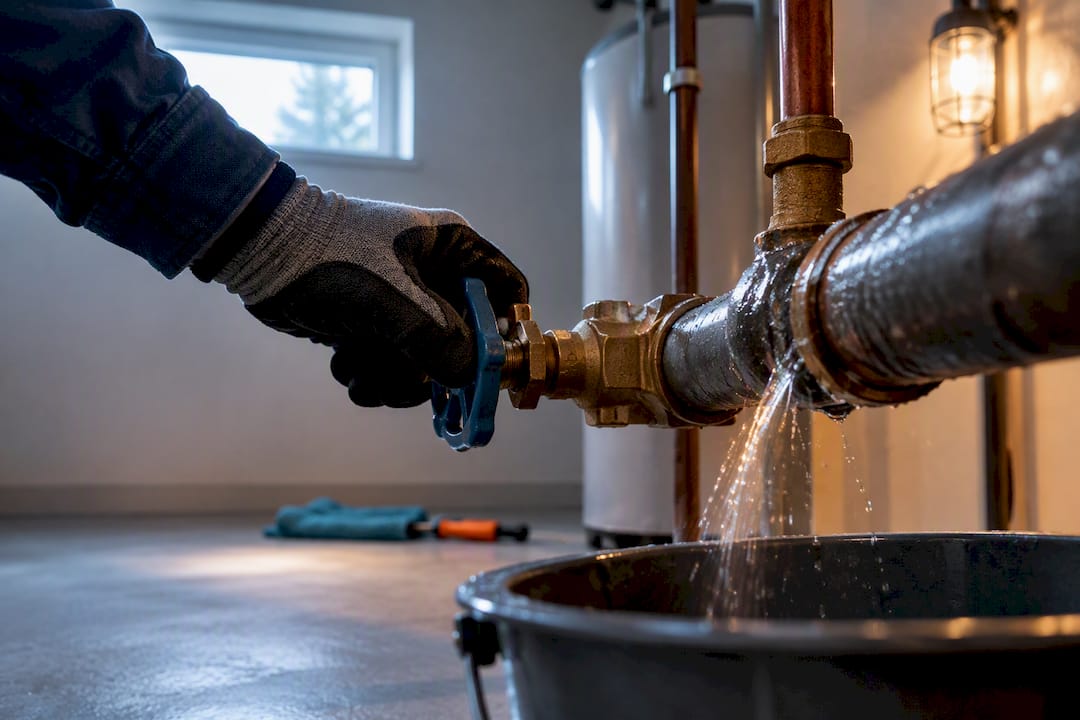
Shut off the main water supply immediately. Stopping the flow is the single action that prevents most of the damage a burst pipe causes. Next, check for water near outlets or panels and cut power to that area if it’s safe to reach the breaker. Then call a licensed plumber and a water damage restoration company, and start photographing the scene before you touch anything.
TL;DR:
- Closing the main water supply promptly can prevent the flow of 2 to 8 gallons per minute, limiting water damage significantly.
- If water is near electrical outlets or panels, shut off power from a dry location before attempting any further action to avoid electrocution risk.
- Calling a licensed plumber first is best if the leak is contained; otherwise, emergency restoration services should be prioritized if the water has spread widely.
- Photographing the scene, including the leak and affected areas, and documenting all steps can expedite insurance claims and repairs.
- Insulating pipes, labeling shutoff valves, and installing leak-detection devices can help prevent future burst pipe incidents.
Table of Contents
- Burst Pipe What to Do: Step-By-Step in the First 5 to 30 Minutes
- What Safety Risks Come With a Burst Pipe?
- How Do You Stop Water From Spreading Further?
- Who Do You Call First: Plumber, Restoration Crew, or Insurer?
- What Documentation Do Insurance Companies Actually Need?
- How Do You Clean Up and Prevent Mold in the First 48 Hours?
- How Can You Prevent the Next Pipe From Bursting?
- How Do You Talk to Your Insurance Company After a Burst Pipe?
- Why the Order of Operations Matters More Than the Tools
- How Psvplumbinginc Handles Your Burst Pipe Emergency
- Sources
- FAQ
Burst Pipe What to Do: Step-By-Step in the First 5 to 30 Minutes
Every minute a pipe stays open, more water finds its way into your subfloor, drywall, and insulation. A household line under normal pressure can push out roughly 2 to 8 gallons per minute, which means a five-minute delay can mean 40 gallons or more soaking into your home before anyone arrives. Here’s the order that actually limits that damage.
- Find the main shutoff valve. It’s usually near the water meter, in a basement, crawlspace, or utility closet, or outside near the street-facing wall. Turn it clockwise until it stops.
- If the valve won’t budge or you can’t locate it, head to the meter box, often called the curb box, near the curb or sidewalk. This is your fallback when the interior valve is corroded or seized shut.
- Shut off the water heater. Flip the breaker if it’s electric, or turn the gas control knob to “off” if it’s gas. A running heater with no water flowing can overheat fast.
- Open the highest and lowest faucets in the house. This drains remaining water out of the lines instead of letting it sit and pressurize the break.
- Apply a temporary containment fix if you have the materials. A pipe repair clamp or self-fusing silicone tape can slow a leak for a few hours, but it’s a stopgap, not a repair.
Pro Tip: Keep a small emergency kit near your water heater: a pipe wrench, self-fusing tape, a flashlight, and a laminated card showing where your main shutoff and curb box are located. When you’re standing in two inches of water at 2 a.m., you don’t want to be searching for a flashlight app.
Waiting for the pipe to be repiped after an emergency shutoff is common. If yours is corroded or the break is the second one this year, Psvplumbinginc’s repiping services address the root cause instead of the symptom.
What Safety Risks Come With a Burst Pipe?
Water and electricity in the same room is the most dangerous combination in a home flood, and it’s the one people underestimate most. Here’s what to check before you do anything else in an affected area:
- Never touch an electrical panel, outlet, or switch with wet hands or while standing in water.
- If water is actively pooling near outlets, appliances, or a breaker panel, shut off the main breaker from a dry location, not the wet room itself.
- Watch ceilings for bulging or sagging. A ceiling holding pooled water can collapse without warning.
- If you see a bulge, puncture it carefully at its lowest point with a screwdriver and catch the water in a bucket. This controlled release is safer than an uncontrolled collapse.
- Leave the house and call emergency services or your utility company if you smell gas, see sparking, or notice structural sagging beyond the ceiling.
Roughly 24 to 48 hours is how long standing water takes to start growing mold on drywall and framing, according to the EPA. That clock starts the moment water hits the material, not when you notice it, which is exactly why safety and speed have to work together instead of one delaying the other.
How Do You Stop Water From Spreading Further?
Once the main is off and electrical hazards are handled, your job shifts to limiting how far the water travels and how much it soaks into materials that are expensive to dry out.
- Drain the lines completely. With the main shut off, open both the highest faucet in the house and the lowest one, plus an outdoor spigot if you have one. Gravity pulls the remaining water out instead of leaving it trapped in the pipe.
- Move valuables and electronics off the floor first. Rugs, boxes, cords, and furniture legs sitting in water get ruined fast, and lifting them takes thirty seconds.
- Extract standing water with a wet-dry vacuum, not a household vacuum. A regular vacuum will short out or shock you. Towels and buckets work fine for smaller amounts.
- For ceiling leaks, position a bucket under the lowest drip point and change out saturated towels before they stop absorbing anything useful.
- Cover furniture you can’t move with plastic sheeting to buy time until a restoration crew arrives.
Skip the shortcuts here. Bleach sprays and consumer “water damage” products do nothing for water trapped inside a wall cavity, and running a household fan on a soaked carpet mostly just spreads humidity around the room.
Who Do You Call First: Plumber, Restoration Crew, or Insurer?
The call order depends on where you are in the emergency, and getting it backward wastes time you don’t have.
- If you already stopped the flow and water hasn’t spread far, call a licensed plumber first to schedule the repair, then call restoration for cleanup and drying.
- If water has already soaked carpet, drywall, or spread to another room, call a restoration company first. Restoration crews handle extraction and structural drying and often dispatch around the clock, while a plumber repairs the actual pipe. Most burst-pipe situations end up needing both.
- If you can’t get the water to stop no matter what you try, call an emergency plumber immediately and skip everything else until the flow is under control.
- When you call, give the dispatcher the exact location of the break, whether the water is currently stopped, the type of pipe if you can tell (copper, PVC, PEX), and any hazards like exposed wiring or a sagging ceiling.
That last detail matters more than people expect. A crew that knows to bring a wet vacuum and a ceiling brace before they arrive saves real time versus one that shows up and has to run back to the truck.
What Documentation Do Insurance Companies Actually Need?
Insurance adjusters approve claims faster when the evidence is clear and timestamped, and they push back when it isn’t. Before you clean up a single drop of water, work through this list:
- Photograph the active leak itself, not just the aftermath, so the adjuster sees the source.
- Include a ruler or a common object like a shoe next to standing water for scale. Adjusters trust depth measurements far more when there’s something to compare against.
- Photograph every affected room, wall, and piece of furniture before you move or discard anything.
- Keep the failed section of pipe if your plumber removes it. It’s physical proof of what broke and how.
- Save every receipt from the emergency kit, the plumber’s visit, and any rented equipment.
Pro Tip: Shoot a short video walkthrough in addition to photos. Video captures depth, movement, and scale in a way a single photo often misses, and it takes the same thirty seconds.
Notify your insurer the same day if possible. Standard homeowners policies typically cover sudden pipe bursts, but coverage can get disputed if the damage traces back to a leak you ignored for months.
How Do You Clean Up and Prevent Mold in the First 48 Hours?
The EPA’s 24-to-48-hour window for mold growth on wet materials is the real deadline here, not a suggestion. Everything you do in this window either shortens or lengthens your eventual repair bill.
- Run wet-dry vacuums and mops to pull out standing water as fast as possible.
- Set up dehumidifiers in the affected rooms once bulk water is gone; household fans move air but don’t pull moisture out of saturated drywall or subfloor.
- Photograph and log every mitigation step you take, including when you started extraction and when equipment ran.
- Stop and wait for a restoration crew once you’re dealing with soaked drywall, insulation, or subfloor. Cutting into wet walls without knowing what’s behind them risks hitting wiring or spreading contamination.
- If carpet padding stayed wet more than a day, plan on replacing it. Padding rarely dries fully in place.
Homeowners dealing with lingering mold from an earlier incident can find more detail in Psvplumbinginc’s guide to preventing bathroom mold.
How Can You Prevent the Next Pipe From Bursting?
Most bursts trace back to freezing, corrosion, or pressure spikes, and all three are things you can get ahead of before winter or before the next inspection.
- Insulate exposed pipes in crawlspaces, garages, and exterior walls, and keep heat running even when you’re traveling.
- Label your main shutoff and curb box locations clearly so anyone in the house can act during an emergency.
- Look into a leak-detection shutoff device that senses a sudden flow spike and closes the main automatically.
- Schedule a post-incident inspection to check nearby sections of pipe for corrosion or thinning that could fail next.
- If your home still has galvanized steel or old copper showing green corrosion, ask about repiping before it fails on its own schedule.
A deeper walkthrough of seasonal prevention lives in Psvplumbinginc’s guide on proven ways to prevent pipe bursts.
How Do You Talk to Your Insurance Company After a Burst Pipe?
Adjusters process claims faster when you give them organized information instead of a panicked phone call. Start by reporting the incident the same day it happens, even if you’re still mid-cleanup. Most carriers have a 24-hour claims line specifically because water damage claims are time-sensitive.
When you speak with the adjuster, describe the burst as a sudden, accidental event rather than a gradual problem. That distinction affects coverage directly, since standard homeowners policies generally cover sudden pipe failures but scrutinize damage tied to leaks that went unaddressed for weeks or months. If your policy has an emergency mitigation clause, ask about it before you hire a restoration crew. Many policies require you to take reasonable steps to prevent further damage, and they may reimburse for towels, a rented dehumidifier, or a service call that happened before the adjuster ever saw the property.

Keep every communication in writing when you can, follow up phone calls with a short email summary, and ask for a claim number on your first contact. If your insurer disputes the cause or the scope of damage, a public adjuster or a documentation partner can help you present the case clearly. Services like Top Florida Roofing’s claim filing assistance work with homeowners on exactly this kind of advocacy when a claim gets complicated. Don’t sign a settlement offer until you’ve compared it against your actual repair estimates from your plumber and restoration crew.
Why the Order of Operations Matters More Than the Tools
People fixate on having the right gadget, the right tape, the right vacuum. What actually separates a $2,000 repair from a $20,000 one is sequence: water off, electricity checked, documentation started, then extraction. This checklist is built around that sequence because homeowners who don’t know their valve location risk losing the mold-growth window. Know your valve location before you ever need it.
— Serghei
How Psvplumbinginc Handles Your Burst Pipe Emergency
Once the water’s off and the immediate danger has passed, you still need a licensed professional for the actual repair. Licensed and insured plumbers handle emergency repairs, diagnostic inspections, and can coordinate directly with restoration crews so you’re not managing two separate companies on your own during a crisis.

When you call, tell our dispatcher whether the water is currently stopped, the approximate location of the break, and any visible hazards like exposed wiring or a sagging ceiling. That information lets our crew arrive with the right equipment instead of making a second trip. If the break turns out to be the second or third failure in an aging system, ask about our repiping and remodel services for a permanent fix rather than another patch. If the incident involved your water heater shutting down or getting damaged, our water heater services team can inspect it the same visit. Get a free quote and same-day emergency dispatch by reaching out through our site today.
Sources
For primary guidance beyond this checklist, consult these sources directly:
- Mold cleanup in your home
- Burst Pipe: What to Do Immediately | AlertPlumber
- Burst Pipe Emergency Repair: What to Do Right Now | WA
- What to Do When a Pipe Bursts
FAQ
What Should I Do If a Pipe Bursts in My Home?
Shut off the main water supply immediately, then open the highest and lowest faucets to drain the remaining water from the lines. Check for water near electrical outlets or panels before touching anything, then call a licensed plumber and a restoration company depending on how far the water has spread.
Should I Turn Off the Water After a Pipe Bursts?
Yes, always. Closing the main shutoff is the first and most important step, since it stops the source of damage before you do anything else, including calling for help.
How Urgent Is a Burst Pipe?
Very urgent. A household pipe can release 2 to 8 gallons per minute, and mold can start forming on wet materials within 24 to 48 hours, so every hour without water extraction increases both flood volume and mold risk.
Can I Fix a Burst Pipe Myself?
You can apply a temporary fix like a repair clamp or self-fusing tape to slow a leak, but these are stopgaps and not permanent repairs. A licensed plumber needs to inspect and properly repair or replace the damaged section, and Psvplumbinginc’s repiping services handle permanent fixes when the pipe is corroded or repeatedly failing.
What If I Can’t Find My Main Shutoff Valve?
Check the water meter box near the curb or sidewalk, which serves as the fallback shutoff when the interior valve is seized or inaccessible. Label both locations once you find them so anyone in the household can act quickly next time.
Leave a Reply