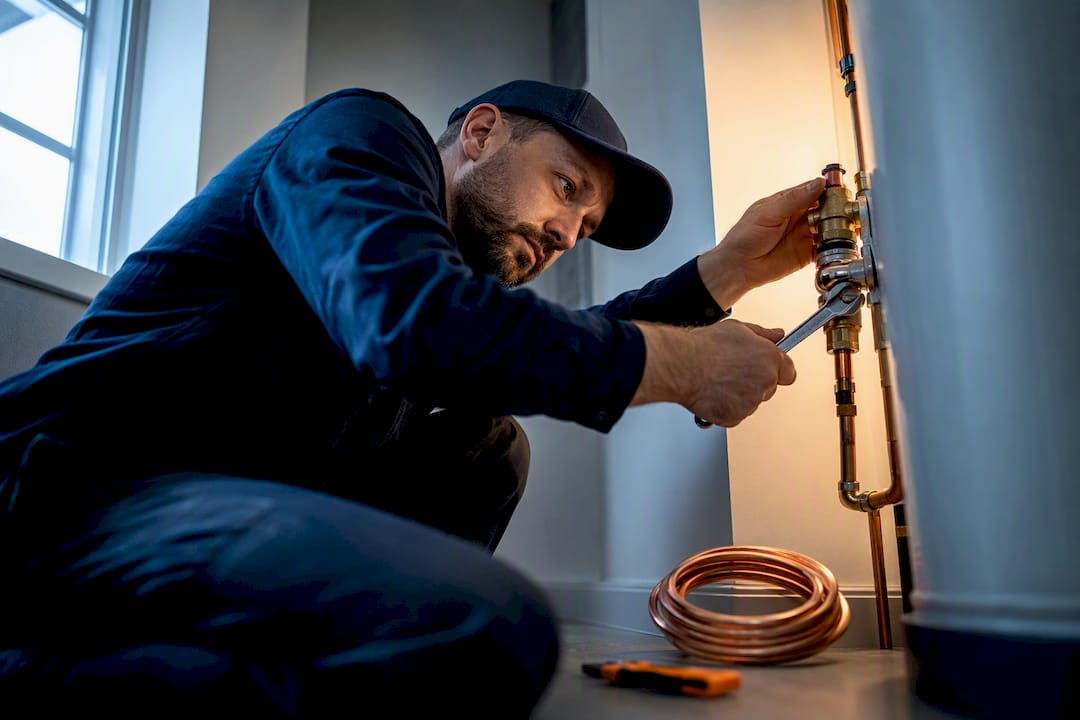
Expect to pay $1,100 to $2,200 installed for a standard 40 to 50 gallon gas tank, $3,500 to $6,500 for a tankless conversion, and $2,200 to $4,500 for a heat pump unit after incentives. Labor typically runs about half that total, and site conditions like venting or panel access can push any of these ranges higher. Get two to three written estimates, confirm who pulls the permit, and treat the low bid with caution if it skips permit costs.
TL;DR:
- The cost for a standard 40 to 50 gallon gas water heater ranges from $1,100 to $2,200, with site conditions and permit fees potentially increasing the price.
- Tankless conversions typically cost between $3,500 and $6,500, mainly due to additional plumbing, venting, and gas line upgrades required.
- Labor accounts for about half the total cost, with longer, more complex installations like relocations or conversions significantly increasing labor time and expenses.
- Electrical upgrades, venting replacements, or gas line upsizing can add $250 to $4,500 to the overall bill, depending on complexity and local site conditions.
- Utility rebates, especially for heat pump water heaters, may offset higher upfront costs, making them more economical over time despite higher initial prices.
Table of Contents
- How Much Does Water Heater Installation Cost Nationally?
- Tank Size, Tankless GPM, and Heat Pump Costs Explained
- What Drives Labor Costs and Common Add-Ons Higher?
- What Do Permits and Inspections Cost?
- How Long Does Installation Take?
- Should You Install a Water Heater Yourself?
- Can You Lower the Net Cost With Rebates or Credits?
- What’s the Bottom Line for Your Budget?
- PSV Plumbing Inc’s Approach to Pricing and Safety
- Ready to Get a Water Heater Estimate?
- Sources
How Much Does Water Heater Installation Cost Nationally?
An “installed” price should cover the unit, standard fittings, haul away of your old tank, and one to three hours of labor for a straightforward swap. It should not automatically include a gas line upsize, new venting, an electrical panel upgrade, or major pipe rerouting. Those get quoted separately once your plumber sees your setup.
Here is how the major installed price bands break down nationally, based on ContractorRanks editorial research and HomeWyse cost modeling:
| System type | Typical installed price range |
|---|---|
| Basic electric tank (30 to 50 gal) | $1,100 to $2,200 installed, higher with add-ons |
| 40 to 50 gal gas tank | $1,100 to $2,200 |
| Gas tankless conversion | $3,500 to $6,500 |
| Heat pump hybrid | $2,200 to $4,500 |
The gap between the gas tank number and the tankless conversion number is not really about the unit price. It is about everything the conversion drags along with it, which the next section breaks down.
Your ZIP code moves these numbers, too. A plumber working in a dense metro with higher permit fees and tighter parking is going to price differently than a rural crew with a straightforward driveway install, and HomeWyse data reflects that variability directly in its site-condition adjustments.
Tank Size, Tankless GPM, and Heat Pump Costs Explained
Bigger is not just a bigger number on the sticker. It changes the wiring, the venting, and sometimes the whole install approach.
- A 30 gallon electric tank is the cheapest unit to buy and install for a one or two person household with light hot water demand.
- A 40 to 50 gallon tank, gas or electric, is the standard swap most families need and the price band most estimates are built around.
- A 75 to 80 gallon tank often requires a dedicated circuit or larger gas line, which adds labor even before you count the unit’s higher retail price.
- Tankless units are sized by gallons per minute (GPM), and a whole-house model rated for 8 to 10 GPM usually demands upgraded gas supply and dedicated venting that a smaller point-of-use unit does not.
- Large electric tankless units can require a 200 amp service or a panel upgrade, since they pull far more current than a standard tank ever would.
- Heat pump hybrids cost more upfront but run on significantly less electricity than standard electric resistance tanks, and that lower operating cost is what makes the higher installed price pay back over time in many U.S. markets.
If you’re still deciding which category fits your household, a broader look at water heater types is worth reading before you request quotes, since the right size depends as much on your family’s usage pattern as on the price tag.
What Drives Labor Costs and Common Add-Ons Higher?

Labor makes up roughly half the total bill on most water heater jobs, according to NerdWallet. A simple tank swap runs one to three hours of billable labor. A tankless install, with its added venting and gas work, often eats up a full day. Conversions and relocations climb from there since moving a unit means rerouting water, gas, and venting lines simultaneously, which can roughly double the labor time compared with a like-for-like replacement.
The add-ons are where a “surprise” invoice usually comes from:
- Gas line upsizing: $400 to $1,500
- Vent replacement or power vent installation: $250 to $900
- Electrical panel upgrade: $1,500 to $4,500
- Expansion tank, drain pan, and seismic strapping: smaller line items, but code-required in many jurisdictions
Access matters just as much as the parts list. A unit tucked in a crawlspace or a tight attic takes longer to remove and reinstall than one sitting in an open garage, and that extra time shows up directly in the labor line of your estimate.
What Do Permits and Inspections Cost?
Most jurisdictions require a permit for water heater replacement, and fees generally run $50 to $400 depending on scope, per ContractorRanks. A straightforward tank swap sits at the low end. A conversion that adds gas or electrical work, or one that triggers both plumbing and mechanical inspections, lands at the high end.
Skipping the permit is not a shortcut worth taking. An unpermitted install can trigger an insurance denial if a leak causes water damage later, and it can complicate a home sale if a buyer’s inspector flags it.
- Confirm in writing whether you or the contractor pulls the permit.
- Ask for the permit fee as its own line item on the estimate, not folded into “labor.”
- Check your specific requirements through your local permit guide before work begins.
How Long Does Installation Take?
- Tank swap: Typically two to three hours from shutoff to first hot water, assuming no code upgrades are needed.
- Tankless install: Usually a full day, since venting and gas line adjustments take longer than a simple tank exchange.
- Conversions or relocations: Can stretch across multiple days if structural work, new venting runs, or electrical upgrades are involved.
Before the crew arrives, clear the access path and confirm water and gas shutoffs are reachable. After the install, ask for a leak and vent test, permit inspection scheduling, and warranty registration paperwork, all of which should appear on your final invoice alongside the itemized costs.
Should You Install a Water Heater Yourself?
A basic electric tank swap, in a location without code changes, is about the only scenario where a confident DIYer might reasonably handle it, and even then, local permit rules may still require professional sign off.
Everything involving gas lines, venting, relocations, or panel work belongs to a licensed plumber. DIY installation on those jobs risks a voided manufacturer warranty, a failed inspection, and real safety hazards from improper gas or vent connections, according to NerdWallet.
- Gas appliance connections and gas line modifications
- Any relocation or venting change
- Electrical panel upgrades for larger electric or tankless units
Pro Tip: Even for a “simple” swap, call your local permitting office first. Some cities require an inspection even on straight replacements, and skipping it can cost you more at resale than the install itself did.
Can You Lower the Net Cost With Rebates or Credits?
Heat pump water heaters commonly qualify for a federal tax credit under the Inflation Reduction Act, often around 30% of project cost subject to annual caps, which is the main reason their higher sticker price often makes financial sense. Many utilities layer state or local rebates on top of that.
- Bundle the water heater job with other plumbing work to spread the visit’s fixed costs across two projects.
- Request an itemized bid that separates unit, labor, permit, and add-ons.
- Ask whether haul away of the old unit is included before you compare bids.
- Keep your unit maintained afterward. Routine maintenance extends the life of whichever system you choose and delays the next big expense.
What’s the Bottom Line for Your Budget?
Before you sign anything: collect two to three itemized estimates, confirm permit and inspection responsibility, and verify the contractor’s license and insurance.
PSV Plumbing Inc’s Approach to Pricing and Safety
We build every water heater quote around transparent, itemized pricing, no hidden line items, no vague “labor” catchall. Our licensed technicians pull permits, schedule inspections, and register your new unit’s warranty as part of the job. If you want a real number for your home, request a written estimate before you commit to anything.

Ready to Get a Water Heater Estimate?
A licensed technician looking at your actual gas line, your actual panel, and your actual access before quoting a number gives you what a generic online calculator cannot. That matters more than any national average, since your installed price depends on the specifics this guide just walked through, not a spreadsheet.

Permit filing, itemized quotes, and post-install paperwork are managed so nothing gets left for you to chase down later. If your unit is already showing signs of failure, waiting for a full breakdown rarely helps your position. Request a written estimate from Psvplumbinginc through our pipe repair and installation services page and get a real number for your home this week.
Sources
- Water Heater Cost in 2026: DIY or Professional Installation?
- Water Heater Installation Cost (2026) — ContractorRanks
- Cost to Replace Hot Water Heater — HomeWyse
Leave a Reply