TL;DR:
- Gas leaks pose a serious risk of explosions, toxic exposure, and oxygen displacement in homes. Detecting leaks relies on sensitive alarms and careful inspection because smell alone is unreliable. Immediate evacuation and professional help are essential if a gas leak is suspected.
Gas leaks are dangerous because they create explosive atmospheres and release toxic compounds that threaten your home and health simultaneously. When methane concentration in air reaches between 4.6% and 15.8% by volume, any small spark can trigger a catastrophic explosion. Beyond the blast risk, gas leaks expose your family to benzene, carbon monoxide, and oxygen displacement in confined spaces. Understanding these threats is the first step toward protecting your home.
Why gas leaks are dangerous: explosion risk explained
Natural gas is primarily methane, a colorless and odorless fuel that becomes explosive within a specific concentration window. When methane reaches between 4.6% and 15.8% by volume in air, the mixture becomes explosive. A single spark from a light switch, a phone, or a pilot light is enough to ignite it.

What makes this especially alarming is how quickly gas can accumulate in an enclosed space. A slow leak in a basement or utility room can build to dangerous concentrations in under an hour. Homeowners often have no idea the risk exists until it is too late.
Natural gas is odorless on its own. Utility companies add a chemical called mercaptan to give it that familiar rotten egg smell. But this detection method has real limits, which we cover in detail below.
- Sparks from light switches can ignite accumulated gas instantly.
- Pilot lights on stoves and water heaters are constant ignition sources near appliances most likely to leak.
- Static electricity from clothing or carpets is enough to trigger ignition in a saturated room.
- Outdoor leaks near HVAC intakes can pull gas indoors without any visible sign.
Pro Tip: If you smell gas, do not flip any light switches on or off. Even turning a switch to the OFF position creates a small spark inside the fixture.
What are the health effects of gas exposure?
Gas leak health risks fall into two categories: short-term symptoms from acute exposure and long-term damage from chronic low-level leaks. Both are serious, and both are underestimated by most homeowners.
Acute exposure symptoms appear quickly and can escalate fast. Headaches, dizziness, nausea, and difficulty breathing are the most common early signs. Prolonged exposure in a poorly ventilated space leads to loss of consciousness. Gas leaks displace oxygen in confined spaces, creating asphyxiation risk on top of the toxicity hazard.
Carbon monoxide is the deadliest compound linked to gas appliance failures. CO binds to hemoglobin about 200 times more effectively than oxygen, starving the brain and organs of the oxygen they need. Faulty or poorly maintained gas appliances cause at least 420 deaths annually in the US from CO poisoning alone. That number does not include non-fatal poisonings, which cause lasting neurological damage.
Chronic low-level leaks carry a different but equally serious threat. Nearly 9% of homes in a recent study exceeded benzene safety limits due to gas cooker leakage. Benzene is a known carcinogen, and repeated exposure raises long-term cancer risk even at concentrations too low to smell.
Certain groups face higher risk from the effects of gas exposure:
- Children absorb toxins faster due to higher breathing rates relative to body size.
- Elderly adults often have reduced smell sensitivity, making odor-based detection unreliable.
- Pregnant women face elevated risk of fetal harm from benzene and CO exposure.
- People with respiratory conditions like asthma experience faster symptom onset.
You can also learn more about how volatile organic compounds like benzene affect indoor air quality beyond gas leaks alone.
How to detect gas leaks at home
Detecting gas leaks is harder than most homeowners assume. The smell of mercaptan is the first line of defense, but it is not reliable on its own. Odor fade occurs through natural absorption into soil, building materials, or ventilation, making a real leak undetectable by smell alone.

Outdoor underground leaks add another layer of risk. Gas migrates through soil and enters homes through foundation cracks, utility conduits, and floor gaps. The leak source may be 20 feet from your house, yet gas accumulates indoors at dangerous levels. This is why a “no smell” result does not mean “no leak.”
Carbon monoxide presents the most silent danger of all. CO is completely odorless and colorless. Without a dedicated detector, you will not know it is present until symptoms appear, and by then, exposure may already be severe.
Here is a practical detection and prevention checklist for homeowners:
- Install a combination detector that monitors both natural gas and carbon monoxide. Place units near sleeping areas and on every floor.
- Check appliance flame color regularly. Healthy gas flames should be about 90% blue. A yellow or orange flame signals incomplete combustion and possible CO buildup.
- Schedule annual gas line inspections with a licensed technician. A professional gas line inspection catches corrosion, loose fittings, and pressure drops before they become emergencies.
- Test detectors monthly and replace batteries twice a year.
- Never ignore a dead detector. A unit that fails its self-test should be replaced immediately, not ignored.
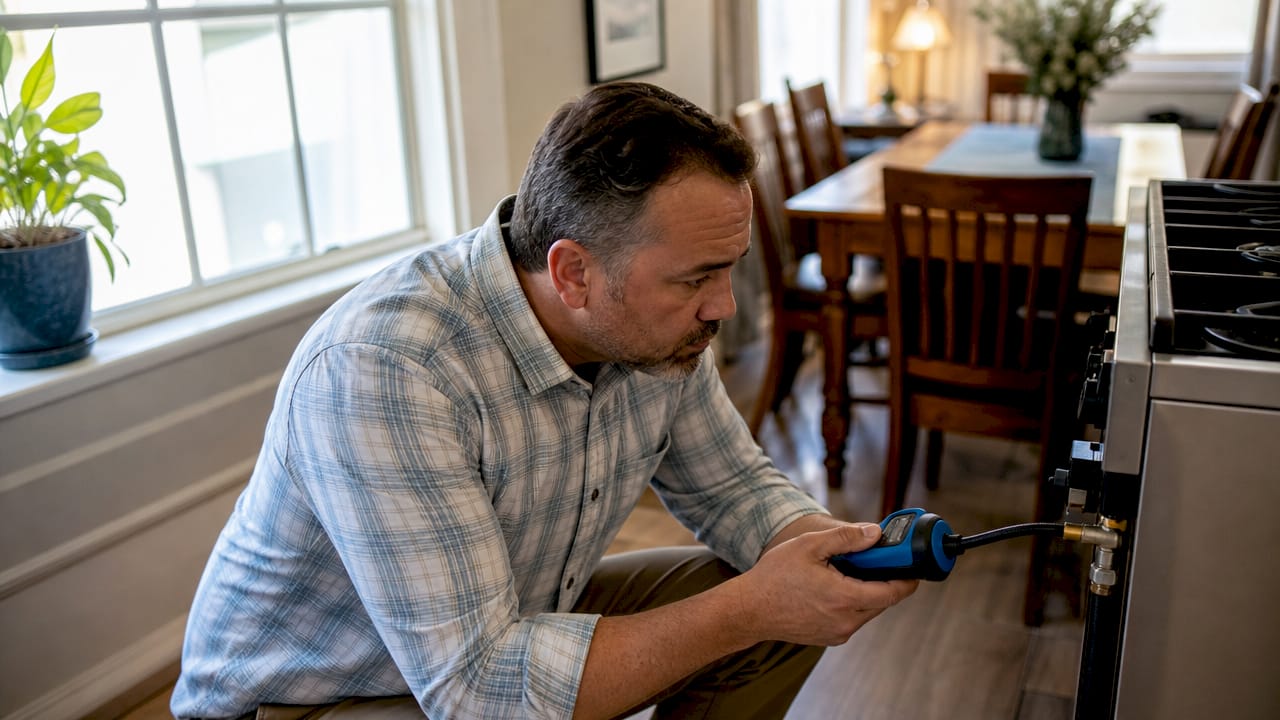
Pro Tip: Electronic gas detectors are far more reliable than smell alone. Install one within 10 feet of every gas appliance, including your water heater, furnace, and stove.
What should you do if you suspect a gas leak?
The right response to a suspected gas leak is fast, calm, and specific. Utility regulations are clear: never attempt to locate or repair a leak yourself. Evacuate immediately and call for help from a safe distance.
Follow these steps without hesitation:
- Do not turn any electrical devices on or off. This includes lights, fans, and appliances. Every switch creates a spark.
- Do not use your phone inside the building. Step outside first, then call 911 and your gas utility provider.
- Leave doors open as you exit to help ventilate the space, but do not stop to open windows.
- Shut off the gas valve at the meter only if you know how and can do so safely without creating a spark.
- Do not re-enter the building until emergency services have cleared it.
- Call 811 before any digging on your property. The 811 rule requires you to contact your utility locator service before breaking ground to avoid rupturing buried gas lines.
Regular appliance maintenance is your best long-term defense. Have a licensed technician service your furnace, water heater, and stove every year. If you notice a yellow flame, unusual hissing near a gas line, or a sudden spike in your gas bill, treat it as a warning sign and call a professional. For a broader look at what to do during a home gas or plumbing emergency, the homeowner’s crisis guide from Psvplumbinginc covers the full protocol step by step.
Key Takeaways
Gas leaks are dangerous because they combine explosive methane concentrations, toxic compounds like benzene and carbon monoxide, and silent oxygen displacement into a threat that can escalate before most homeowners recognize the warning signs.
| Point | Details |
|---|---|
| Explosive concentration range | Methane becomes explosive between 4.6% and 15.8% by volume in air. |
| Carbon monoxide kills silently | CO causes at least 420 US deaths per year and requires a dedicated detector to catch. |
| Benzene raises cancer risk | Nearly 9% of homes exceed benzene safety limits from chronic gas appliance leakage. |
| Smell detection is unreliable | Odor fade and underground migration mean you cannot rely on smell alone to detect leaks. |
| Evacuate first, call second | Never use phones or switches indoors during a suspected leak. Exit, then call 911. |
What I’ve learned from years of gas line calls
Gas leaks are the home safety risk I see underestimated most consistently. Homeowners call us after an incident and say the same thing: they noticed a faint smell weeks earlier but assumed it was nothing. That delay is where the real danger lives.
The single biggest mistake I see is homeowners trying to sniff out a leak themselves or tightening a fitting with a wrench to “fix it.” Gas line work requires pressure testing, calibrated detection equipment, and a licensed technician who knows what a safe repair looks like. A wrench and good intentions are not enough.
Installing a combination gas and CO detector is the one action that pays off more than any other. It costs less than a dinner out and works around the clock. I have seen it save lives in homes where the occupants had no idea a slow leak had been building for months.
The other thing I tell every homeowner: schedule a gas line inspection before you think you need one. By the time you smell gas or see a yellow flame, the problem has already been developing. Proactive inspections catch corroded fittings, aging connectors, and pressure irregularities that no detector will flag until the leak is already underway.
— Serghei
How Psvplumbinginc helps homeowners stay safe from gas leaks
Gas line safety is not a DIY project. Psvplumbinginc is a licensed and insured team with direct experience in gas line inspections, leak detection, and pipe repairs for both residential and commercial properties.

Whether you suspect a leak, want a scheduled inspection, or need a repair handled correctly the first time, Psvplumbinginc responds quickly and works to code. The pipe repair workflow guide on the Psvplumbinginc website walks you through exactly what to expect during a professional gas line service call, from initial assessment to final pressure test. You can also review preventive plumbing measures that reduce your risk before a problem develops. Contact Psvplumbinginc for a free quote and get the inspection scheduled before a small issue becomes a serious one.
FAQ
What concentration of gas makes a home explosive?
Methane becomes explosive when it reaches between 4.6% and 15.8% by volume in air. Any ignition source, including a light switch, can trigger a fire or explosion within that range.
Can a gas leak make you sick without an explosion?
Yes. Chronic low-level gas leaks expose residents to benzene and carbon monoxide, both of which cause serious health damage. CO alone causes at least 420 deaths per year in the US from poisoning.
Why can’t I always smell a gas leak?
Mercaptan, the odorant added to natural gas, can fade through absorption into soil or building materials. Underground leaks can also migrate indoors without producing a detectable smell at the entry point.
What should I do first if I smell gas indoors?
Do not touch any switches or use your phone inside. Exit the building immediately, leave doors open as you go, and call 911 and your gas utility from outside.
How often should I have my gas lines inspected?
Annual inspections by a licensed technician are the standard recommendation. Regular checks catch corrosion, loose fittings, and pressure drops before they develop into leaks.
Leave a Reply