TL;DR:
- Water heaters vary by type, energy source, and capacity, affecting efficiency and installation needs.
- Proper maintenance and sizing are crucial for optimal performance, lifespan, and cost savings.
- Choosing the right system involves assessing household demand, space, fuel source, and long-term costs.
Most homeowners treat their water heater like a light switch: flip it on, expect it to work, and only think about it when something goes wrong. But that “hot water tank” in your utility room is far more nuanced than you might expect. There are at least five major types of water heaters, each with different energy sources, installation requirements, and maintenance needs. Understanding how yours works, and whether it’s the right fit for your home, can save you hundreds of dollars a year and prevent the kind of cold-shower surprise nobody wants on a Monday morning.
Table of Contents
- What does a water heater do?
- Common types of water heaters explained
- How does a tankless water heater work?
- Key considerations for choosing and maintaining your water heater
- Why most people misunderstand water heaters (and how to avoid costly mistakes)
- Upgrade your hot water experience with expert help
- Frequently asked questions
Key Takeaways
| Point | Details |
|---|---|
| Water heater basics | A water heater heats and supplies hot water for daily home needs like bathing and cleaning. |
| Types of heaters | The main types are tank, tankless, heat pump, and solar, each with unique pros and cons. |
| Tankless efficiency | Tankless water heaters provide hot water on demand and can lower energy use compared to tanks. |
| Maintenance matters | Routine maintenance and proper sizing help water heaters last longer and work efficiently. |
| Seek expert help | Professional advice ensures the right choice and safer installation for your home. |
What does a water heater do?
A water heater is a household appliance that takes cold water from your main supply line, raises it to a set temperature, and delivers it to your taps, showers, and appliances on demand. It sounds simple, but the process behind it involves thermostats, heating elements or burners, pressure relief valves, and a delivery system that connects to every water outlet in your home.
Hot water is used constantly throughout your day, often without you realizing it:
- Bathing and showering require water heated to a comfortable and safe temperature, typically between 110°F and 120°F
- Dishwashers and washing machines rely on hot water to sanitize dishes and remove stains from laundry effectively
- Cooking uses hot water for boiling, blanching, and food prep
- Cleaning and sanitizing surfaces throughout the home depend on warm or hot water to cut through grease and bacteria
The two broad categories of water heaters are storage models and on-demand models. Storage models keep a large tank of pre-heated water ready at all times. On-demand models, also called tankless units, heat water only when you open a hot water tap. Each approach has real trade-offs in energy use, space, and cost.
Modern water heaters are far more efficient than older models. Many newer units include digital controls, smart home connectivity, and energy-saving modes. Keeping up with water heater maintenance tips is one of the simplest ways to extend the life of your unit and maintain efficiency year-round.
Common types of water heaters explained
Not all water heaters are alike. Let’s break down the most common types you’ll encounter when shopping, replacing, or upgrading your system.
Tank storage water heaters are the most familiar type. A large insulated tank, typically 30 to 80 gallons, holds pre-heated water and keeps it at a set temperature around the clock. When you use hot water, cold water enters the tank and the heating cycle begins again. These units run on electricity, natural gas, propane, or oil.

Tankless water heaters heat water on demand, with no large storage tank. When you turn on a hot water tap, cold water flows through a heat exchanger inside the unit and exits hot within seconds. They use significantly less energy because there is no standby heat loss from a constantly heated tank.

Heat pump water heaters (also called hybrid models) pull heat from the surrounding air and transfer it to the water. They use electricity but consume far less of it than standard electric tank models, making them one of the most energy-efficient options available today.
Solar water heaters use roof-mounted panels to capture heat from sunlight and transfer it to your water supply. They work best in warmer climates and are often paired with a backup electric or gas unit for cloudy days.
Here is a quick comparison to help you evaluate your options:
| Type | Energy source | Average lifespan | Upfront cost | Best for |
|---|---|---|---|---|
| Tank storage | Gas or electric | 8 to 12 years | Low to moderate | Most households |
| Tankless | Gas or electric | 15 to 20 years | Moderate to high | Small households, efficiency seekers |
| Heat pump/hybrid | Electric | 10 to 15 years | High | Warm climates, energy-conscious buyers |
| Solar | Solar + backup | 15 to 20 years | Very high | Sunny regions, long-term savings focus |
| Condensing | Gas | 10 to 15 years | High | Homes already using natural gas |
Before you purchase or replace a unit, ask yourself these key questions:
- How many people live in your home, and what is your peak hot water demand?
- What fuel sources are available at your property (gas line, electric panel capacity)?
- How much physical space do you have for installation?
- What is your budget for upfront costs versus long-term energy savings?
- Are there local rebates or tax credits available for high-efficiency models?
Pro Tip: One of the most common mistakes homeowners make is replacing a failed water heater with the exact same model without considering whether their household needs have changed. A family that has grown from two to five people may need a larger tank or a tankless system with a higher flow rate. Always reassess your needs before buying.
You can explore the complete guide to water heater types for deeper detail on each category, or review a breakdown of the main types of water heaters to compare options side by side.
How does a tankless water heater work?
Of the new technologies shaking up home water heating, the tankless model often creates the most confusion. Here’s how it really works.
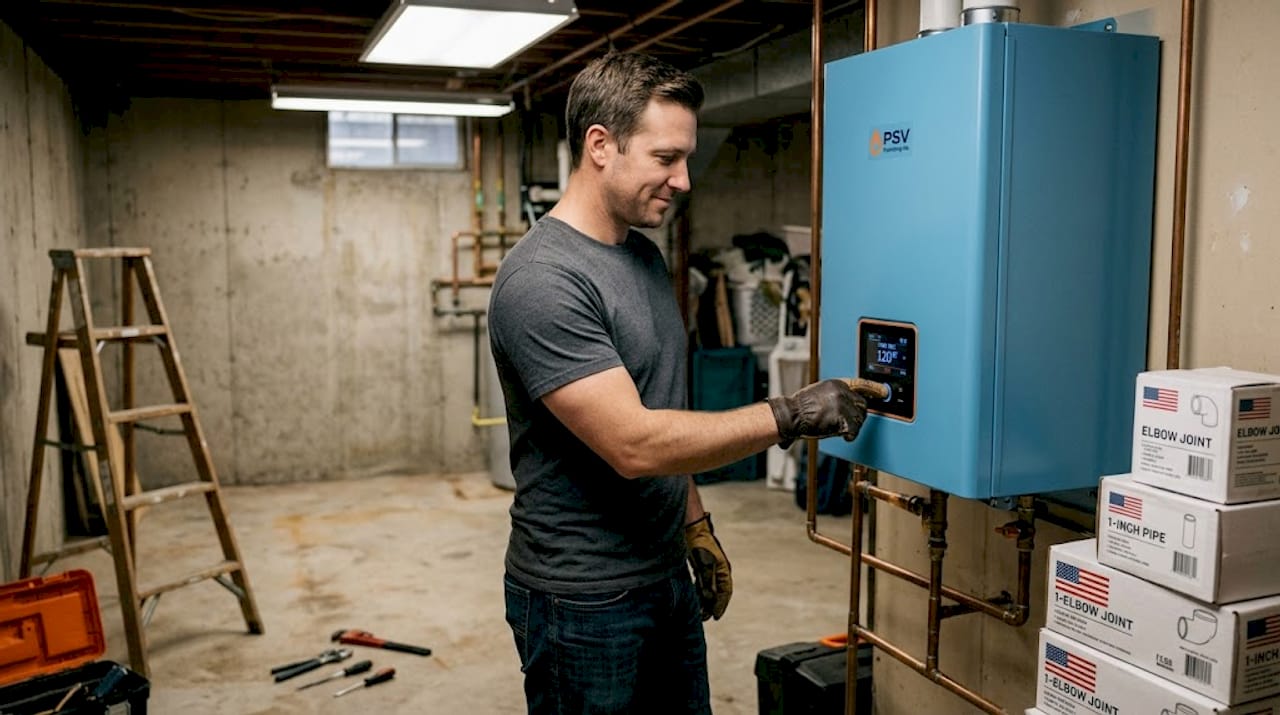
When you open a hot water tap, cold water enters the tankless unit through an inlet pipe. A flow sensor detects the movement of water and activates either a gas burner or an electric heating element. The water passes through a heat exchanger, a coiled pipe surrounded by heat, and exits your tap hot. The entire process takes only a few seconds. As confirmed by Wikipedia’s water heating entry, tankless units heat water as it flows through a heat exchanger when a hot-water outlet is opened, with no large storage volume involved.
Here is a look at key performance stats for tankless water heaters compared to standard tank models:
| Feature | Tankless | Standard tank |
|---|---|---|
| Flow rate | 2 to 5 gallons per minute | Limited by tank size |
| Energy savings | 24% to 34% more efficient for average homes | Baseline comparison |
| Average install cost | $800 to $1,500+ | $300 to $900 |
| Space required | Wall-mounted, compact | Floor space, 18 to 24 sq ft |
| Hot water supply | Continuous | Limited to tank capacity |
The everyday benefits for homeowners are real and noticeable:
- No running out of hot water during long showers or back-to-back laundry loads
- Space savings because the unit mounts on a wall, freeing up floor space in utility rooms
- Lower energy bills since you are not paying to keep 50 gallons of water hot all day
- Longer service life, often 15 to 20 years versus 8 to 12 for tank models
- Reduced risk of tank leaks, since there is no large water-filled vessel that can corrode and burst
One important consideration: tankless units can struggle with simultaneous high-demand situations. Running two showers and a dishwasher at the same time may exceed a single unit’s flow rate. In larger homes, some owners install two tankless units or use a point-of-use unit near high-demand areas. Considering plumbing upgrades for efficiency alongside your water heater choice can make a significant difference in overall performance.
Statistic to know: According to the U.S. Department of Energy, tankless water heaters can be 24% to 34% more energy efficient than conventional storage tank heaters for homes that use 41 gallons or less of hot water daily. For homes with higher usage, the savings are still meaningful but slightly lower.
Key considerations for choosing and maintaining your water heater
Understanding the technology is only half the story. Choosing the right heater and caring for it are just as critical to long-term satisfaction and value.
When selecting a new water heater, work through these decision steps in order:
- Calculate your first-hour rating (FHR) need. FHR measures how much hot water a heater can supply in one hour starting with a full tank. Match this to your household’s peak demand, typically the morning rush.
- Choose your fuel type. Gas heaters heat water faster and often cost less to operate, but require a gas line and proper venting. Electric models are easier to install but may have higher operating costs depending on local utility rates.
- Determine the right size. For tank models, a two-person household typically needs a 30 to 40-gallon tank. A family of four usually needs 50 to 60 gallons. For tankless models, calculate the flow rate needed based on simultaneous use.
- Factor in installation requirements. Some high-efficiency models require special venting, upgraded electrical panels, or specific clearances. Get a professional assessment before purchasing.
- Review energy efficiency ratings. Look for the Energy Factor (EF) or Uniform Energy Factor (UEF) rating. Higher numbers mean better efficiency and lower operating costs over time.
- Budget for total cost of ownership. A cheaper unit with higher operating costs may cost more over ten years than a pricier efficient model.
Maintenance is where most homeowners fall short. A water heater that is never serviced will fail earlier and cost more to operate. Here are the essential habits every owner should build:
- Flush the tank annually to remove sediment buildup, which reduces efficiency and causes premature wear
- Test the pressure relief valve every year to ensure it opens and closes properly
- Inspect the anode rod every two to three years and replace it when more than 50% is depleted
- Check for signs of corrosion, moisture, or unusual sounds around the unit
- For tankless models, descale the heat exchanger annually, especially in areas with hard water
Pro Tip: Sediment buildup is the silent killer of tank water heaters. In areas with hard water, minerals like calcium and magnesium settle at the bottom of the tank, creating a layer that forces the heater to work harder. Flushing your tank once a year takes about 30 minutes and can add years to your unit’s life.
Refer to our plumbing maintenance checklist for a full seasonal schedule, and revisit our water heater maintenance tips for step-by-step guidance on each task.
When should you call a professional? If you notice rusty water, a persistent sulfur smell, water pooling near the unit, or inconsistent temperatures, those are signs that a licensed plumber should inspect your system. Attempting repairs on gas-connected or high-voltage electric units without proper training creates serious safety risks.
Why most people misunderstand water heaters (and how to avoid costly mistakes)
Here is something we see regularly in our work: homeowners replace a 40-gallon tank with a 75-gallon tank because they assume bigger is always better. In reality, a larger tank means more water to heat continuously, higher standby energy loss, and a bigger utility bill every month. Sizing up without a genuine need is one of the most expensive mistakes you can make.
The “bigger is better” logic also ignores location. A large tank in a cramped utility closet creates clearance problems, ventilation issues, and makes future servicing difficult. The right water heater is the one that fits your actual usage pattern, your available space, and your fuel source, not the largest one that fits through the door.
We also see the real cost of deferred maintenance play out constantly. A homeowner who skips annual flushes for five years ends up with a tank so packed with sediment that the heating element burns out prematurely. What would have been a $30 DIY flush becomes a $1,200 replacement job. The math is not complicated, but the habit is easy to skip.
Another overlooked factor is energy source alignment. Switching from a gas tank to an electric tankless unit sounds like an upgrade, but if your electrical panel cannot handle the load, you are looking at a panel upgrade that can cost $1,500 to $3,000 on top of the unit itself. Always assess your infrastructure before committing to a new technology.
Our water heater types guide walks through these infrastructure considerations in detail, so you can make a fully informed decision before spending a dollar on equipment.
The most valuable advice we can offer: treat your water heater like any other major appliance. Schedule it, inspect it, and replace it proactively rather than reactively. A water heater that fails unexpectedly in winter is an emergency. One that you replace on your own timeline is a planned investment.
Upgrade your hot water experience with expert help
Choosing, installing, and maintaining the right water heater is not something you should have to figure out alone. At PSV Plumbing Inc, we work with homeowners and property managers every day to assess their hot water needs, recommend the right equipment, and handle installation with precision and care.

Whether you need to review maintenance tips before your next service, want to explore your water heater options in more detail, or are ready to speak with local plumbing professionals about installation or repair, we are here to help. Our licensed and insured team brings real expertise to every project, from minor repairs to full system upgrades. Let’s work together to make sure your home has reliable hot water every single day.
Frequently asked questions
What is the difference between a tank and tankless water heater?
A tank water heater stores and continuously heats a large volume of water, while a tankless heater heats water instantly on demand with no storage tank, as confirmed by Wikipedia’s water heating overview. Tankless units tend to be more energy efficient but cost more upfront to purchase and install.
How long does a water heater typically last?
Most traditional tank water heaters last 8 to 12 years, while tankless models can last 15 to 20 years with proper annual maintenance. Regular servicing is the single biggest factor in reaching or exceeding those averages.
What maintenance does a water heater need?
Essential maintenance includes flushing the tank annually to remove sediment, testing the pressure relief valve, inspecting the anode rod every two to three years, and descaling tankless units in hard-water areas. Skipping these steps shortens the unit’s lifespan noticeably.
Can I install a water heater myself?
DIY installation is possible in some situations, but professional installation is strongly recommended for safety, code compliance, and warranty protection. Gas and high-voltage electric connections in particular carry serious risks when handled without proper training or licensing.
Leave a Reply