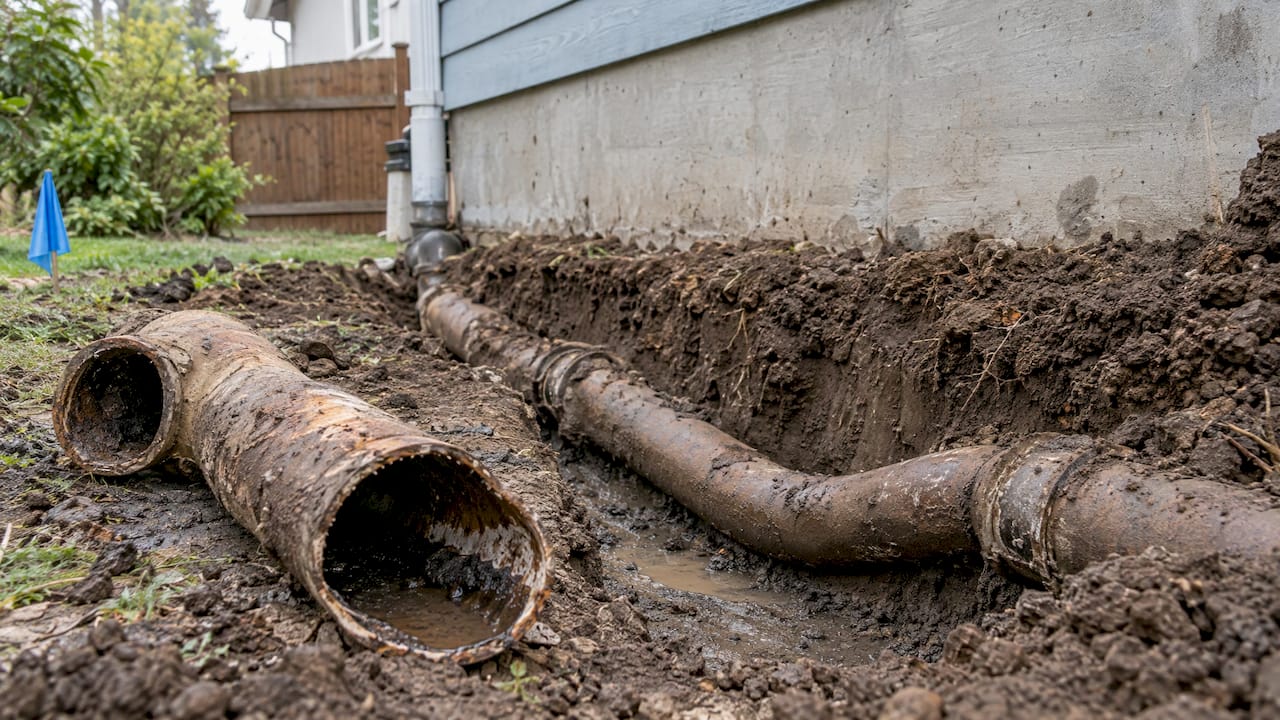
A sewer line belly is a sag in the pipe where the line dips below its intended slope and wastewater and solids pool instead of flowing out. Repair means restoring the correct grade over the sagging section, which in most cases means exposing and re-bedding or replacing that stretch of pipe. A camera inspection decides whether you need that at all, because many shallow bellies are stable and only need monitoring and good maintenance.
This guide explains how to tell a belly from other drain problems, how severity is judged, which repair methods address the cause, what to expect on cost and insurance, and how to hire well.
TL;DR
- A belly is a low spot in an otherwise intact pipe. Water collects there, solids settle, and clogs repeat.
- A sewer camera inspection with a locate is the only reliable way to confirm a belly and judge how deep and how long it is.
- Not every belly needs digging. Shallow, stable ones can be monitored and maintained. Deep or worsening ones need the grade restored.
- Methods that only line or reshape the inside of the pipe do not change its slope, so match the repair to the cause.
- Homeowners policies usually do not pay for worn or poorly bedded pipe. Read your policy and ask your insurer before work starts.
Table of Contents
- What a sewer line belly is
- Signs you may have a belly
- How serious is a belly?
- How professionals diagnose a belly
- Does every belly need repair?
- Repair options for a bellied sewer line
- What belly repair costs
- Is a belly covered by homeowners insurance?
- How to choose who repairs it
- Our perspective
- Get your line inspected in Burbank
- FAQ
- Sources
What a sewer line belly is
Your home’s sewer lateral runs from the house to the city main or septic system. It is laid at a slight downward slope so gravity carries waste along. A belly (also called a sag or low spot) is a section where the pipe has settled below that slope. The pipe wall may be perfectly intact. The problem is geometry: a dip that holds standing water.
Code minimums for slope depend on pipe size and local rules. Building sewers are commonly laid at about 1/8 to 1/4 inch of fall per foot, so even a small dip matters because there is so little slope to begin with. Your local building department has the figure that applies to your address.
What causes a belly
Most bellies come from what is under the pipe, not the pipe itself:
- Poor bedding or compaction. If the trench was backfilled with uneven soil, rocks or debris, the ground settles unevenly over time.
- Soil movement. Expansive clay, erosion, nearby excavation and washed-out soil beneath the line can all let a section drop.
- Disturbance from construction. Heavy equipment, new additions or a past repair done without proper bedding can shift a section.
- Tree roots and voids. Roots and water flow can create gaps beneath the pipe that later collapse.
Older homes are more exposed simply because the ground has had more years to move. For a wider look at what stresses laterals, see our guide to why sewer lines fail.
Signs you may have a belly
A belly rarely announces itself with one dramatic event. It shows up as a pattern:
- Slow drains in several fixtures, especially the lowest ones in the house
- Gurgling from toilets or tubs when water runs elsewhere
- Repeated clogs that clear and then return within weeks or months
- Sewer odor in the yard or around floor drains
- Wet or unusually green patches over the line
- Waste backing up into a shower or floor drain
These symptoms overlap with root intrusion, grease buildup, offset joints and cracked pipe. That is why guessing is expensive. Our articles on the warning signs of sewer line problems and common sewer line issues help you sort what you are seeing before you call.
How serious is a belly?
Severity depends on depth, length, and whether the sag is stable. Think of it as a spectrum:
| Condition | What you see | Typical approach |
|---|---|---|
| Shallow, short, stable | A little standing water on camera, few or no symptoms | Document it, maintain the line, re-inspect on a schedule |
| Moderate | Recurring clogs, slow drains, water pooling over a longer stretch | Plan a repair; clean the line to keep it flowing meanwhile |
| Deep or long | Frequent backups, solids visibly stranded, pipe also cracked or offset | Restore the grade by excavating and replacing that section |
| Belly plus collapse | Broken or crushed pipe at the low point | Replace the failed section; the belly is part of the failure |
The key risk is the one you cannot see: solids settle in the dip, clogs recur, and a persistent backup can send wastewater into your home. A belly that holds water also keeps stressing the pipe joints around it.
How professionals diagnose a belly
A proper diagnosis combines three things:
- Camera inspection. A small camera on a push cable travels the line and records it. Standing water that sits in one place, rather than flowing past, points to a low area.
- Locating and depth readings. A locator on the surface marks where the camera is and how deep the pipe lies. Comparing depths along the run shows how far the pipe has dropped and over what length.
- Condition grading. Industry condition-assessment standards, such as the NASSCCO PACP coding system, separate structural defects from operations-and-maintenance defects. That distinction is useful for you: a pipe can flow poorly yet be structurally sound, or be structurally serious while it still flows.
Ask to see the footage and the depth readings. A good inspection shows you the problem rather than describing it. We cover sewer and gas line inspections as part of our sewer line services in Burbank.
Belly, channeling or collapse?
Standing water on camera has more than one explanation, and each calls for a different fix:
- Belly: the pipe sits low but is intact all the way around.
- Channeling: the pipe’s bottom has worn or eroded into a trough, so water follows a groove while the pipe’s position is unchanged.
- Collapse or break: the pipe wall has failed and soil or debris is entering.
Getting this call right keeps you from paying for a repair that cannot address the actual cause.
Does every belly need repair?
No. A shallow belly in a line that drains normally, with no backups, may be managed for years with regular cleaning and periodic re-inspection. Repair becomes the sensible call when you see any of these:
- Backups or recurring clogs tied to the same spot
- A belly that is getting deeper between inspections
- Pipe damage (cracks, offset joints, root entry) at or near the dip
- Plans to sell, where a camera report may be requested by a buyer or lender
- A remodel or addition that will add load to the line
While you decide, keeping the line clear matters. Our sewer line maintenance steps explain what helps, and hydro jetting can clear built-up debris and grease from a line so it flows while you plan.
Repair options for a bellied sewer line
Because the problem is slope, the repair has to change the pipe’s position or replace the sagging section.
Spot excavation and re-grade
The crew locates the low section, digs down to it, removes the sagging pipe, rebuilds a firm, properly graded bed, and installs new pipe at the correct slope. This is the most direct fix when the belly is limited to one stretch. It is also the approach most local guides describe as the dependable cure for a true belly.

Full or long-section replacement
If the sag runs a long distance, the line is old, or other defects exist along the run, replacing a longer section can make more sense than several separate digs. Our sewer line replacement cost breakdown shows what drives that number.
Trenchless methods: where they fit
Trenchless repair avoids trenching the whole yard, and it is valuable for many sewer problems such as cracks, root-damaged joints and corroded pipe. For a belly, the question to ask is whether the method actually changes the grade. Lining a pipe creates a new surface inside the old one, so it follows the existing shape, dip included. Some trenchless replacement methods can pull in new pipe along a new path, which can help in certain conditions. Ask any contractor to explain, in terms of slope, how the proposed method removes the low spot. Our guide to comparing trenchless sewer repair quotes gives you the questions to put to each bid.

Methods that do not solve the underlying problem
Snaking and jetting clear what has collected, but they do not lift the pipe. They are maintenance, and they are good maintenance, but a belly will refill with solids until its grade is corrected. This is also why a belly is not a DIY job: diagnosis needs a camera and depth readings, and the fix involves excavation near utilities. If you are weighing smaller drain jobs yourself, our drain line repair guide shows where the line sits between homeowner work and professional work.
What belly repair costs
There is no single price, because depth, length, access, soil, pavement or landscaping to restore, and permits all change the total. For context, one insurance-industry guide reports an average sewer line repair of about $4,000 and full replacement at $55 to $250 per linear foot, while stressing that severity, length and location move the figure. A short spot repair sits at the low end of that range, and a long, deep replacement under a driveway sits at the high end.
If you manage rental property, this landlord repair cost guide offers more context for budgeting underground repairs across a portfolio.
What you can control is the quality of the quote. A good one should state:
- Where the belly is, how long it is and how deep, backed by footage
- The method and how it restores slope
- The length of pipe being replaced and the pipe material
- Restoration of concrete, landscaping or pavement
- Permit and inspection handling
We offer free quotes, so you can compare a written scope with the others you collect.
Is a belly covered by homeowners insurance?
Usually not for the pipe itself. Standard policies typically exclude sewer line damage from poor construction, upkeep, tree roots or wear and tear, while sudden accidental damage from a covered event may be treated differently. Backup coverage is a separate matter: the Connecticut Insurance Department notes that most homeowners policies exclude sewer or drain backup unless an endorsement adds it. An endorsement generally addresses damage inside the home from a backup, and service-line coverage may be needed for the underground pipe.
Policies and state rules differ, so read the exact wording and call your insurer before work begins. If a backup has already damaged your home, our guide on documenting plumbing damage for your insurance claim lists what to photograph and keep.
How to choose who repairs it
- License and insurance. Confirm both before any digging starts.
- Footage first. Hire a company that shows you the camera findings and depth data.
- A written scope. It should name the method, the footage of pipe affected and the restoration included.
- A plan for the cause. If poor bedding caused the belly, the repair should rebuild the bed, not only replace pipe.
- Clear sequencing. Know when utilities will be located, when the line will be out of service and when inspections occur.
Our pipe repair workflow for property owners walks through each stage from diagnosis to final inspection.
Our perspective
We see the same mistake often: a homeowner pays to clear a repeating clog, the clog returns, and nobody has looked inside the pipe. A camera inspection is the step that turns guesswork into a decision.
Our view is simple. Look first, measure the dip, and match the repair to the cause. Some bellies only need monitoring and good maintenance. Others need the grade restored properly, with a firm bed under the new pipe so the problem does not return. We would rather give you a clear picture and a written quote than rush you into work.
That is how we approach every sewer job: licensed and insured crews, transparent pricing, and recent work you can look at before you decide.
Serghei
Get your line inspected in Burbank
If you suspect a belly, start with an inspection. Our team handles sewer and gas line inspections, drain cleaning and sewer line work for homes and commercial properties, and we provide free quotes for prospective work. Learn more on our sewer line services page or contact us through psvplumbinginc.com.

Property managers and commercial owners can also ask about commercial plumbing and ongoing maintenance plans.
FAQ
How serious is a belly in a sewer line?
It depends on depth and length. A shallow, stable sag may cause few problems, while a deep one can cause recurring clogs and backups. A camera inspection with depth readings shows which one you have.
Can trenchless sewer repair fix a belly?
Only if the method changes the pipe’s grade. Lining follows the existing shape of the pipe, so it generally leaves a dip in place. Ask your contractor to explain how the proposed method restores slope.
Will a belly fix itself or go away with cleaning?
No. Cleaning removes what has settled in the dip, but the dip remains and fills again. Regular cleaning is useful for keeping a mild belly flowing while you plan a repair.
What does a sewer belly look like on camera?
You see a section where water sits in a pool and does not drain past, while the pipe before and after it looks clear. Solids and paper often collect at the low point.
Is belly repair covered by insurance?
Standard homeowners policies usually exclude pipe damage from wear, poor construction or roots, and most exclude backup unless you added an endorsement. Check your policy wording and ask your insurer before work begins.
Sources
- Does homeowners insurance cover sewer line replacement or repair? (SelectQuote)
- Homeowners Insurance FAQs (Connecticut Insurance Department)
- Sewer Backup and Home Insurance: Add an Endorsement (Coverage Classroom)
- Sewer Condition Assessment: CCTV, PACP Grading and I&I (Maya Global Group)
- Landlord repair cost guide
Leave a Reply