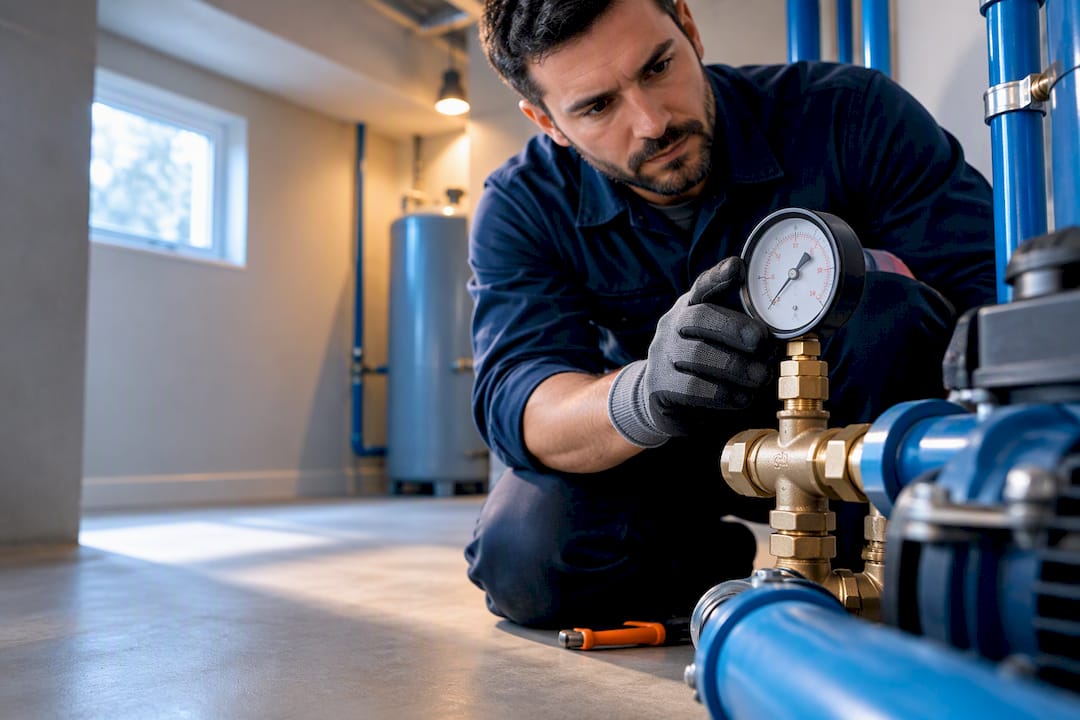
Most homeowners pay between $800 and $4,500 for a water pressure booster installed, with a typical whole-house job landing around $1,800 to $2,800. The final number depends on three things: the pump type and size you need, how much labor the site demands, and whether permits or backflow protection apply in your area. Before you commit, get two or three written local quotes and ask your building department about permit rules.
TL;DR:
- Most entire-house booster pump installations range from $1,800 to $2,800, depending on pump type, site complexity, and permit requirements.
- Equipment costs vary from under $200 for small point-of-use units to over $1,000 for whole-house models, with variable-speed pumps being the most expensive upfront.
- Labor costs depend on job complexity, with simple retrofits being affordable and upgrades involving electrical work or pipe modifications pushing prices higher.
- Permits and backflow prevention can add significant costs, especially when main line modifications or electrical code compliance are involved.
- Homeowners should compare detailed, itemized quotes and verify pump sizing calculations rather than focusing solely on initial pump prices.
Table of Contents
- Line-item cost breakdown for your booster pump project
- How pump types and specs affect purchase price
- When DIY makes sense versus hiring a licensed plumber
- What operating costs add up to over the life of the pump
- U.S. codes and permit items that affect your final price
- How to compare quotes and choose the right contractor
- A common approach to booster pump installations begins with an on-site inspection and a pressure test, since guessing at pump size can lead to wasted money or disappointing results. The installer typically guides homeowners through solution options that fit both their pressure needs and budget, rather than defaulting to the most expensive system.
- Get a clear, line-item quote for your booster pump install
- What homeowners get wrong about booster pump costs
- Sources
- FAQ
Line-item cost breakdown for your booster pump project
Booster pump jobs break into predictable categories, and knowing each one helps you read a quote instead of just reacting to the bottom line. Equipment cost varies the most: entry-level fixed-speed pumps run on the lower end, mid-range units with a built-in tank cost more, and variable-speed (VFD) systems sit at the top of the range because of their controllers and sensors. Retail listings for consumer booster pumps show pricing that spans from under $200 for small point-of-use units to $1,000 or more for whole-house models, which tells you upfront that “a booster pump” is not a single price point, it’s a category with a wide spread tied to capacity and features.
Beyond the pump itself, expect line items for a pressure tank, a controller, check valves, fittings, and any electrical work needed to power the unit. Permit fees, where required, add a smaller but real cost on top.
- Equipment: fixed-speed units on the low end, mid-range packaged systems with tank and controller in the middle, VFD systems at the top.
- Pressure tank and controller: often bundled with mid-range and VFD systems, sold separately with basic fixed-speed pumps.
- Electrical work: a dedicated circuit, GFCI protection, or a disconnect switch, depending on the pump’s power draw.
- Permits and inspection: vary by city and county, and apply mainly when the job involves new plumbing runs or backflow devices.
- Labor: billed either as a flat installation fee or by the hour, depending on the plumber and the complexity of the job.
Three scenarios illustrate how this adds up. A simple retrofit, swapping an existing booster for a similar model with no new wiring or piping, sits at the low end of the range because most of the infrastructure is already there. A whole-house booster installation, which usually includes a new pressure tank, controller, and some plumbing modification, lands in the middle of the range and is the most common job type. A VFD or well-system upgrade, which adds programming, commissioning, and often new electrical, pushes toward the higher end. One homeowner discussion cited a contractor quote of roughly $3,500 for a booster pump with a small tank installed, a total that reflected local permit requirements and site conditions rather than the pump price alone.
How pump types and specs affect purchase price
Not every booster pump does the same job, and the type you choose changes both the sticker price and what you’ll spend running it. Fixed-speed pumps run at one speed and cycle on and off, which keeps their price low but means more mechanical wear over time. Multistage centrifugal pumps use several impellers to build pressure gradually and suit homes needing a moderate, steady boost. Variable-speed (VFD) pumps adjust motor speed to match real-time demand, which raises the purchase price but can cut energy use by about 20 to 50 percent compared with constant-speed operation.
Sizing matters as much as pump type. Horsepower, gallons per minute, and PSI all factor into price, and most homes only need a boost within a range typically between 15 and 40 PSI, well below what commercial systems require. Buying a larger, higher-horsepower pump than your home needs doesn’t get you better pressure, it just wastes energy and shortens the pump’s service life from excess cycling stress.
- Fixed-speed pumps: lowest purchase price, more on-off cycling, shorter typical service life under heavy use.
- Multistage centrifugal pumps: moderate price, steady pressure buildup, a common middle-ground choice.
- VFD pumps: higher purchase price, smoother operation, lower long-term energy and wear costs.
Checking your home’s current pressure with a simple gauge, as covered in our homeowner’s guide to understanding water pressure, gives you the baseline number a plumber needs to size the right pump instead of guessing.
Pro Tip: Ask any plumber quoting your job to show the GPM and PSI calculation behind their pump recommendation, not just a model name.
When DIY makes sense versus hiring a licensed plumber
A booster pump installation splits into tasks that are reasonably safe for a handy homeowner and tasks that legally and practically call for a licensed plumber or electrician. Mounting a small point-of-use pump on an existing line with basic fittings is within reach for many DIYers. Everything involving the home’s main water supply, a pressure tank tie-in, or new electrical circuits is a different matter.
- Simple, low-risk tasks: mounting a small pump, connecting standard fittings, and basic leak testing are jobs some homeowners handle themselves.
- Licensed-trade tasks: wiring a dedicated circuit, installing a backflow prevention assembly, and modifying main supply lines typically require a licensed plumber or electrician, both for code compliance and for safety.
- Hidden costs of a failed DIY attempt: a botched connection can mean water damage, a redo by a professional, and in some cases a code violation that has to be corrected before a home sale or insurance claim.
- Site complexity factors: limited crawlspace access, existing pipe material that needs adapting, or an electrical panel far from the install site all add labor hours no matter who does the work.
Homeowners insurance and manufacturer warranties often assume proper installation. A DIY job that skips a required permit or backflow device can complicate both if something goes wrong later. Weigh the modest savings on labor against the risk of a costly correction, especially on jobs that touch your home’s main water line.
What operating costs add up to over the life of the pump
The purchase price is only part of what a booster pump costs you. Energy use, maintenance, and eventual replacement all factor into the total cost of ownership, and this is where pump type matters most over the years you own it.
A VFD booster can cut energy consumption by roughly 20% to 50% compared with a fixed-speed unit by matching motor speed to actual demand instead of running at full power in short bursts. Over five to ten years of daily use, that difference in electricity draw can offset a meaningful share of the VFD’s higher upfront price, particularly in households with frequent water use across multiple fixtures.

Routine maintenance is modest for either type: periodic check valve inspection, tank pressure checks, and occasional seal or gasket replacement. Fixed-speed pumps tend to need more frequent servicing because of constant cycling, while VFD systems, with smoother operation, often go longer between service calls. Factor a basic annual check into your budget regardless of which system you choose.
U.S. codes and permit items that affect your final price
Local plumbing codes and backflow rules are where many homeowners get an unexpected line item on their invoice. Booster pumps that tie into a home’s main supply can trigger requirements that a simple fixture swap wouldn’t.
- Backflow prevention: Chapter 9 of recent model plumbing code guidance covers backflow protection, and whether your installation needs an assembly or a simpler device depends on your local plumbing code and water utility rules.
- Permits and inspection: most municipalities require a permit for work that modifies main water lines or adds backflow protection, with an inspection to follow before the job is signed off.
- Electrical code items: a pump on a dedicated circuit may need GFCI protection, a proper disconnect switch, and code-compliant conduit, depending on its power draw and location.
- Local authority check: contact your city or county building department, known as the authority having jurisdiction (AHJ), before work starts, since backflow and permit rules vary by location.
Our guide on backflow prevention basics walks through why municipalities require these devices and what triggers the requirement on a typical residential job.
How to compare quotes and choose the right contractor
A written quote should tell you exactly what you’re paying for, not just a single number at the bottom. Comparing bids apples to apples means asking every plumber for the same level of detail.
- Equipment specifics: the exact pump model, brand class, and whether a tank and controller are included.
- Labor breakdown: hours estimated, whether it’s a flat rate or hourly, and what’s covered if the job runs long.
- Permit and inspection handling: who pulls the permit, and whether that cost is included or billed separately.
- Warranty terms: what’s covered on parts versus labor, and for how long.
- Timeline: a realistic start and completion window, since a straightforward retrofit often finishes in a single day while a job needing electrical work or pipe rerouting can take longer.
Ask direct questions about pump sizing calculations, VFD programming if that’s the system you’re considering, expected noise levels, and what routine maintenance will cost you later. A few red flags should disqualify a bid outright: no mention of a permit when your job clearly needs one, a vague or unwritten warranty, or a price so far below every other quote that it suggests corners will be cut on equipment or code compliance.
Pro Tip: Save every quote in writing, even the ones you reject. Comparing them side by side often reveals which contractor is the most transparent, not just the cheapest.
A common approach to booster pump installations begins with an on-site inspection and a pressure test, since guessing at pump size can lead to wasted money or disappointing results. The installer typically guides homeowners through solution options that fit both their pressure needs and budget, rather than defaulting to the most expensive system.
Written quotes typically break out equipment, labor, and permit costs separately, so customers can see exactly where their money goes before work begins. Licensed and insured plumbing contractors document their process consistently for every job, and portfolios of completed work and customer testimonials often reflect that consistency. Maintaining direct communication throughout the job, from the initial pressure test to the final inspection sign-off, is a common practice.
Get a clear, line-item quote for your booster pump install
Choosing the right water pressure booster shouldn’t mean guessing at a price or wondering what’s actually included. The full scope of a booster pump installation includes the initial inspection, permit coordination, certified installation, and a final pressure test to confirm the system performs as expected.

Every quote we provide breaks down equipment, labor, and any permit or backflow costs as separate line items, so you know exactly what you’re paying for before we start. If your home also needs pipe work alongside the booster install, our repiping and remodel services cover that scope under one project. Reach out through our Burbank service pages to schedule a free, no-obligation estimate and get a written quote tailored to your home’s actual pressure needs.
What homeowners get wrong about booster pump costs
The biggest mistake homeowners make isn’t overpaying for a pump, it’s underestimating the site work around it. People shop for the booster like they’re buying an appliance, comparing horsepower and brand names, when the bigger cost swing usually comes from what’s already in the walls: old wiring that needs an upgrade, a main line that needs rerouting, or a permit process nobody budgeted for.

The second mistake is treating the cheapest quote as the smart choice. A price with no permit plan and no written warranty isn’t a deal, it’s a cost you haven’t paid yet. The homeowners who end up satisfied are the ones who compared detailed, itemized quotes rather than a single bottom-line number, and who asked about backflow and permit requirements before signing anything.
If there’s one number worth remembering, it’s not the price of the pump. It’s the total installed cost, permits and all, because that’s the figure that actually determines whether your project stays on budget.
— Serghei
Sources
- Buying a Pressure Booster Pump: Key Features to Look For
- CHAPTER 9 BACKFLOW PROTECTION – 2024 PLUMBING CODE ESSENTIALS
FAQ
How much does it cost to install a water pressure booster?
Most U.S. homeowners pay between $800 and $4,500 installed, with a typical whole-house job landing in the $1,800 to $2,800 range. The final price depends on pump type, site complexity, and whether permits or backflow protection apply.
How much do water pressure boosters cost?
Booster pump equipment alone ranges from under $200 for small point-of-use units to $1,000 or more for whole-house models, based on capacity and features. Variable-speed systems cost more upfront than fixed-speed units because of their added controls.
Is a water pressure booster worth it?
For homes with consistently low pressure, a booster pump solves the problem directly rather than treating symptoms fixture by fixture. A VFD model can also cut energy use by roughly 20% to 50% compared with a fixed-speed pump, which helps offset its higher purchase price over time.
How much does it cost to increase the water pressure in a house?
The cost depends on the cause: a pressure regulator adjustment or replacement is often the lower-cost fix, while a whole-house booster pump installation typically runs higher due to equipment, labor, and possible permit requirements. A licensed plumber can test your home’s baseline pressure and recommend the right fix instead of the most expensive one.
Leave a Reply