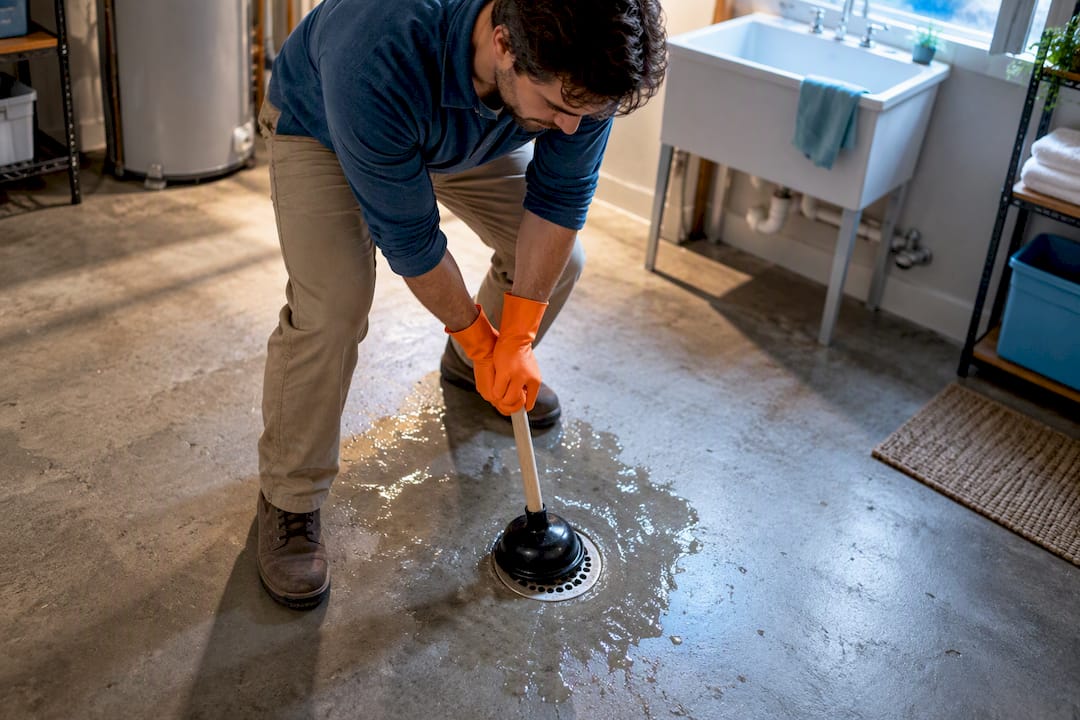
Start by pulling the grate and clearing visible debris, then seal the drain with a plunger and work it 10 to 15 times. That fixes most floor-drain clogs on the spot. If the water still won’t drop, or if other fixtures in the house start backing up, gurgling, or smelling like sewage, stop the DIY attempts and call a licensed plumber. Persistent or spreading symptoms point to a problem deeper in the line than a plunger can reach.
TL;DR:
- A simple plunger, hot water flush, and baking soda and vinegar can resolve most floor drain clogs if symptoms are minor and localized.
- Persistent or house-wide backups, smells, or gurgling indicate a deeper problem likely beyond the trap, requiring professional inspection.
- Tools like a hand auger are more effective for stubborn blockages, but avoid caustic chemicals that can damage older pipes or flooring.
- Regular maintenance, including monthly water pours and screen installation, helps prevent recurring clogs and reduces the risk of sewer gas entering the home.
- Repeated clogs in the same drain within months suggest a structural or systemic issue that warrants a camera inspection and professional repair.
Table of Contents
- How Do You Unclog a Floor Drain Yourself?
- Is the Clog Local or a Sign of a Bigger Sewer Problem?
- What Tools Should You Use, and What Should You Avoid?
- How Do You Stop a Floor Drain From Clogging Again?
- When Should You Call a Licensed Plumber?
- Why Trust PSV Plumbing on Floor Drain Problems
- The Real Problem With Most Floor Drain Advice
- Book a Drain Cleaning With PSV Plumbing Inc
- Sources
- FAQ
How Do You Unclog a Floor Drain Yourself?
Work through these steps in order. Each one takes just a few minutes, and you’ll usually know within 15 to 20 minutes whether you’ve solved the problem or need to escalate.
Before touching anything, put on gloves and eye protection. Floor drains sit near washers, water heaters, and sometimes electrical outlets, so check for exposed wiring or standing water near any power source before you start.
- Remove the grate and scoop out debris. Lint, hair, and gravel collect right at the opening. Clearing this by hand solves a surprising number of “clogs” before you even reach for a tool.
- Plunge it. Use a flat-bottomed cup plunger, add a little water to the basin for suction, seal the drain opening, and plunge firmly 10 to 15 times without breaking the seal.
- Flush with hot water. Pour it in gradually, not scalding and not all at once. A slow, steady flush helps loosen grease without stressing old pipe joints.
- Try baking soda and vinegar if the clog is organic. Half a cup of each, followed by a 15-minute wait, can help break up soap scum or light grease. It does little against hair, sludge, or a solid obstruction.
- Snake it with a hand auger. Feed the cable in slowly until you feel resistance, then crank and push through it rather than forcing it. Manual methods like plunging, snaking, and hot water flushes are the effective first-line fixes plumbers rely on before anything more invasive.
You’ll know it worked when the water drains at a normal speed, the level in the basin drops completely, and you don’t hear gurgling from nearby pipes. Wait a few minutes between each step. Rushing from plunger to chemicals to auger without checking results just means you can’t tell what actually fixed it, or whether anything did.
Pro Tip: Run a full sink of water down a nearby drain right after you think you’ve cleared the floor drain. If the floor drain gurgles or backs up in response, the clog is farther down the line than your auger reached.
Is the Clog Local or a Sign of a Bigger Sewer Problem?
Not every clogged floor drain is a simple trap blockage. Before you spend another 20 minutes with a plunger, figure out how far the problem actually reaches.
Ask yourself these questions:
- Is only the floor drain affected, or are other fixtures (sinks, tubs, the washing machine) draining slowly too?
- Does water back up into the floor drain when you run the washing machine or a sink upstairs?
- Is there a sewage smell, even faint, when you’re near the drain?
- Does the water level rise and fall in a “burping” pattern instead of draining steadily?
A simple bucket test tells you a lot: pour a gallon of water into the floor drain and time how fast it clears. Under 30 seconds usually means a minor local obstruction. If it sits and slowly drains, or if running an upstairs sink makes the floor drain gurgle, you’re likely dealing with something further down the system, not the drain itself.
Symptoms map fairly predictably to causes. A dry trap that hasn’t seen water in months lets sewer gas rise without any actual clog. Hair and debris cause slow, localized drainage. Grease buildup shows up as a coating you can feel on the auger tip. Multiple fixtures backing up together, especially with a sewage odor, points toward a main-line blockage, root intrusion, or a collapsed section of pipe. These broader causes, including dry trap seals and main-line blockages, are common enough that plumbers see them repeatedly, and they’re not something a plunger will resolve. If you’re seeing signs across the house rather than at one drain, it’s worth reading through the warning signs of sewer line problems before doing more DIY work.
What Tools Should You Use, and What Should You Avoid?
Not every tool works for every clog, and the wrong chemical can make a bad situation worse.
A cup plunger works fine for a flat floor-drain opening, while a flange plunger (the kind with a fold-out lip) is designed for toilets and rarely seals well against a floor grate. A hand auger, typically a 25 foot cable for residential use, gets you past the trap and into the horizontal run where a plunger can’t reach. Feed it in slowly and pull back if you hit hard resistance rather than forcing it, since aggressive cranking can scratch or crack older cast iron pipe.
A garden hose can dislodge a clog close to the drain opening, but pushing water down the line is unreliable once the blockage sits farther away, and the backpressure can force water back up through the grate onto your floor. A wet/dry vac can pull out standing water and loose debris, though it takes careful use and proper PPE and isn’t a substitute for real diagnostics if the clog keeps returning.

On chemicals: skip the heavy caustic drain cleaners for floor drains. They sit in the trap far longer than they do in a sink, which means more contact time with old pipe joints, plastic components, and flooring. A leak or crack from a caustic cleaner is a far more expensive problem than the clog it was supposed to fix.
Before you start:
- Wear gloves and eye protection.
- Keep the area ventilated. Standing water combined with sewer gas is not something to breathe in for long.
- Check for nearby outlets or power cords before adding water to the floor.
Pro Tip: If you must use a store-bought cleaner, choose an enzyme-based product and give it hours, not minutes, to work. It’s gentler on old pipe and far safer if the drain is slow rather than fully blocked.
For a deeper walkthrough of technique, our drain snaking guide covers cable sizes and how to read resistance while you work.
How Do You Stop a Floor Drain From Clogging Again?
Most recurring clogs trace back to one thing: neglect between problems, not a single bad pour.
- Pour a cup of water down infrequently used floor drains once a month. This keeps the trap seal intact so sewer gas and small pests can’t work their way up through a dry trap, a maintenance habit that costs nothing and takes seconds.
- Install or check a screen over the grate. A basic mesh insert catches hair and grit before it reaches the trap, which is especially useful in basements and garages where debris tracks in.
- Clean the visible grate every few months. Lint, dust, and grit build up on top long before they cause a real blockage.
- Watch for grease near kitchen or utility floor drains. Even small amounts solidify over time and narrow the pipe from the inside out.
- Schedule a camera inspection every few years for older plumbing, or annually in commercial kitchens and multi-unit buildings. Hydro-jetting on a preventive schedule clears buildup before it becomes an emergency call.
Property managers running commercial kitchens or multi-tenant buildings benefit most from a set schedule rather than reactive fixes. Our commercial drain cleaning guide breaks down inspection intervals by facility type.
When Should You Call a Licensed Plumber?
Some signs mean stop the DIY attempts immediately, not after one more try with the auger.
- Sewage backing up into the floor drain, a tub, or a shower at the same time.
- Multiple fixtures draining slowly across the house, not just one.
- A persistent sewer gas smell that doesn’t clear after you’ve refilled the trap.
- Visible cracks, staining, or shifting around the drain or nearby flooring.
- Water rising back up through fixtures after you flush or run water elsewhere.
When you call, expect a camera inspection first. It’s often the deciding factor between a quick fix and a bigger repair, since it shows a plumber whether they’re looking at root intrusion, a collapsed section, or a localized trap issue. From there, hydro-jetting clears grease and buildup along the pipe walls, trap replacement solves a damaged or corroded fitting, and sewer line repair addresses breaks or root damage found on camera.
Before the appointment, take photos or a short video of the backup, note which fixtures are affected and when, and ask about license, insurance, and warranty coverage before work starts. A clear estimate up front avoids surprises later.
Why Trust PSV Plumbing on Floor Drain Problems
PSV Plumbing Inc is licensed and insured, and our crews handle floor drain issues from the simple to the systemic: drain cleaning, hydro-jetting, and full camera inspections for properties where the clog keeps coming back.
A typical case looks like this: a basement floor drain backs up every few weeks despite regular plunging. A camera inspection finds a partial collapse 15 feet down the line, well past where any hand auger could reach. Hydro-jetting clears the immediate blockage, and the collapsed section gets scheduled for repair before it fails completely. That’s the pattern we see most: DIY buys time, but a recurring clog almost always has a specific, findable cause.
If your floor drain has cleared and reclogged more than once, that recurrence is the signal to bring in a camera rather than repeating the same steps.
The Real Problem With Most Floor Drain Advice
Most guides treat a clogged floor drain like a single event: one clog, one fix, done. That framing misses the more useful question, which is whether this is the first time or the third. A first-time clog responds well to a plunger and a little patience. A third-time clog in the same drain is a different animal entirely, and no amount of baking soda changes that.

The conventional advice also underweights the trap itself. Homeowners obsess over the clog and ignore the dry trap seal sitting quietly in a rarely used basement or garage drain, which lets sewer gas creep in without any blockage at all. That one habit, a cup of water once a month, prevents a whole category of complaints people mistake for a “clog.”
What I’d prioritize differently: treat the second recurrence, not the first, as your trigger to call a professional. One clog is normal wear. A second one in the same spot within a few months means something structural or systemic is going on, and DIY community fixes, while genuinely useful for quick relief, tend to skip the long-term risk entirely. Fix it fast, but pay attention to the pattern.
— Serghei
Book a Drain Cleaning With PSV Plumbing Inc
You can hire a licensed, insured plumbing crew and arrange a camera inspection instead of another round of guesswork with a plunger. If you’ve already tried the steps above and the floor drain keeps clogging, that’s exactly the situation our drain cleaning service is built for.

On-site, we start with a diagnostic camera run to see exactly what’s happening in the line, whether that’s grease buildup, a dry trap, or something farther down like root intrusion. You’ll get a clear scope of work and an estimate before anything else happens, no surprise add-ons after the fact. For clogs that keep returning even after cleaning, we can walk you through hydro-jetting as a longer-lasting option that clears buildup along the entire pipe wall rather than just the immediate blockage.
Get a free quote today and get the camera inspection that tells you what’s actually going on before it becomes a bigger repair.
Sources
For more on tools and technique, see our guides on drain snaking and DIY drain cleaning.
- How To Clear Floor Drains and Main Drainpipe Blockages — HowStuffWorks
- Common floor drain problems and how to solve them — Green Drain
FAQ
Can I Pour Drano Down a Floor Drain?
It’s not the safest choice. Caustic cleaners sit in the trap far longer than they do in a sink drain, increasing contact time with old pipe and fittings, which raises the risk of damage rather than a clean fix. An enzyme-based cleaner or the plunger-and-auger approach above is the safer route for most floor-drain clogs.
How Often Should You Pour Water Down a Floor Drain?
Pour a cup of water down infrequently used floor drains about once a month. This keeps the trap seal filled, which blocks sewer gas and pests from working their way up through a dry trap.
Why Does My Floor Drain Keep Backing Up?
Recurring backups usually point to something beyond the trap itself, like grease buildup, root intrusion, or a partial pipe collapse farther down the line. A camera inspection is the most reliable way to identify the actual cause instead of guessing with repeated plunging.
What Can I Pour Down My Drain to Unclog It?
Hot water and a baking soda and vinegar mix can loosen light grease or soap buildup, though they do little against hair, sludge, or a solid obstruction. For anything that doesn’t clear within one or two attempts, a hand auger or a professional drain cleaning visit gets better, safer results.
Leave a Reply