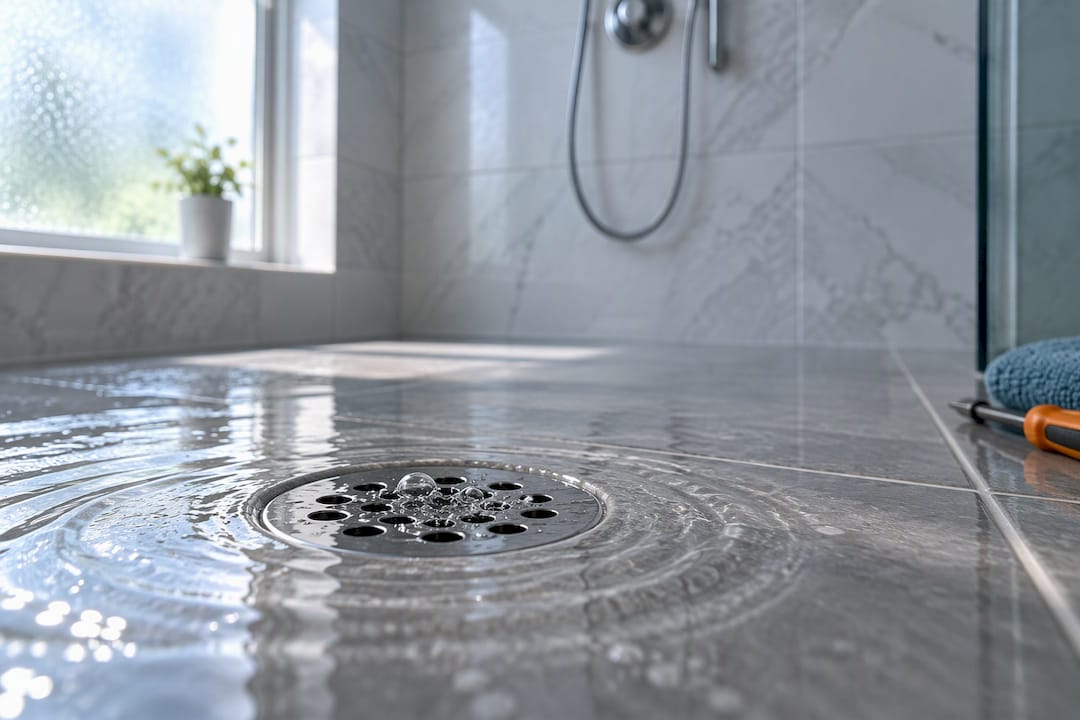
Shower drain gurgling almost always traces back to one of three things: a partial clog somewhere in the line, a blocked or undersized vent, or a trap that has dried out. None of these require panic, but a gurgle paired with slow drainage, sewage odor, or water backing up in other fixtures means you should stop troubleshooting and call a licensed plumber. Start with the quick checks below before deciding which path fits your situation.
TL;DR:
- Gurgling sounds often stem from a partial clog, blocked vent, or dried trap, especially if accompanied by slow drainage or sewer odors.
- Running the shower, flushing the toilet, and checking nearby fixtures can help identify if the problem is local or shared across multiple drains.
- DIY fixes like cleaning the strainer, plunging, and using a hand snake are effective for minor clogs but often fail beyond a certain point.
- Persistent or widespread gurgling, especially with backups or odors, warrants immediate professional inspection with a camera to identify deeper issues.
- A licensed plumber can diagnose the exact cause through targeted inspection and offer solutions like hydrojetting or vent clearing, saving time and avoiding damage.
Table of Contents
- What Causes a Gurgling Sound in a Shower Drain
- Quick Checks to Run Before You Do Anything Else
- DIY Fixes That Actually Work (and Where They Stop Working)
- When to Stop Troubleshooting and Call a Plumber
- What a Licensed Plumber Brings to a Gurgling Drain Diagnosis
- Why Most Gurgling Complaints Get Fixed Wrong the First Time
- Get Your Shower Drain Checked by a Licensed Plumber
- Sources
- FAQ
What Causes a Gurgling Sound in a Shower Drain
Every drain in your house relies on a vent pipe to let air in behind the wastewater as it flows out. Without that airflow, the water creates a partial vacuum, and air gets pulled back through the trap in bubbles. That’s the gurgle you’re hearing. It’s the sound of trapped air fighting its way past standing water because the pressure on either side of the trap isn’t equalizing the way it should.
A few distinct problems produce that same sound, and the timing tells you which one you’re dealing with.
- Partial clog in the drain line: Hair, soap scum, or grease narrows the pipe, so water backs up briefly and pushes air backward through the trap.
- Blocked or restricted vent: Debris, ice, bird nests, or a design flaw stops air from entering the system, so the drain gurgles as it fights for pressure relief.
- Dry trap: In showers used rarely, the water seal evaporates, letting sewer gas and air move freely, which sometimes produces sound along with odor.
- Shared branch line issues: If your shower gurgles specifically when the toilet flushes, the two fixtures likely share a branch drain or vent, and a downstream blockage is affecting both.
- Main line or septic problems: Gurgling across multiple fixtures at once, especially with slow drainage everywhere, often points to a main sewer line or septic system issue rather than anything local to the shower.
A one-time gurgle after a big load of laundry or a long shower usually isn’t worth worrying about. Inspectapedia’s diagnostic guidance notes that persistent gurgling paired with other symptoms, like slow drainage or backups, is what separates a nuisance noise from a real system problem.
Quick Checks to Run Before You Do Anything Else
You don’t need tools for this part. You need about ten minutes and a willingness to pay attention to timing.
- Run the shower for a minute and listen for when the gurgle starts, right at drain time or partway through.
- Flush a toilet on the same floor while the shower is off, then run the shower again, and note whether the gurgle changes.
- Check a nearby sink or tub for slow drainage, bubbling, or the same sound.
- Watch for water rising in the shower pan when another fixture drains. That’s a sign of a shared line problem, not something local to the shower itself.
- Pull the strainer and clear any visible hair or debris sitting right at the drain opening.
- Pour a couple of quarts of water into the drain to refill the trap if the shower hasn’t been used in a while. A dry trap can cause both gurgling and a faint sewer smell.
Plumbing code guidance backs up this sequence: testing fixtures in order helps isolate whether the issue is local to the shower or shared across the branch line, and it specifically warns against climbing onto a roof to inspect a vent stack. Leave that part to someone with the right equipment.
Pro Tip: If the gurgle only happens when the toilet flushes, don’t bother snaking the shower drain first. The blockage is almost certainly downstream in the shared branch, and clearing the shower side won’t touch it.
DIY Fixes That Actually Work (and Where They Stop Working)
Most local clogs respond to three tools: a strainer cleanout, a plunger, and a hand snake. Work through them in order before reaching for anything stronger.
- Clean the strainer first. Remove it, scrape off hair and soap buildup, and rinse it under hot water. This alone solves a surprising number of slow-drain complaints.
- Plunge correctly. Cover the overflow opening if your shower has one, seat the plunger fully over the drain, and use firm, steady strokes rather than fast jabs.
- Run a hand snake. Feed it down slowly, and when you feel resistance, crank the handle to break through or hook the debris, then pull back out.
- Flush with hot water. Hot (not boiling, if you have PVC pipes) water helps break down soap scum and grease after mechanical clearing.
Skip the chemical drain openers. The EPA’s SepticSmart homeowner guidance specifically recommends boiling water or a drain snake instead, warning that repeated chemical use can damage septic system biology and, over time, corrode certain pipe materials. If you’re on a septic system, that caution matters even more.
If you’ve cleaned the strainer, plunged, and snaked without any change in the gurgle, stop. Repeating the same steps or pouring in more chemicals at that point usually just delays a call that was going to be necessary anyway. A blockage that survives a hand snake is often farther down the line than a homeowner tool can reach.
When to Stop Troubleshooting and Call a Plumber
Certain signs mean it’s time to hand this off, regardless of how confident you feel with a wrench.
- Multiple fixtures gurgle or drain slowly at the same time.
- Water backs up into the shower when you flush a toilet elsewhere in the house.
- You smell sewage near a drain, floor cleanout, or in the yard.
- Drains that used to work fine are now consistently slow across the house.
- You’ve already tried a strainer cleaning, plunger, and hand snake with no improvement.
Any of these can indicate a sewer line problem or a septic system malfunction. The EPA advises calling a professional promptly if wastewater backs up or sewage odors persist, since delaying service on a septic issue tends to make the eventual repair more expensive.
A licensed plumber typically starts by locating cleanouts and running a camera inspection to see exactly where the blockage sits and what it’s made of. From there, options range from mechanical cabling to hydrojetting for grease and root intrusion, or clearing a blocked vent stack if that’s the actual culprit. Before the visit, have information ready: whether you’re on septic or sewer, when the problem started, and whether you’ve noticed any recent yard work or landscaping near the line.
What a Licensed Plumber Brings to a Gurgling Drain Diagnosis
Homeowners can rule out the easy stuff. What’s harder to see with the naked eye is the difference between a drain-side clog and a vent-side restriction, and that distinction changes the entire repair.
A camera inspection removes the guesswork. Instead of assuming a blockage is in the branch line, a plumber can see whether it’s roots, grease, a collapsed section of pipe, or a vent obstruction, and fix the actual problem instead of the symptom.
PSV Plumbing Inc technicians rely on this sequence, cleanout access, camera inspection, then targeted cabling or hydrojetting, because it avoids unnecessary invasive work. It also means fewer repeat visits for the same complaint. [Serghei’s professional credentials and years of experience to be added] and [case studies or project examples led by Serghei to be added] will round out this section with specifics from the field.
Why Most Gurgling Complaints Get Fixed Wrong the First Time
Most gurgling advice online treats every noise the same way, telling you to pour something down the drain and hope. That’s backwards. The sound itself is a clue about location, not a problem you solve by throwing product at it. If you take one thing from this guide, it’s that timing matters more than the noise: when the gurgle happens tells you more than how loud it is.

The conventional wisdom oversells chemical drain openers and undersells the value of a camera inspection. A five-minute look with a scope answers the vent-versus-drain question definitively, something no amount of guessing or repeat plunging will do. I’d also push back on the instinct to keep trying home fixes past the second attempt. If a strainer cleaning, a plunge, and a hand snake haven’t worked, the blockage is probably beyond what a homeowner tool can reach, and every additional DIY attempt just delays the diagnosis that actually solves it.
Prioritize timing and pattern over intensity of effort. Notice when it happens, check other fixtures, and treat two failed attempts as your signal to call, not your cue to try harder.
— Serghei
Get Your Shower Drain Checked by a Licensed Plumber
If your shower keeps gurgling after the strainer cleaning, the plunging, and the hand snake, PSV Plumbing Inc gets to the actual cause instead of guessing at it again. Locally based in Burbank and licensed and insured, our technicians run camera inspections to see exactly what’s blocking the line, whether that’s grease, roots, or a restricted vent, before recommending a fix.

Our drain cleaning service covers strainer-level clogs up through full hydrojetting for stubborn grease and root intrusion, and if the camera turns up a bigger issue, our sewer line services team can take it from there. Visits generally include a written quote before any work begins, to inform clients of the cost upfront.
If you’ve already run through the DIY steps and the gurgle hasn’t stopped, request a free quote through our drain cleaning page and get a licensed tech out to run the diagnostics that actually solve it.
Sources
- Plumbing drain noise diagnosis | Inspectapedia
- CHAPTER 7 SANITARY DRAINAGE – 2024 INTERNATIONAL PLUMBING CODE WITH GEORGIA AMENDMENTS (GAPC)
FAQ
How Do You Fix a Gurgling Shower Drain?
Start with the strainer, clear visible debris, then try a plunger and a hand snake in that order. If the gurgle persists after those three steps, the blockage is likely beyond DIY reach and needs a professional camera inspection.
Why Does My Shower Drain Make a Gurgling Sound?
It’s almost always trapped air moving through the water in the trap because the vent system can’t equalize pressure fast enough. That happens when there’s a partial clog in the drain line or a restricted vent.
Why Is My Sink Gurgling but Not Blocked?
A sink can gurgle from a shared branch or vent issue even when its own trap is clear. If another fixture, like a toilet, flushes and the sink gurgles in response, the two are likely tied to the same downstream line that has a partial restriction.
What Does a Gurgling Drain Indicate?
It usually points to trapped air fighting past a water seal, caused by a partial clog, a blocked vent, or a dry trap. Persistent gurgling alongside slow drainage or odor can signal a septic or sewer line problem that needs professional attention.
Leave a Reply