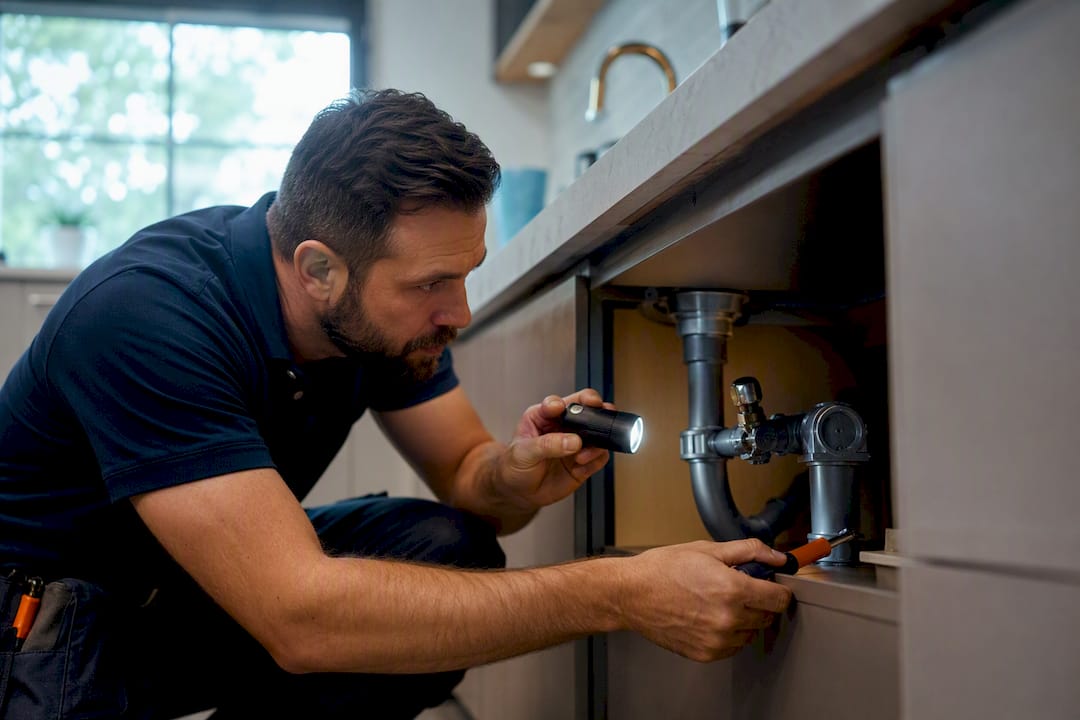
Yes, many plumbers charge a diagnostic or service call fee, and it is a normal part of hiring a licensed professional. That fee pays for travel, technician time, and the expertise needed to actually find the problem instead of guessing at it, as explained in detail in Another Cycle Appliance Repair’s diagnostic services. Most companies credit that amount toward the repair if you approve the work during the same visit, though the policy varies, so it is worth confirming before anyone shows up.
TL;DR:
- Diagnostic fees typically range from $75 to $150 for standard troubleshooting visits, with higher charges for emergency, rural, or specialized services.
- Camera inspections and advanced leak detection tools increase the upfront cost but often save money by pinpointing issues precisely, avoiding unnecessary repairs.
- Many companies credit the diagnostic fee toward the repair if you decide to proceed during the same visit, but policies vary and should be confirmed beforehand.
- The diagnostic fee covers travel, technician time, equipment, and expertise, making it a fair charge for real problem investigation rather than a simple show-up fee.
- Always verify the exact credit policy and obtain a written, itemized estimate before authorizing repairs to prevent surprises and ensure transparency.
Table of Contents
- Why plumbers charge a diagnostic fee in the first place
- How much does a plumber charge to diagnose a problem?
- Will the diagnostic fee be credited toward my repair?
- How should you prepare for a diagnostic visit?
- What does a licensed plumber’s diagnostic process actually look like?
- Is the diagnostic fee actually fair to homeowners?
- Ready to book a diagnostic visit with a licensed plumber?
- Where these figures and policies come from
- Sources
- FAQ
Why plumbers charge a diagnostic fee in the first place
A diagnostic fee is not a cover charge for showing up. It reflects real costs a plumbing company absorbs on every call, whether the fix takes ten minutes or two hours.
That fee typically bundles together:
- Travel and dispatch, including fuel, drive time, and scheduling coordination
- Technician time on site, from the moment they arrive to the moment they hand you a diagnosis
- Vehicle and tool overhead, the trucks, gauges, cameras, and equipment a company maintains year round
- Diagnostic expertise, the actual skill of tracing a leak, a clog, or a pressure drop back to its source
This is different from a free estimate for a visible, planned project, like quoting a new water heater installation you already know you need. A diagnostic visit exists because something is wrong and nobody knows exactly why yet, and that troubleshooting takes real time from a licensed plumber.
There is also a business reason behind the fee that rarely gets explained to homeowners. Small service calls cost a company money to staff and dispatch, and a diagnostic fee helps cover that cost while also filtering out casual inquiries from homeowners who are not actually ready to hire anyone. It protects a technician’s time so the people who do book a visit get full attention rather than a rushed once-over.
How much does a plumber charge to diagnose a problem?
Service call and diagnostic fees across the country commonly fall between $75 and $250, depending on your region, the company, and the complexity of the issue, according to Angi’s plumbing cost data. Most residential visits land on the lower half of that range, with many companies charging between $75 and $150 for a standard troubleshooting visit.
By the numbers: Trip charges alone (transport and overhead, separate from the actual diagnostic work) often cluster between $75 and $100 for plumbing specifically, which runs lower than typical HVAC or electrical trip charges, according to SmartService’s field-service pricing data.
Several factors push that number toward the higher end:
- After-hours or emergency calls. Nights, weekends, and holidays routinely carry surcharges on top of the base fee.
- Rural travel time. A technician driving 45 minutes each way costs more to dispatch than one working five minutes from the shop.
- Specialty equipment. Camera inspections, acoustic leak detection, and gas line sniffing require tools a basic service call fee usually does not cover, according to TaskRabbit’s plumbing cost guide.
- Technician level. A master plumber sent for a complex commercial issue typically bills higher than a general service tech.
Camera inspections are worth calling out specifically. They add cost upfront, but they often save money overall by pinpointing exactly where a pipe is cracked or a line is blocked, which means no unnecessary excavation or blind guesswork. If you want a broader sense of how these fees fit into total repair budgets, our plumbing cost breakdown walks through hourly, flat rate, and emergency pricing side by side.
Will the diagnostic fee be credited toward my repair?
In most cases, yes, if you hire the same company to do the repair on the spot. This credit-if-hired model is the most common policy in the plumbing industry: the technician diagnoses the problem, quotes the fix, and if you say yes right there, the diagnostic fee gets subtracted from your final bill. If you decline the repair or want to get other quotes, the fee usually stays as a standalone charge for the visit itself.
A few other patterns show up across the industry:
- Some companies waive the fee entirely for members of a maintenance plan or for planned installation jobs.
- Trip charges and diagnostic fees are technically different things, even though people use the terms interchangeably. A trip charge covers transport and overhead; a diagnostic fee covers the actual investigation and expertise, according to EosLog’s plumbing pricing guidance.
- Advertising that promises “free estimates” sometimes applies only to visible, planned work, not diagnostic troubleshooting, which can confuse homeowners who assumed every visit was free.
Pro Tip: Ask the exact wording of the credit policy before the technician arrives, not after. “We’ll waive the fee if you hire us” and “we’ll credit the fee toward the repair” are not always the same thing, and the difference can matter if the estimate comes in high.
How should you prepare for a diagnostic visit?
A little preparation gets you a faster, more accurate diagnosis and protects you from surprise charges. Before the appointment:
- Take photos or short videos of the issue, especially if it’s intermittent, like a leak that only shows up during heavy rain or a drain that only backs up after laundry.
- Locate your main water shutoff and any relevant fixture shutoffs so the technician does not lose time hunting for them.
- Write down when the problem started and whether it followed any recent work, like a renovation or a new appliance installation.
- Confirm the fee amount and credit policy over the phone, along with any after-hours surcharge if your appointment falls outside normal business hours.
- Ask how the estimate will be delivered. A written, itemized quote before work begins is standard practice and protects both sides if a dispute comes up later, per Angi’s homeowner guidance.
- Confirm licensing and insurance if you have not worked with the company before.
During the visit itself, expect a visual inspection first, followed by pressure tests or a camera scope if the problem is not obvious. Any specialty tool use should be quoted separately before the technician turns it on, and you should get a clear number in writing before agreeing to repairs. For property managers coordinating multiple units, a property manager service checklist can standardize what gets confirmed before every dispatch.
What does a licensed plumber’s diagnostic process actually look like?
Some licensed plumbing companies handle diagnostic visits with a clear fee stated upfront, a credit-if-hired policy, and a written estimate before any repair work begins. That transparency matters because homeowners are often diagnosing a stranger’s trustworthiness as much as a pipe problem.
A typical example policy involves a diagnostic fee that gets credited toward the repair if you approve the work that same day, paired with a written quote delivered before the technician starts. That kind of model gives homeowners something concrete to compare against other providers.

Is the diagnostic fee actually fair to homeowners?

A modest diagnostic fee is fair because it compensates real expertise and protects a technician’s schedule from tire kickers who never intended to hire anyone. Where I push back is when a company advertises “free estimates” broadly and then charges a diagnostic fee anyway without explaining the distinction between a planned project quote and actual troubleshooting.
Get the credit policy in writing, and compare quotes on paper, not over the phone.
— Serghei
Ready to book a diagnostic visit with a licensed plumber?
Some plumbing companies handle diagnostic visits with a stated fee, a credit-if-hired policy, and a written estimate before repairs start, so you know the cost before anyone touches a pipe. That kind of upfront pricing matters more than it sounds: it means no guessing whether your quote will change halfway through the job, and no pressure to approve work you have not seen in writing.

If a pipe issue, water heater concern, or drain backup has you searching for answers, our pipe repair workflow guide walks through what happens after diagnosis, from quote to completed repair. Request a free quote today and get a technician who explains the fee, the findings, and the fix before any work begins.
Need a plumbing problem diagnosed in Burbank or nearby? Request a quote from PSV Plumbing or call (818) 588-0064.
Where these figures and policies come from
Pricing ranges and policy details throughout this article come from Angi’s plumbing repair cost data, SmartService’s field-service trip charge research, ProToolScout’s guidance on service call fee structures, and TaskRabbit’s plumbing cost guide.
Sources
- How Much Does Plumbing Repair Cost? 2026 Data | Angi
- How to Set Plumbing Service Call Fees & Trip Charges in 2026 – Pro Tools Scout
- Average Service Trip Charge | HVAC, Plumbing & Electrical
- Plumbing cost guide | TaskRabbit
FAQ
Do plumbers charge a diagnostic fee?
Many do, typically between $75 and $250 depending on region and company, and the fee is often credited toward the repair if you hire the same plumber that day.
Is it normal to pay a diagnostic fee?
Yes, it is standard practice across the plumbing industry and covers travel, technician time, and the expertise needed to find the actual problem.
What is the 135 rule for plumbing?
There is no widely recognized industry standard for a fixed pricing rule in plumbing; if you have seen such a term, it likely refers to a specific company’s internal formula rather than a universal guideline.
How much does it cost for a plumber to diagnose a leak?
A standard leak diagnosis usually falls within the general $75 to $250 service call range, though leaks requiring camera inspection or acoustic leak detection can cost more due to specialty equipment.
What is a diagnostic fee versus a trip charge?
A trip charge covers transport and overhead for getting a technician to your home, while a diagnostic fee covers the time and expertise spent actually investigating the problem once they arrive.
Leave a Reply