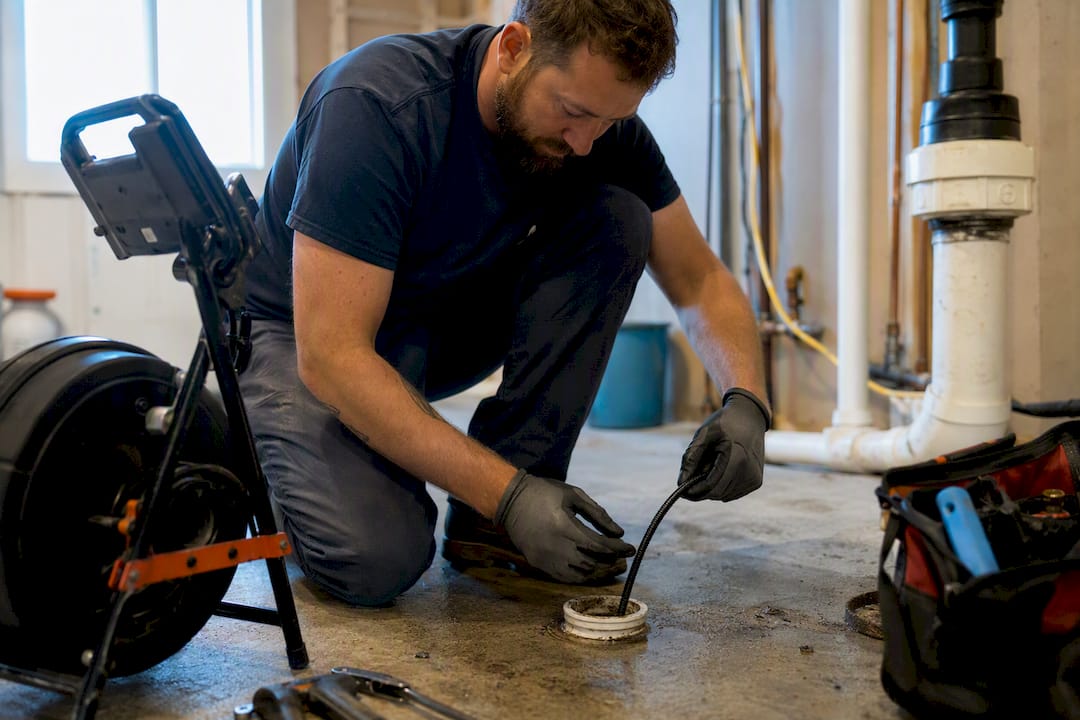
A standard residential sewer camera inspection typically runs $100 to $600, with most homeowners paying between $250 and $450. The single biggest factor pushing that number higher is access: if your plumber has to pull a toilet or cut in a new cleanout to reach the line, expect the bill to climb toward $700 to $2,000 or more. Add-ons like dye tracing or after-hours scheduling raise the total further.
TL;DR:
- Access issues, such as needing to remove a toilet or install a new cleanout, can increase costs from $100–$350 to over $2,000.
- The average cost for a bundled sewer camera inspection with a report and dye trace is around $400–$600, but extra access work can add significantly to the total.
- Long line length, complicated pipe materials, and additional camera technology or permits can push prices higher, especially in older or complex properties.
- Comparing quotes requires understanding whether costs cover access, footage, reporting, and if the provider offers a written, location-marked report.
- Renting or buying consumer-grade cameras may be cheaper upfront but often lacks professional interpretation and safe access, risking higher future expenses.
Table of Contents
- Average Sewer Camera Inspection Cost by Tier
- What Actually Drives the Price Up or Down
- Three Real-World Scenarios and What They Cost
- What’s Included and What Costs Extra
- Renting a Camera vs. Hiring a Licensed Plumber
- How to Compare Quotes Without Getting Burned
- Why the Report Matters More Than the Footage
- Access, Not Length, Is What Actually Costs You
- Get a Documented Sewer Scope From Psvplumbinginc
- Where These Numbers Come From
- Sources
Average Sewer Camera Inspection Cost by Tier
Most quotes fall into three practical tiers, and knowing which one applies to your home before the technician arrives saves you from an unpleasant surprise on the invoice. A basic camera-only run through an existing cleanout is the cheapest option. Add a written report and dye trace, and you’re paying for documentation you can actually use in a real estate deal or insurance claim. Need a new cleanout installed just to get the camera in the pipe? That’s a different job entirely.
Pricing usually comes in one of two structures: a flat per-visit fee, or a per-foot rate. Per-foot pricing runs about $0.50 to $5.00, which works fine for long commercial runs but gets confusing fast on a typical 50 to 100 foot residential lateral. Most residential contractors instead quote a diagnostic bundle, and Angi’s national data shows the average bundled job lands closer to $996 once you factor in the jobs that need extra access work.
| Service tier | Typical price range | What’s included |
|---|---|---|
| Basic camera-only scope | $100–$350 | Camera run through existing cleanout, live viewing |
| Camera + report + dye trace | $250–$600 | Video file, written report, dye trace for leak confirmation |
| Complex/new cleanout required | $700–$2,000+ | Excavation or toilet removal, cleanout install, full scope |
HomeAdvisor’s data puts the broader camera inspection range at $250 to $1,175, which reflects exactly this spread between simple and access-heavy jobs.
What Actually Drives the Price Up or Down
Access is the variable that moves your quote more than anything else. A home with an existing, reachable cleanout can save several hundred to over a thousand dollars compared to a home where the technician has to remove a toilet or cut a new cleanout into the line. Here’s what else factors into the number your plumber gives you:
- Cleanout access: an existing exterior cleanout keeps costs low; toilet removal adds labor time; a new cleanout installation can add $500 to $1,500 for excavation and restoration alone.
- Line length: longer runs mean more camera cable, more runtime, and more labor, especially past 100 feet.
- Pipe material: PVC is straightforward, but cast iron, clay, and Orangeburg pipe (common in homes built before the 1970s) sometimes need a specialty camera head to navigate joints and offsets.
- Camera technology: pan-and-tilt or self-leveling camera heads add $100 to $400 but give a much clearer picture of joint separations or liner failures.
- Permits and dispatch: new cleanout work sometimes requires a permit, and travel time in rural areas adds to the invoice.
Pro Tip: Ask upfront whether your home has an accessible cleanout before you even book the appointment. A five-minute look around your foundation and yard can tell you which price tier you’re likely in.
Three Real-World Scenarios and What They Cost
Matching your property to one of these scenarios gives you a realistic target before you call anyone for a quote.
- Accessible cleanout, short run. A single-story home with an exterior cleanout and a 40 to 60 foot line to the street connection. Expect $100 to $350 for a straightforward camera pass with a basic report.
- No cleanout, toilet access required. An older home without an exterior cleanout, where the technician removes and resets a toilet to feed the camera. Added labor typically pushes the total to $350 to $700, depending on whether the report includes dye trace or footage markers.
- No access at all, new cleanout needed. A property with a buried or nonexistent cleanout and a longer or branching line, sometimes 100+ feet with multiple fixture connections. Installing a new cleanout before the scope can even happen moves the job into the $700 to $2,000+ range, largely driven by excavation and restoration work.
These assumptions hold for typical single-family homes; multi-unit or commercial properties with branching lines run higher regardless of access.
What’s Included and What Costs Extra
A standard inspection should always include a live camera run through the line, real-time narration from the technician, a saved video file, and a written report with location markers tied to footage counts. That documentation is what gives you leverage later, whether you’re negotiating a home sale or getting repair bids.
Common add-ons and typical costs:
- Dye trace: confirms a suspected leak source, often bundled into the $250 to $600 tier.
- Locating and mapping: pinpoints the exact underground path of the pipe for excavation planning.
- Hydro-jetting before the scope: clears debris so the camera gets a clean view, usually a separate line item.
- Emergency or after-hours scheduling: adds a premium, sometimes 25 to 50% over standard rates.
Ask for the add-on price schedule in writing before the technician starts work, not after.
Renting a Camera vs. Hiring a Licensed Plumber
Consumer-grade sewer cameras can be rented for a day or bought outright, and the upfront cost looks tempting next to a professional inspection. But renting comes with real trade-offs you should weigh honestly.
- Rental cost: typically runs $50 to $150 per day for basic push cameras from tool rental centers.
- Consumer camera purchase: entry-level units run a few hundred dollars; most lack the resolution or self-leveling heads pros use.
- Interpretation risk: seeing a crack on screen is different from knowing whether it’s structural, cosmetic, or root intrusion in progress.
- Liability: DIY access work (removing a toilet, opening a cleanout) risks water damage or code violations without proper technique.
Pro Tip: Rental gear is fine for a quick look before a routine flush, but if you’re buying a home or suspect a structural issue, hire a licensed professional. The report matters as much as the footage, and interpretation is where experience earns its cost.
Professional inspections cost more because you’re paying for correct diagnosis, safe access work, insurance coverage if something goes wrong, and a report that holds up in a negotiation or repair bid.
How to Compare Quotes Without Getting Burned
Getting three quotes for the same job sometimes yields three very different numbers, and the difference usually comes down to what’s actually included. Here’s how to make an apples-to-apples comparison:
- Request a written breakdown showing whether the price is flat or per-foot, how much footage is covered, and whether the video and report are included or billed separately.
- Ask how they’ll access the line. Cleanout, toilet removal, or new cleanout installation each carry different costs, and you should know who pays for any prep work.
- Confirm licensing and insurance directly, and ask to see a sample report or short clip so you know what you’re actually getting.
- Ask how they mark problem locations in the report, since footage markers are what a repair contractor will use to quote your fix.
Watch for red flags: vague verbal pricing with nothing in writing, no sample report available, or reluctance to document findings on video. Those are signs to keep looking.
Why the Report Matters More Than the Footage
If your home was built before 1980 or your sewer system is more than 20 years old, a documented scope pays for itself even when nothing’s wrong. Standard home inspections routinely skip the sewer lateral interior entirely, which is exactly why buyers and long-term owners benefit from a separate scope with a timestamped report.

Psvplumbinginc performs sewer camera inspections with licensed and insured technicians, transparent per-job pricing, and a documented deliverable: video footage plus a written report with location markers you can hand to a repair contractor or use in a sale negotiation. Homeowners working with Psvplumbinginc get the same access-tier pricing described above, applied honestly to their specific property, not a generic flat rate that ignores whether a cleanout exists.
Access, Not Length, Is What Actually Costs You

The conventional advice on this topic fixates on pipe length and per-foot math, but that’s mostly noise for a typical single-family home. The real number that determines your quote is whether the technician can reach your line without tearing something open first. Homeowners who call around for quotes without checking their own cleanout situation end up comparing numbers that aren’t actually comparable.
What gets overlooked most is the report itself. A lot of homeowners treat the camera footage as the product, when the annotated report with footage markers is what actually creates value, whether that’s leverage in a sale or a clear scope for a repair bid. Skip the emergency, false urgency version of this decision. Get the scope during a routine inspection window, ask for the report format upfront, and treat a low quote with no documentation as a warning sign rather than a bargain.
— Serghei
Get a Documented Sewer Scope From Psvplumbinginc
Unlike a generic handyman camera check, Psvplumbinginc delivers a full video record and a written, location-marked report on every sewer scope, priced transparently before work begins, not after a surprise access issue shows up mid-job.

Our licensed and insured technicians walk you through exactly what your line access looks like before quoting a flat fee or per-foot rate, so you’re never guessing what the final invoice will say. Read our homeowner’s guide to sewer scopes to see sample report formats, or request a free quote today and get your line scoped before a small issue turns into a repair bill running into the thousands.
Where These Numbers Come From
Pricing ranges cited here draw from HomeAdvisor’s plumbing inspection cost data, Rocket Mortgage’s sewer scope guidance for buyers, and Mogavero Group’s Austin home inspection overview, which explains why standard inspections often skip the sewer lateral. Check your local building department before any new cleanout or excavation work.
Sources
- Sewer Line Inspection Cost: Price Ranges for Homes Nationwide 2026 – Well Built Florida
- What is a sewer scope inspection? | Rocket Mortgage
- Plumbing inspection costs | HomeAdvisor
- How Much Does a Sewer Line Camera Inspection Cost? | Angi
- Plumbing camera inspection costs | HomeGuide
Leave a Reply