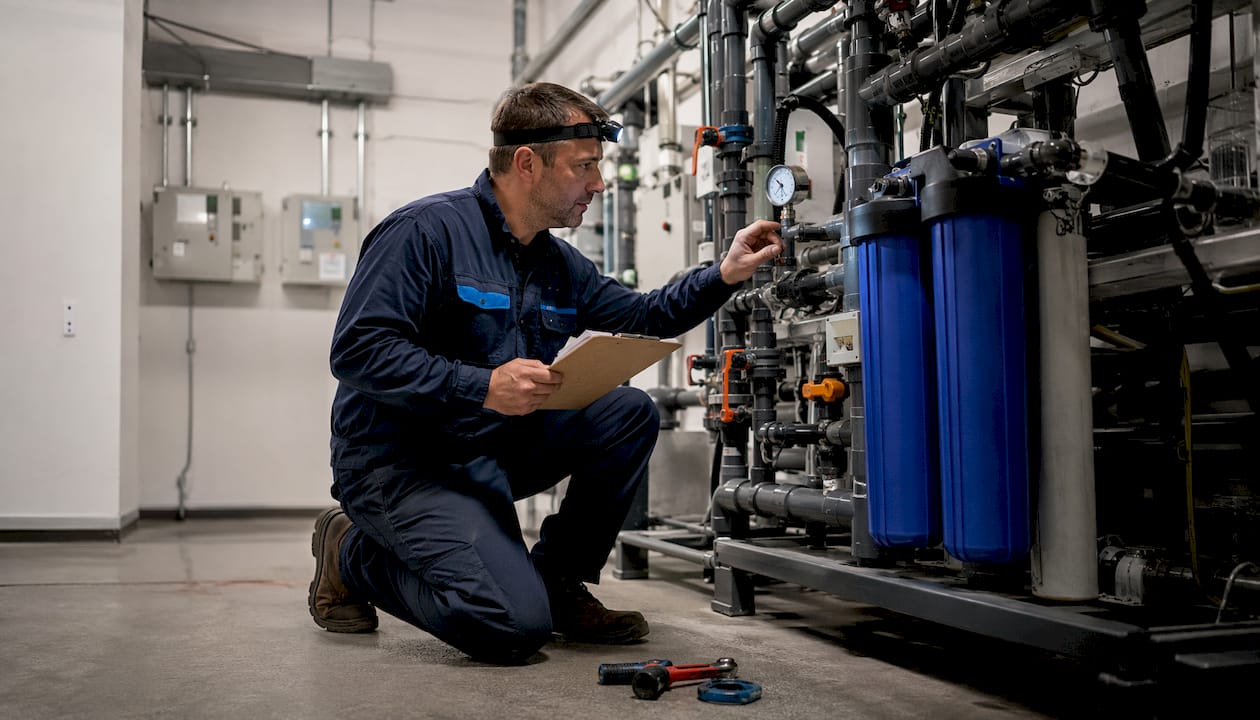
A commercial plumbing service covers professional installation, repair, and maintenance of the complex plumbing systems that keep commercial buildings running. Unlike residential work, these systems handle far greater water volume, serve more occupants, and must meet stricter regulatory standards. The systems involved include boilers, backflow prevention assemblies, sewer lines, drainage infrastructure, pumps, filtration systems, and high-volume fixtures. For property managers and facility teams, getting this right is not optional. A single unaddressed leak or failed backflow assembly can trigger code violations, operational shutdowns, and costly liability.
Here is what a professional commercial plumbing provider covers:
- High-volume water supply and drainage systems for multi-tenant or large commercial buildings
- Boiler and water heater installation, maintenance, and repair
- Backflow prevention testing, certification, and filing with municipal authorities
- Sewer line inspection, cleaning, and repair
- Grease trap pumping and sump pit maintenance
- Emergency repair response, available around the clock
- Code-compliant remodeling and plumbing retrofits
Licensed and insured professionals are the baseline requirement, not a bonus. They carry the credentials to work on specialized systems legally, protect your property from liability, and ensure every job meets local code. Psvplumbinginc brings that level of expertise to both commercial and residential clients, with a focus on quality, safety, and transparent pricing.
Table of Contents
- What does a full commercial plumbing service cover?
- How do you choose a trustworthy commercial plumbing provider?
- What commercial plumbing challenges should you prepare for?
- Psvplumbinginc is ready to handle your commercial plumbing needs
- Key Takeaways
What does a full commercial plumbing service cover?
The scope of a professional plumbing service company goes well beyond fixing a leaky faucet. Commercial plumbing systems include repair, replacement, and maintenance of boilers, water heaters, backflow systems, drains, sewer lines, filtration systems, pumps, piping, and fixtures, all of which must perform reliably under heavy daily use.
- Installation and repair: High-volume water supply lines, sewer and drainage systems, and commercial-grade fixtures require proper sizing and installation from the start. Errors at this stage compound into expensive repairs later.
- Boiler and water heater services: Annual maintenance, state inspection support, and emergency repair keep heating systems efficient and safe. Commercial boilers run continuously and need scheduled attention to avoid breakdowns.
- Backflow testing and certification: Licensed BPATs test assemblies, complete repairs, and file the required municipal paperwork for irrigation, boiler, processing, and fire suppression systems.
- Drain cleaning and sewer maintenance: Camera inspection, hydro-jetting, grease trap pumping, sump pit upkeep, and under-slab tunneling keep wastewater moving without disruption.
- Preventive maintenance plans: Scheduled inspections catch problems before they become emergencies, reducing unplanned downtime and extending the life of major equipment.
- 24/7 emergency repairs: Emergency plumbing services minimize operational disruption from leaks, backups, or equipment failures, with rapid response available at any hour.
- Remodeling and retrofits: Code-compliant upgrades to piping, fixtures, drains, and sewer lines modernize aging systems without interrupting daily operations.
Water quality services, including filtration, water softening, and reverse osmosis, round out the offering for facilities where water purity affects equipment performance or occupant health.
How do you choose a trustworthy commercial plumbing provider?

Selecting the right plumbing services company starts with verifiable credentials. Licensed and insured contractors meet local code requirements and protect your property and its occupants from liability. A license is not just paperwork. It confirms the technician has passed the training and testing required to work on commercial-grade systems legally.
Beyond credentials, look at these factors:
- Experience with commercial systems: A provider who works primarily on residential jobs may lack the knowledge to handle boilers, medical gas lines, or industrial-grade piping safely.
- Transparent pricing: Reputable providers give clear estimates and realistic timelines before work begins. Vague quotes or reluctance to put numbers in writing are warning signs.
- Customer testimonials and project portfolios: Documented project examples and verified client feedback show whether a company consistently delivers on its promises.
- Regulatory knowledge: Facility managers are often legally liable for compliance with local plumbing codes and backflow inspection mandates, even when work is outsourced. Your provider needs to know those rules cold.
- Red flags to avoid: Unlicensed workers, no proof of insurance, no written estimate, and pressure to start immediately without a signed agreement all signal risk.
Pro Tip: Prioritize providers who offer structured preventive maintenance plans. Proactive maintenance is the most effective way to control long-term operating budgets by reducing emergency calls and extending the lifespan of major assets like boilers and water heaters.
Ask any candidate provider how they handle after-hours emergencies, what their average response time is, and whether they carry workers’ compensation coverage. A provider who answers those questions clearly and quickly is one worth trusting.

What commercial plumbing challenges should you prepare for?
Commercial buildings face plumbing problems that residential properties rarely encounter, and the consequences of delayed response are far greater. Knowing the most common issues helps you act before a minor problem becomes a facility-wide disruption.
- Hidden leaks and aging piping: Leaks in hard-to-reach areas drive up water costs, damage structural elements, and can go undetected for weeks. Advanced leak detection using acoustic and camera inspection tools locates problems without tearing open walls. Aging cast-iron or galvanized pipes often require full replacement rather than repeated patching.
- Clogged drains and grease buildup: High-traffic commercial kitchens and restrooms generate blockages faster than residential systems. Hydro-jetting clears grease, scale, and debris from drain lines far more effectively than chemical treatments, and regular drain cleaning prevents the major blockages that shut down operations.
- Backflow contamination: Without properly maintained backflow prevention assemblies, contaminants can enter the potable water supply. Annual testing and certification are required by most municipalities, and failure to comply puts both occupants and the property owner at legal risk.
- Boiler and water heater breakdowns: Commercial boilers run under constant demand. Without scheduled maintenance, small issues like mineral buildup or worn seals escalate into full system failures. Proactive service plans catch these before they cause downtime.
- Specialized system requirements: Commercial systems often include acid waste lines for laboratories, medical gas for healthcare facilities, or food-grade piping for commercial kitchens. Standard residential plumbers are not qualified, legally or technically, to work on these systems. Only licensed specialists with the right certifications should touch them.
Timely maintenance across all these areas reduces the frequency and cost of emergency repairs. A facility that runs scheduled inspections and addresses small issues early spends far less over a five-year period than one that waits for systems to fail.
Psvplumbinginc is ready to handle your commercial plumbing needs

Facility managers and business owners who need a reliable plumbing service company get exactly that with Psvplumbinginc. We handle the full range of commercial plumbing work, from pipe repairs and new installations to sewer line inspections, water heater maintenance, drain cleaning, and bathroom remodeling for commercial spaces.

We are licensed and insured, and we price every job transparently so you know what to expect before work begins. Whether you need a scheduled maintenance plan to protect your building’s systems long-term or an urgent repair that cannot wait, our team responds with the experience and accountability your property deserves. Our portfolio of completed commercial projects and verified customer feedback reflect a consistent standard of quality craftsmanship. For a closer look at how we approach pipe repairs and system upgrades, start with our pipe repair workflow guide. Ready to get started? Contact Psvplumbinginc today for a free quote and let’s keep your facility running without interruption.
Key Takeaways
A licensed, insured commercial plumbing service provider with proactive maintenance plans is the most effective way to protect your facility from costly downtime and compliance risk.
| Point | Details |
|---|---|
| Full-scope service matters | Professional providers cover boilers, backflow, drains, sewer lines, pumps, and emergency repairs under one contract. |
| Proactive plans cut costs | Scheduled maintenance reduces emergency call-outs and extends the lifespan of major equipment like boilers and water heaters. |
| Compliance is your responsibility | Facility managers are often legally liable for code and backflow inspection compliance, even when work is outsourced to a contractor. |
| Specialized systems need specialists | Acid waste, medical gas, and food-grade piping require licensed technicians with specific certifications, not general residential plumbers. |
| Psvplumbinginc delivers both | Licensed, insured, and transparent on pricing, Psvplumbinginc handles commercial plumbing from routine maintenance to urgent repairs. |
Leave a Reply