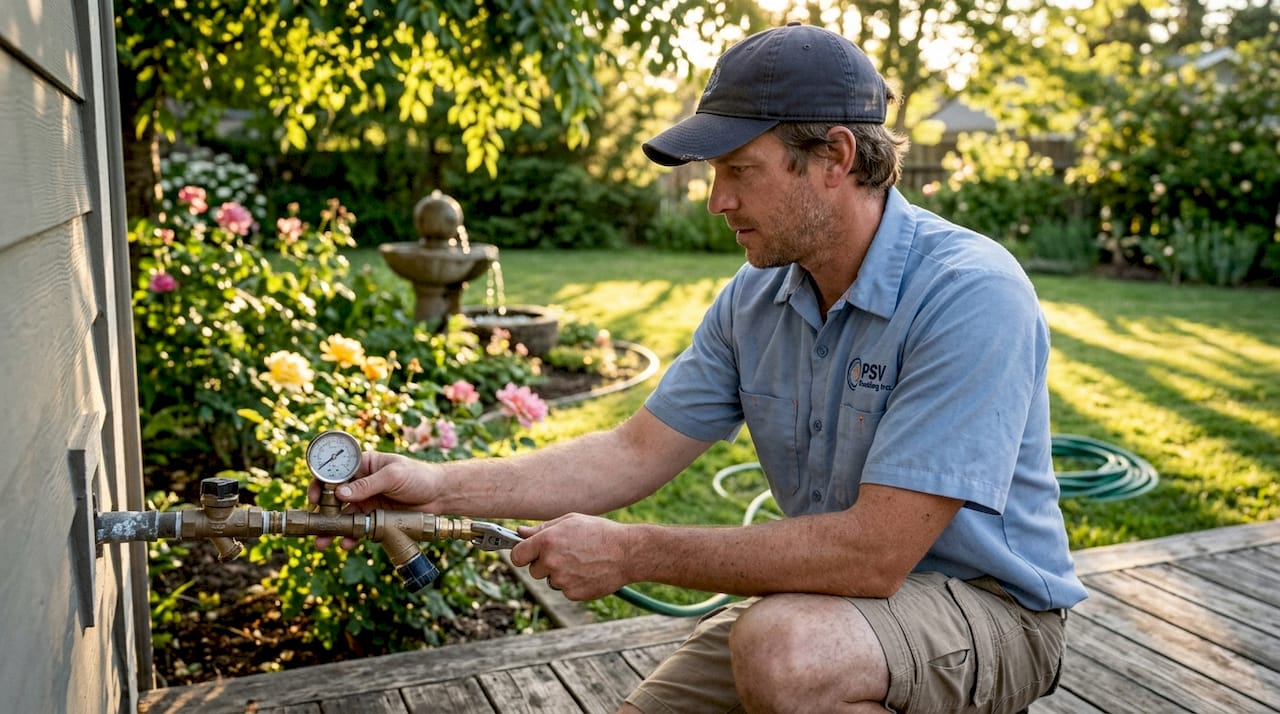
A cross-connection is any actual or potential physical link between a potable water supply and a non-potable source of contamination. That link does not have to be obvious or intentional to be dangerous. The U.S. Environmental Protection Agency (EPA) and the Texas Commission on Environmental Quality (TCEQ) both define cross-connections as direct threats to public health because they create pathways for contaminants to enter the water you drink, cook with, and bathe in. Common residential examples include a garden hose left submerged in a bucket of soapy water, an irrigation system connected to the home supply without a backflow preventer, or a utility sink with a spray nozzle dipped below the waterline.
Here is why this matters to you as a homeowner or property manager:
- A cross-connection does not cause harm on its own. It becomes hazardous the moment backflow occurs.
- Backflow can happen without warning, often during a pressure drop in the municipal supply line.
- Older homes and DIY plumbing projects are especially vulnerable because they frequently lack modern backflow protection.
- Identifying and correcting cross-connections is both a personal responsibility and, in most U.S. states, a legal requirement.
How cross-connections cause contamination through backflow
Backflow is the unintended reversal of water flow through a cross-connection. Under normal conditions, water pressure in the municipal supply keeps water moving in one direction, from the main line into your home. When that pressure balance shifts, contaminated water can travel backward into the clean supply.
Two distinct mechanisms drive this:
- Backsiphonage occurs when pressure in the supply line drops below atmospheric pressure, creating a vacuum effect that pulls water backward. A broken water main, a nearby fire hydrant being opened, or a sudden high-demand event can all trigger backsiphonage.
- Backpressure occurs when pressure on the customer’s side of the connection exceeds the supply pressure. Booster pumps, elevated storage tanks, and heating systems are common sources of backpressure in both residential and commercial settings.
Real-world consequences can be severe. At a western U.S. water system serving a small community, a customer connected a surface water irrigation line to the public supply without a backflow prevention assembly. When irrigation line pressure increased, water flowed back into the county system. Samples tested positive for E. coli, and the Department of Water issued a “Do Not Use” notice to all customers. In a separate incident at a southeastern system serving a large population, aqueous fire-fighting foam was forced into the homes of many customers through an unprotected cross-connection.
Backflow is particularly difficult to detect because it often leaves no visible sign until someone becomes ill or a water test reveals contamination. That invisibility is exactly what makes cross-connection control so critical.
What cross-connection control programs require in the U.S.
Federal and state regulators mandate cross-connection control programs for all public water systems. These programs go well beyond simply installing a device. They establish ongoing responsibilities for water utilities, property owners, and certified professionals alike.

The EPA’s Cross-Connection Control Manual sets the national framework, while state agencies enforce it locally. Michigan’s Safe Drinking Water Act Administrative Rules (Part 14), for example, explicitly prohibit cross-connections and require every water supply to implement a prevention program covering inspections, testing, recordkeeping, and customer education. The Michigan Department of Environment, Great Lakes, and Energy (EGLE) oversees compliance statewide. Texas operates under TCEQ, which defines cross-connections and backflow in its drinking water regulations and holds utilities accountable for protecting distribution systems.
A typical cross-connection control program includes:
- Annual testing of backflow prevention assemblies by state-certified testers
- Inspections of customer premises, including residential properties
- Recordkeeping of all devices, test results, and corrective actions
- Customer education on identifying and reporting potential cross-connections
- Enforcement authority, including citations and water service interruptions for non-compliance
“A Cross Connection Control Program is intended to protect a water system’s distribution network from potential contamination resulting from backpressure or backsiphonage events. It’s essentially a device that stops water from flowing backward in pipes from a customer’s premises back into the public water distribution system.” — Nevada Division of Environmental Protection, Bureau of Safe Drinking Water, June 2023 CCCP Guidance
Programs apply to all customer types, not just industrial facilities. Residential homes with irrigation systems, hose bibs, or older plumbing are subject to inspection. Certified inspectors identify hazards, require corrective actions, and verify compliance with safe drinking water codes.
Pro Tip: If your utility sends an inspector to your home, cooperate fully. Inspections are required by state law, and the inspector’s goal is to protect your water, not to penalize you.
How to prevent cross-connections in your home
Prevention starts with understanding where cross-connections are most likely to form. The good news is that most residential hazards are straightforward to fix once you know what to look for.
Physical solutions:
- Air gaps are the most reliable protection available. An air gap is a physical break between a water outlet and any potential source of contamination, such as the space between a faucet and the rim of a sink. Air gaps are universally regarded as the most fail-safe method because there is no mechanical part to fail.
- Backflow prevention assemblies are mechanical devices installed on supply lines to stop reversed flow. They must be matched to the specific hazard level and maintained properly to remain effective.
- Vacuum breakers attach directly to hose bibs and are inexpensive, widely available, and required by most modern plumbing codes.
Common household cross-connections to fix now:
- A garden hose submerged in a bucket, pool, or chemical solution
- An irrigation system connected to the home supply without a backflow preventer
- A handheld shower sprayer that can reach below the tub waterline
- A utility sink with a spray attachment that dips below the basin rim
- A boiler or hydronic heating system connected directly to the potable supply
Pro Tip: An air gap requires zero maintenance and cannot fail mechanically. Wherever your plumbing code allows it, choose an air gap over a mechanical device.
Backflow prevention devices must be tested annually by a certified tester, as required by most state programs. A device that was installed correctly five years ago may have worn seals or a stuck check valve today. Scheduling that annual plumbing inspection is the single most reliable way to confirm your protection is still working.

How Psvplumbinginc approaches cross-connection protection for homeowners
Cross-connections are one of the most frequently overlooked plumbing hazards we encounter in residential work. Homeowners often discover them only after a utility inspector flags a violation or, worse, after a water quality issue surfaces. At Psvplumbinginc, our licensed plumbers are trained to identify both obvious and hidden cross-connections during every service visit, from a simple hose bib inspection to a full system evaluation.
DIY plumbing installations are a consistent source of unprotected cross-connections. A homeowner who adds an irrigation zone, installs a utility sink, or connects a water softener without professional guidance can unknowingly create a direct pathway between the potable supply and a contamination source. These situations are not always visible without pressure testing or a thorough pipe-by-pipe review.
“Cross-connections are ever-present dangers that exist in most water systems and can result in serious chemical or microbiological contamination events in drinking water systems.” — EPA Cross-Connection Control Best Practices Guide
Best practices our team recommends for every homeowner:
- Have a licensed plumber inspect all hose bibs, irrigation connections, and utility sinks at least once every two years.
- Replace any hose bib that lacks a vacuum breaker, particularly on older homes built before modern plumbing codes took effect.
- Never connect a garden hose to a chemical injector or fertilizer dispenser without a dedicated backflow assembly on the supply side.
- Document the location and model of every backflow prevention device in your home so annual testing can be scheduled efficiently.
| Common cross-connection location | Hazard type | Recommended protection |
|---|---|---|
| Outdoor hose bib | Backsiphonage | Vacuum breaker |
| Irrigation system | Backpressure or backsiphonage | Reduced pressure zone assembly |
| Utility sink with spray nozzle | Backsiphonage | Air gap or atmospheric vacuum breaker |
| Boiler/hydronic heating system | Backpressure | Reduced pressure zone assembly |
| Swimming pool fill line | Backsiphonage | Air gap |
The community impact of individual plumbing decisions is real. A single unprotected cross-connection on a residential property can contaminate not just that home’s water but the shared distribution main serving an entire neighborhood. That is the reason homeowners play a crucial role in protecting community water safety, and why Psvplumbinginc treats every cross-connection inspection as a matter of public health, not just a service call.
If you are unsure whether your home has unprotected cross-connections, the safest step is a professional assessment. Our team can identify hazards, recommend the right protection for each situation, and handle installation to code. Explore our pipe repair and plumbing safety resources or contact Psvplumbinginc directly for a free quote.

Key Takeaways
A cross-connection is any physical link between potable water and a contamination source, and backflow through that link can threaten an entire neighborhood’s water supply, not just one home.
| Point | Details |
|---|---|
| Cross-connection definition | Any actual or potential link between potable water and a non-potable source, as defined by the EPA. |
| Two backflow mechanisms | Backsiphonage (pressure drop) and backpressure (customer-side pressure increase) both drive contamination. |
| Air gaps are most reliable | Physical air gaps require no maintenance and cannot fail mechanically, making them the safest prevention method. |
| Annual device testing required | Most state programs mandate yearly testing of backflow prevention assemblies by certified testers. |
| Homeowners share responsibility | Residential properties with irrigation systems, hose bibs, or older plumbing are subject to inspection and enforcement. |
Leave a Reply