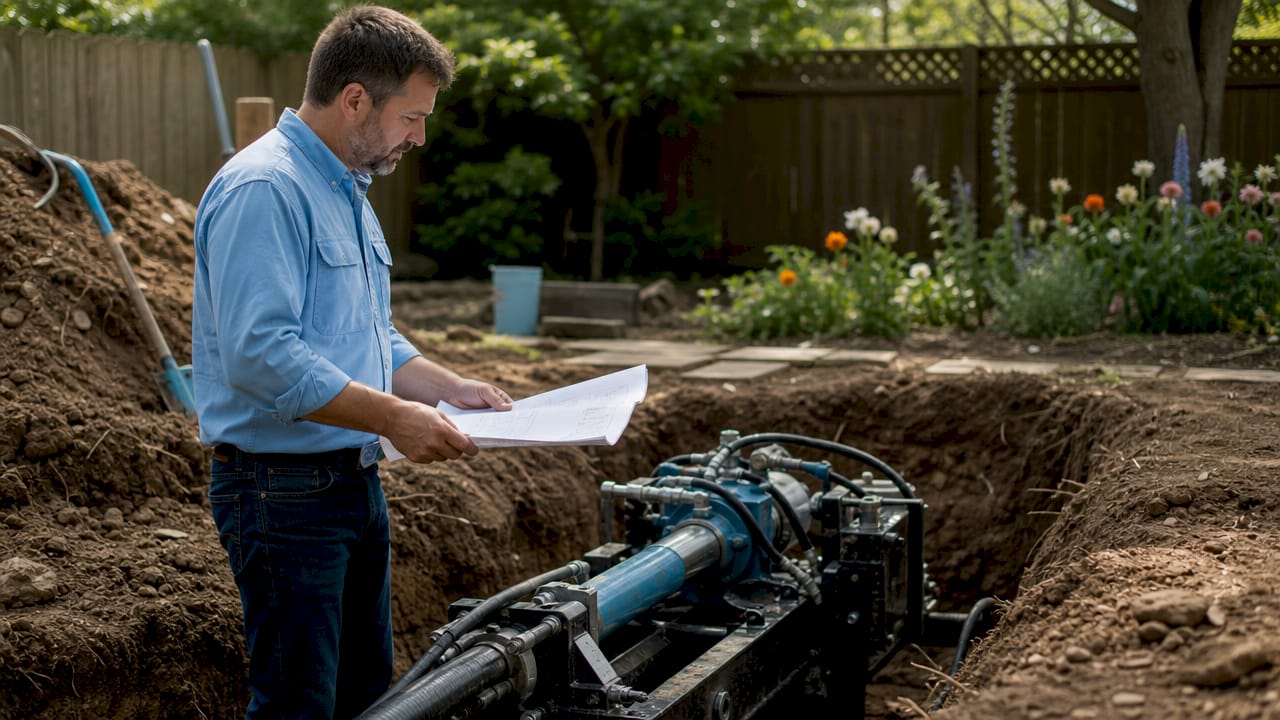
TL;DR:
- Pipe bursting is a trenchless pipe replacement method that fractures an old pipe outward while pulling in a new pipe using hydraulic power. It only requires two small access pits instead of a full trench, minimizing damage to landscaping and driveways. The process is suitable for various pipe materials and sizes and offers faster, less costly installation with the ability to increase pipe capacity.
Pipe bursting is defined as a trenchless pipe replacement method that fractures an existing underground pipe outward and simultaneously pulls a new pipe into its place using hydraulic power. Unlike traditional open trench excavation, this trenchless technique requires only two small access pits rather than tearing up your entire yard, driveway, or landscaping. This method works on damaged sewer lines, water mains, and gas pipes made from clay, cast iron, concrete, and plastic. If you are a homeowner, property manager, or contractor weighing your options for a failing underground pipe, understanding how this process works will help you make a confident, informed decision.
What is pipe bursting and how does it work?
Pipe bursting is the industry term for a trenchless replacement process where a cone-shaped expander head, also called a bursting head, is pulled through the old pipe by a hydraulic power pack connected to steel pulling rods. As the head moves forward, it fractures the old pipe wall outward into the surrounding soil. A new pipe, almost always HDPE (high-density polyethylene), is attached directly behind the bursting head and pulled into position as the old pipe breaks apart.

The process starts with two excavated access pits. The launching pit is where the bursting head enters the old pipe. The receiving pit is where the hydraulic machine sits and pulls the head through. Two small pits replace the continuous trench that traditional replacement requires. That single difference is what makes the method so attractive for properties with mature landscaping, concrete driveways, or finished hardscaping.
Before any equipment enters the ground, a CCTV camera inspection is run through the existing pipe. This step confirms the pipe bore is continuous and intact enough for the bursting head to track through without losing its path. A completely collapsed pipe section can cause the project to fail mid-pull, which is why no reputable contractor skips this step.
Compatible pipe materials and sizes
Pipe bursting works on a wide range of existing pipe materials:
- Clay pipes common in homes built before 1980
- Cast iron pipes found in older residential and commercial buildings
- Concrete pipes used in municipal and larger diameter lines
- Plastic pipes including older PVC and ABS installations
The new replacement pipe is almost always HDPE because it is flexible, durable, and fused into continuous lengths that pull through cleanly. Pipe bursting can replace pipes up to 36 inches in diameter, covering everything from a residential sewer lateral to a municipal water main.
Pro Tip: Ask your contractor to share the CCTV footage before work begins. That video is your proof of pipe condition and protects you if any disputes arise after the job.

What are the advantages of pipe bursting over traditional replacement?
Pipe bursting delivers faster project timelines and lower restoration costs compared to open trench excavation. With traditional replacement, a crew digs a continuous trench the full length of the pipe, removes the old pipe, lays new pipe, backfills, and then restores every surface above. This method skips most of that. Minimal landscaping and driveway disturbance directly reduces what you pay after the pipe work is done.
The advantages stack up quickly when you compare the two methods side by side:
- Less excavation. Only two access pits are needed instead of a full trench running the length of the pipe run.
- Faster completion. A typical residential job finishes in one day. Open trench work on the same line often takes two to four days.
- Lower restoration costs. No torn-up lawn, no broken driveway slabs, no replanted shrubs. Your property looks nearly the same after the work as it did before.
- Full pipe replacement. Unlike pipe lining, which coats the inside of the existing pipe, bursting completely removes and replaces the damaged pipeline.
- Upsizing capability. The method can increase pipe diameter during replacement. A common upgrade moves a line from 100mm to 225mm or larger, adding flow capacity without additional excavation.
Pipe bursting is the preferred choice when pipe lining is unsuitable due to severe pipe damage, significant offset joints, or partial collapse. Lining rehabilitates the inside of a pipe that still has structural integrity. Bursting replaces a pipe that has lost it. That distinction matters when you are deciding which method fits your situation.
For a broader look at why professional pipe repair pays off, the benefits of professional pipe repair go well beyond the method itself.
What types of pipe bursting techniques are there?
Two main pipe bursting types exist: static and pneumatic. Each has trade-offs in control, speed, and upsizing capacity.
| Feature | Static bursting | Pneumatic bursting |
|---|---|---|
| Force type | Steady hydraulic pull | Rapid hammer-like impact |
| Best for | Large upsizing, precise control | Tight spaces, faster operation |
| Pit size required | Larger receiving pit | Smaller pit footprint |
| Upsizing capacity | High | Moderate |
| Risk to nearby utilities | Lower | Higher due to vibration |
Static bursting uses a continuous hydraulic pull to move the expander head through the old pipe at a controlled rate. This steady force gives the crew better control over how the pipe fractures, making it the preferred method when you need to upsize significantly or when nearby utilities are close to the work zone.
Pneumatic bursting uses a percussive, hammer-like action to break the old pipe. It moves faster than static bursting and works well in tighter spaces where a large hydraulic machine cannot be positioned easily. The trade-off is that the vibration it generates carries farther through the soil, raising the risk of disturbing adjacent water, gas, or electrical lines.
Utility mapping before any trenchless project is non-negotiable. Knowing exactly where every underground utility runs determines which technique is safe to use and where the access pits can be placed.
Pro Tip: In urban environments or older neighborhoods with dense underground infrastructure, always request a full utility locate report before approving any trenchless work. That report can change the entire project plan.
Is pipe bursting the right solution for your property?
Pipe bursting is not the right solution for every failing pipe. The method requires a mostly continuous pipe bore for the bursting head to follow. When a pipe has fully collapsed over a long section or has a missing segment, the bursting head has no path to track and the project will fail. A CCTV inspection before the job is the only reliable way to confirm the pipe is a good candidate.
Factors that support this method as the right choice:
- The pipe has cracks, root intrusion, or corrosion but still holds its general shape
- The property has mature trees, finished landscaping, or a concrete driveway above the pipe run
- You need to increase pipe capacity at the same time as replacement
- The pipe material is clay, cast iron, or concrete, all of which fracture cleanly under bursting force
- The pipe run is relatively straight, since sharp bends can limit the bursting head’s travel
Factors that may rule it out:
- The pipe has fully collapsed or has missing sections
- The pipe runs directly alongside a gas main or other sensitive utility with no clearance
- Ground conditions include large boulders or extremely dense rock that the fractured pipe cannot displace into
- The pipe has significant offset joints that would redirect the bursting head off course
A professional assessment from a licensed plumber with trenchless experience is the most reliable way to determine which method fits your specific property. The pipe repair process for homeowners walks through what that assessment typically involves, step by step.
Key Takeaways
Pipe bursting is the most effective trenchless replacement method for severely damaged pipes when the existing bore is intact, the right technique is matched to site conditions, and CCTV inspection confirms suitability before work begins.
| Point | Details |
|---|---|
| Definition | Pipe bursting fractures old pipe outward and pulls new HDPE pipe into place using hydraulic force. |
| Access pits only | Only two small pits are needed, not a continuous trench, which protects landscaping and driveways. |
| CCTV is mandatory | A pre-job camera inspection confirms the pipe bore is continuous enough for the bursting head to track. |
| Two main techniques | Static bursting suits large upsizing; pneumatic bursting works faster in tighter spaces with more vibration risk. |
| Not for every pipe | Fully collapsed or missing pipe sections make this method unsuitable; professional assessment is required. |
Pipe bursting services from PSV Plumbing

We handle every step, from the initial CCTV inspection and utility mapping to the final pipe installation and site restoration. Our team uses professional-grade hydraulic equipment and HDPE pipe to deliver a replacement that lasts. If you are ready to assess your options, our pipe repair workflow guide is a practical starting point. Contact PSV Plumbing for a free consultation and let us tell you exactly what your pipe replacement project requires.
FAQ
What is pipe bursting used for?
Pipe bursting replaces damaged underground pipes, including sewer, water, and gas lines, without continuous trench excavation. It works on clay, cast iron, concrete, and plastic pipes.
How long does a pipe bursting job take?
Most residential projects complete in a single day. The timeline depends on pipe length, access conditions, and the technique used.
Can pipe bursting increase pipe size?
Pipe bursting can upsize a pipe during replacement, commonly moving from 100mm to 225mm diameter or larger, adding flow capacity without extra excavation.
Is pipe bursting safe for nearby utilities?
The method is safe when utility mapping is completed before work begins. Static bursting carries lower vibration risk than pneumatic bursting near adjacent gas or water lines.
When is pipe bursting not an option?
Pipe bursting is not suitable when a pipe has fully collapsed or has missing sections, since the bursting head needs a continuous bore to follow through the existing pipe.
Leave a Reply